
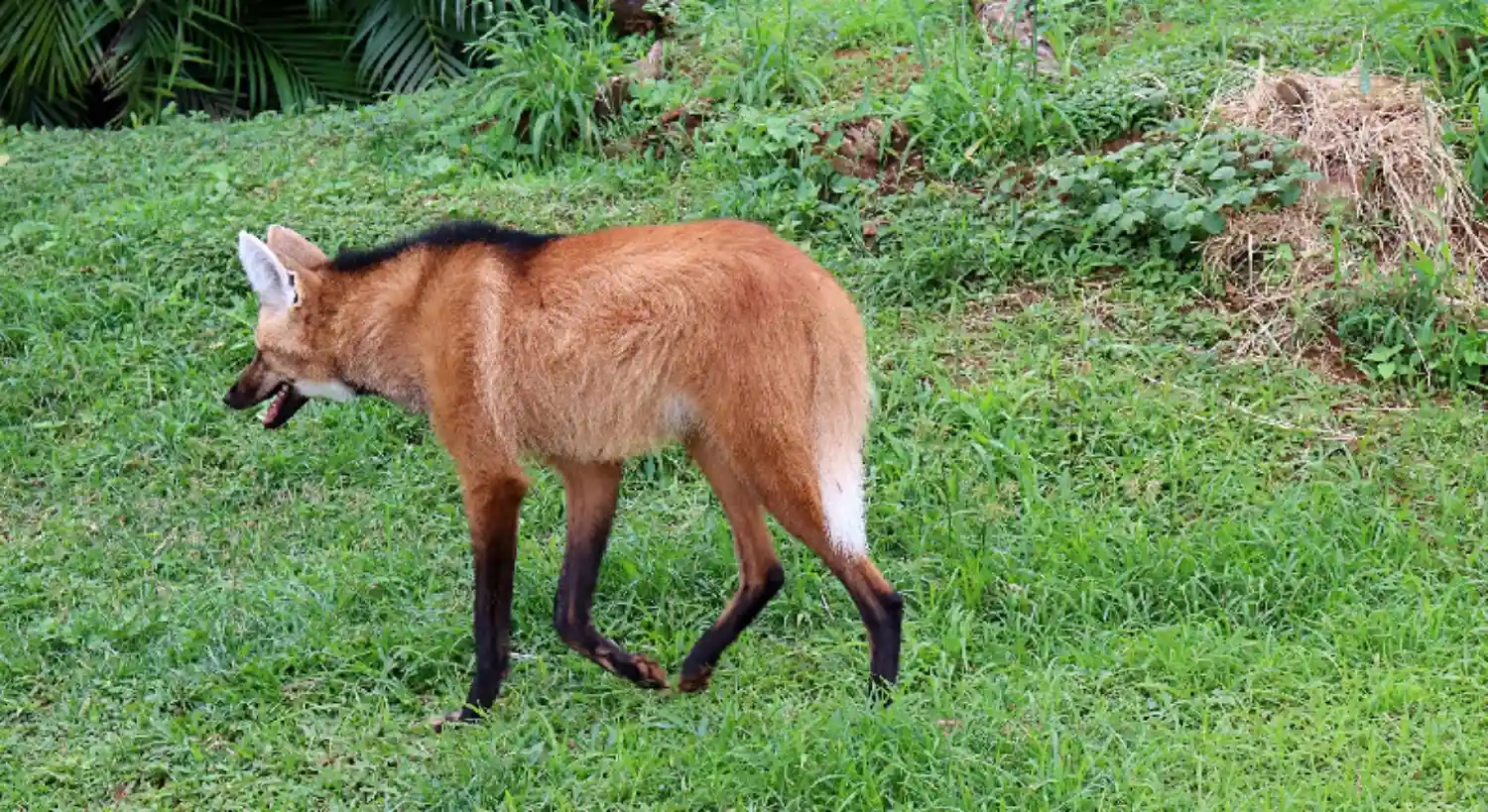
Although it is the largest canid in all of South America and has the build of a great predator, the maned wolf keeps a diet in which more than half of everything it consumes over its lifetime is made up of fruits native to grassland vegetation. The species Chrysocyon brachyurus defies the stereotype of carnivores by having the wolf apple as its favorite food, a yellowish wild fruit that can account for up to 50% of its daily food intake. This symbiotic relationship between a large mammal and a Cerrado plant reveals a striking evolutionary adaptation that turns the animal into the most efficient sower of Brazil’s open landscapes.
Long legs to see above the tall vegetation
The anatomy of the maned wolf is a direct response to the challenges imposed by the topography and vegetation of its habitat. Its disproportionately long, slender shanks work like natural stilts, allowing the animal to raise its line of sight above the tall grass and the grasses typical of tropical savannas.
This physical adaptation grants an indispensable strategic advantage for moving through open fields. By walking with its body raised, the maned wolf can spot small prey such as rodents, reptiles and ground birds, while also detecting the presence of threats or fruit trees at long distances. Its large, erect ears complete that structure, acting as acoustic radars capable of catching the faintest sounds made by the movement of small animals in the leaf litter.
Unlike its distant relatives, such as the gray wolves of the Northern Hemisphere, the maned wolf is an essentially solitary and crepuscular animal. It does not form packs to hunt large prey in groups. Instead, it roams vast individual territories in a calm and silent manner, using its keen sense of smell to locate ripe fruit and small prey on the ground.
The perfect symbiosis with the wolf apple
The relationship between the maned wolf and the tree Solanum lycocarpum, popularly known as lobeira or wolf apple, is one of the most remarkable examples of mutualism in South American fauna. The wolf apple resembles a large, greenish yellow tomato, with a dense, aromatic pulp rich in nutrients and water, a vital resource during the harsh dry seasons.
Studies indicate that regular consumption of this fruit brings direct therapeutic benefits to the health of the canid. The pulp of the wolf apple contains active compounds that help fight the giant kidney worm, a severe parasite that attacks the mammal’s renal system and can be fatal. In return, the digestive tract of the maned wolf prepares the seeds for germination.
By swallowing the whole fruit, the animal passes the seeds through its digestive system without damaging their internal structure. Gastric juices remove the germination inhibiting substances present in the skin. When the maned wolf defecates in places far from the parent plant, it deposits the fertilized seeds within a layer of nutrient rich organic matter, creating the perfect setting for new wolf apple seedlings to emerge across the vegetation.
The great farmer of the South American grasslands
The ecological role of the maned wolf goes far beyond its function as a consumer. By covering dozens of kilometers each day in search of food, the canid acts as a true natural farmer, scattering seeds of dozens of species of native plants throughout its territory.
Besides the wolf apple, the animal’s diet includes gabiroba, pitanga, murici and cactus fruits. Without the maned wolf to carry these seeds over long distances, many plant species would see their dispersal capacity drastically reduced, which would compromise the natural regeneration of grassland ecosystems and the diversity of the local flora.
The scarcity of the canid in a given region triggers a harmful cascade effect. A lower rate of seed dispersal reduces the density of fruit bearing shrubs, indirectly affecting insects, birds and other small mammals that depend on those resources to survive, demonstrating how the presence of the vegetarian predator is crucial for the health of the biome.
This service is especially valuable in a landscape where fruits ripen in seasonal pulses rather than year round. Because the maned wolf ranges so widely and rests in different sites each night, it deposits seeds far from where they were eaten, reducing competition among seedlings and expanding the reach of each plant species. In practice, the animal weaves an invisible network of future groves, ensuring that the Cerrado keeps its ability to sprout again after droughts and the natural fires that shape the savanna.
Urban pressures and the future of the species
Despite its vital importance for the conservation of the ecosystem, the maned wolf faces severe threats caused by human action. The rapid advance of agriculture and cattle ranching, the conversion of native fields into monoculture pastures and the growth of cities destroy and fragment the natural habitat of the species at an alarming pace.
The expansion of road networks that cut across the open fields results in thousands of roadkill deaths each year, one of the main causes of direct mortality among adult individuals. In addition, the proximity to urban and rural areas exposes the maned wolf to contact with domestic dogs, which transmit fatal diseases such as distemper and rabies, and it also generates needless conflicts with rural producers over occasional attacks on poultry.
Ensuring the preservation of the maned wolf demands the urgent implementation of ecological corridors that connect the fragments of native vegetation, along with stronger wildlife crossings on highways and awareness campaigns about the docility and importance of the animal for the environment.
How can you help preserve the maned wolf? Support native wildlife conservation projects, respect speed limits when driving on roads that cross environmental preservation areas, and report illegal deforestation and the trade of wild animals to the competent authorities. The survival of Brazilian biodiversity is a responsibility shared by the whole of society.
Reporting: Anne Silva / Amazonia Mag. Source: revistaamazonia.com.br

Editor, English Edition — Amazonia Mag
Anne Silva is the editor of Amazonia Mag, the English-language edition of Revista Amazônia. She curates, translates and adapts the outlet's science and environment coverage for an international audience, reporting on Amazon wildlife, flora, rivers, climate and research. Every story she edits is grounded in peer-reviewed studies, official data and on-the-ground reporting from the Revista Amazônia newsroom in Belém, Pará, Brazil. More by Anne Silva →