
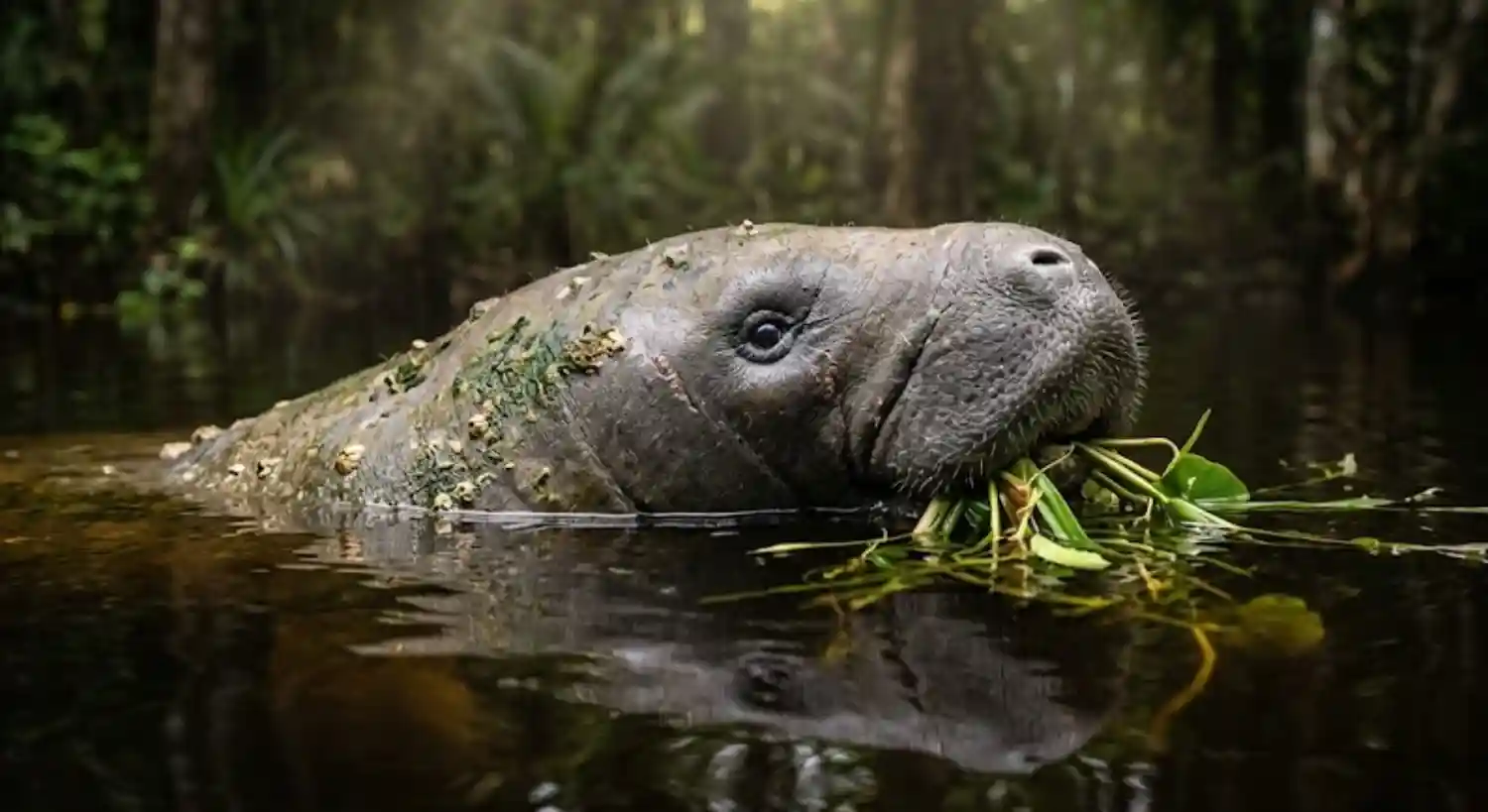
In the calm, murky waters of the Amazon basin moves a gentle giant that is rarely seen. The Amazonian manatee is the only manatee in the world that lives exclusively in freshwater environments, and its daily routine makes it a cornerstone of river balance. This mammal can eat up to 10 percent of its own body weight in vegetation every day, a tireless task that turns it into a genuine natural machine for the ecological management of tropical waters. It can exceed 500 kilograms and measure around three meters in length, earning it the undisputed title of the largest freshwater aquatic mammal in Brazil.
The adaptive biology of the river giant
The anatomy of the Trichechus inunguis is perfectly shaped for life in slow, poorly transparent water. Unlike its marine relatives, this manatee has no nails on its pectoral flippers, a trait recorded even in its scientific name. Its skin is smooth, thick and dark gray, and it almost always displays a well defined white or pinkish patch on the chest and abdomen. That mark works as a unique visual signature for each individual, allowing researchers to tell one animal from another in the field.
To sustain such a bulky body while feeding only on plant matter, the manatee developed highly flexible, split upper lips that act as small prehensile structures. With them, the animal can grip, tear and chew an enormous variety of aquatic and floating plants, such as water lettuce, water hyacinths and the grasses that grow along the riverbanks. Its molar teeth have a continuous capacity for replacement: as they wear down through friction with plant fibers and sand, new teeth emerge at the back of the jaw and gradually move forward.
The water engineer and the control of macrophytes
The compulsive feeding habit of the Amazonian manatee plays an irreplaceable ecological role in the health of aquatic ecosystems. By consuming tons of aquatic macrophytes every day, the mammal prevents these plants from proliferating uncontrollably across the surface of lakes and igarapés, naturally regulating a growth that would otherwise be very hard to contain.
Without the constant grazing of the manatee, excessive plant cover on the surface can block sunlight from entering the water column, compromising the photosynthesis of phytoplankton and drastically reducing dissolved oxygen levels. That reduction severely harms the survival of dozens of fish species. In addition, the manatee’s digestion releases nutrient rich feces that fertilize the water, providing a food base for small organisms and boosting the primary productivity of the whole ecosystem.
The navigation routes of riverside communities also benefit directly from this cleaning work. The continuous removal of dense vegetation keeps natural channels from becoming obstructed, ensuring the passage of boats that carry people, supplies and health services along the region’s waterways.
From historic exploitation to reintroduction efforts
Despite its ecological importance, the Amazonian manatee carries a painful history of exploitation. For centuries, the species was hunted intensely and predatorily for the extraction of its meat, the use of its thick hide in industry, and the use of its fat in public lighting and cooking. That hunting pressure drastically reduced the mammal’s populations across the entire river basin, placing the species under serious threat of extinction.
Although hunting has been banned by law in Brazil for decades, the species still faces constant dangers in the wild. Habitat loss and degradation, river contamination by mercury and pesticides, accidental entanglement in artisanal fishing nets, and the extreme droughts driven by climate change are the main factors that put individuals at risk.
To reverse this vulnerable scenario, research institutions and conservation agencies run programs for the rescue, rehabilitation and reintroduction of manatees in the Amazon. Calves left orphaned by illegal hunting, or stranded during the dry season, are rescued and taken to specialized centers. There they receive veterinary care and artificial nursing, and they go through a long readaptation process that lasts years, until they are ready to return safely to their native rivers.
A symbol of preservation for the future of the Amazon
The conservation of the Amazonian manatee goes far beyond protecting a single iconic species. Because it is a long lived animal with late sexual maturity and low reproductive rates, given that the female produces only one calf after a gestation of roughly twelve months, the recovery of its populations is a slow process that demands continuous protection of aquatic territories.
Protecting the manatee’s habitat means safeguarding the integrity of some of the most important freshwater reserves on the planet. The creation of environmental protection areas, participatory monitoring with the involvement of local communities, and rigorous enforcement against hunting and pollution are indispensable pillars so that future generations can keep witnessing the silent presence of this mammal in Amazonian waters.
Ensuring that the manatee continues to swim freely through Brazilian rivers is an ethical and ecological commitment to biodiversity. The restoration of aquatic wildlife is the path to keeping rivers alive, productive and able to sustain both the rich wildlife and the human populations that depend on these waters to survive. Each protected calf that returns to the wild is a quiet reminder that the fate of the manatee and the fate of the freshwater basin are, in the end, one and the same.
Reporting: Anne Silva / Amazonia Mag. Source: Revista Amazônia.

Editor, English Edition — Amazonia Mag
Anne Silva is the editor of Amazonia Mag, the English-language edition of Revista Amazônia. She curates, translates and adapts the outlet's science and environment coverage for an international audience, reporting on Amazon wildlife, flora, rivers, climate and research. Every story she edits is grounded in peer-reviewed studies, official data and on-the-ground reporting from the Revista Amazônia newsroom in Belém, Pará, Brazil. More by Anne Silva →