
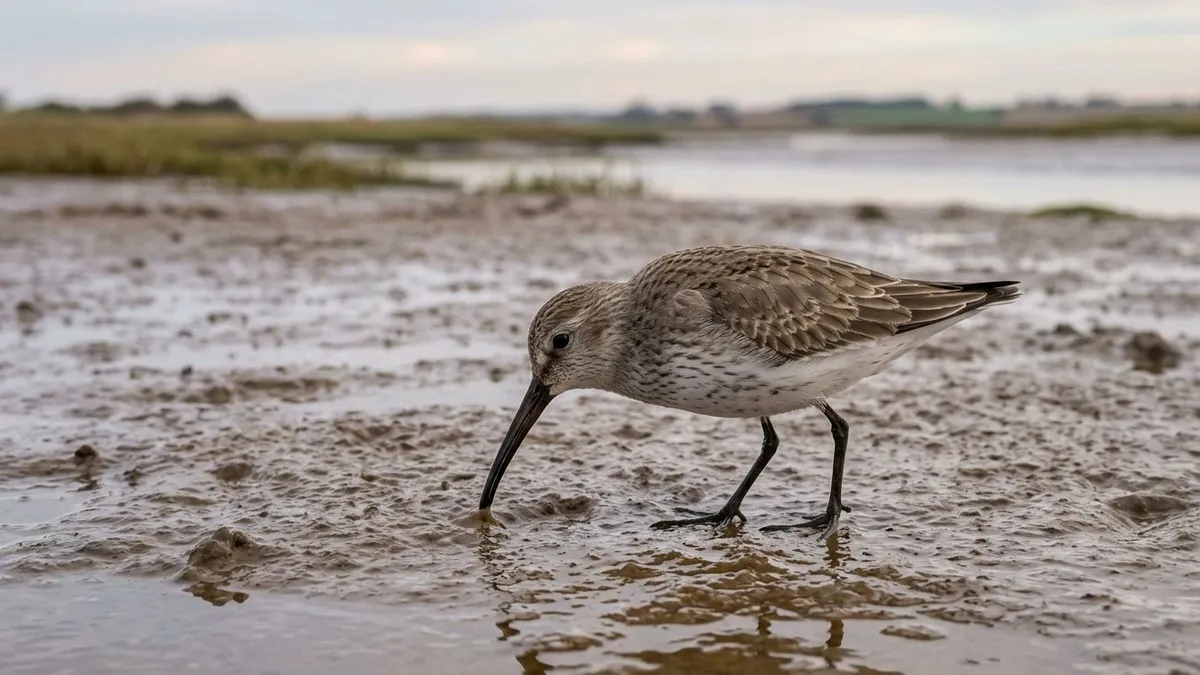
Before leaving a feeding area, the sandpiper (maçarico in Portuguese) enters a period of hyperphagia, in which it eats in large quantities and turns the surplus energy into fat. This reserve makes the body much heavier. The gain is not excess without a purpose. It fuels muscles and organs during a journey that links distant parts of the continent.
At the same time, the body adjusts its structure to make flight cheaper. Some internal organs tied to digestion shrink for a while, which reduces the mass the bird has to carry. Along the route, mudflats serve as stopover points where the bird restores its energy, recovers tissue and sets off again. The round trip is repeated every year.
Fat turns food into fuel for flight
Hyperphagia begins when the sandpiper has to prepare for the next stage of migration. Instead of simply holding its weight, it raises its food intake and stores energy mainly as fat. This reserve is rich in energy and weighs less than an equivalent amount of tissue used to store proteins or water.
During flight, the fat is drawn on gradually to power the pectoral muscles, which move the wings. The body loses weight as it burns through this reserve, but the loss is part of the physiological plan for the trip. For the bird, leaving heavier can mean carrying the fuel needed to cover a distance without finding food along the way.
The body shrinks what will not be a priority
Putting on fat is not the only change that comes before departure. In sandpipers that make long journeys, internal structures associated with digestion can shrink for a time. This remodeling cuts the weight of organs that do not have to work at full capacity during the most demanding part of the route.
The change is neither a permanent loss nor an illness. Once the bird reaches a mudflat and starts feeding again, the tissues can recover to meet the new digestive demand. The body alternates between two functional settings. One favors taking in and processing food, while the other lowers the cost of carrying mass in flight.
The mudflat interrupts the journey at the right moment
Mudflats are not only surfaces where birds rest. They concentrate small invertebrates and other organisms that can be caught at low tide. With its bill, the sandpiper probes the sediment and pulls out prey that quickly replaces part of the energy spent on the previous leg.
This stopover lets the bird reorganize its own body before continuing. Feeding rebuilds the fat reserve, supports the recovery of the muscles and reactivates the digestive system. Without intermediate areas where food is available, a long-distance route would leave less room to make up for headwinds, delays and the extra cost of looking for shelter.
Becoming much heavier before departure may seem at odds with the need to fly efficiently, but the two strategies serve different purposes. The extra fat increases the fuel available, while the temporary shrinking of organs lowers part of the load. The outcome is a combination of energy supply and structural economy.
This alternation also limits the risk of depending on food in midflight. The sandpiper sets out with a reserve that can sustain long periods of travel and uses its stopovers to replace what was spent. Migration stops being one continuous trip based on constant effort and works instead as a series of flights, pauses and physiological rebuilding.
The bird’s rhythm follows the pulse of the tides
The availability of food on mudflats depends on the movement of the tides and on the organisms living in the sediment. The sandpiper has to synchronize its rest and feeding with those conditions. When the mud is exposed, chances arise to catch prey; when water covers the site, the bird can wait or look for another suitable stretch.
This relationship means that migration depends on more than orientation and the ability to fly. It also requires a working network of wetlands along the route. Each mudflat offers a chance to refuel, and the loss or degradation of one of these points can lengthen the gap between meals and raise the energy cost of the trip.
Two crossings a year connect distant ecosystems
The sandpiper crosses the continent twice a year, once on the way to its breeding area and once on the return to the regions where it spends the other part of its annual cycle. In each direction, the bird relies on the same logic of preparation. It feeds intensively, adjusts its body weight, flies to a suitable area and breaks the journey when it needs to recover energy.
This movement carries the bird’s ecological influence between different environments. When it feeds, it takes part in the dynamics of invertebrate communities and stirs shallow sediment. Its presence also indicates that there are mudflats able to support migratory animals. Protecting these places does not preserve a single isolated site, but a sequence of conditions that lets the sandpiper complete its annual cycle.
The body of the sandpiper shows that migrating does not mean simply having wings and covering great distances. It means preparing the metabolism, carrying energy in the right amount, shrinking for a while whatever weighs too much and knowing where the mud still offers food. With every round trip, the bird turns separate landscapes into parts of one ecological route. The mudflat, often seen as empty ground, shows its worth when the flight depends on it to continue.
Reporting: Natália Santos / Amazonia Mag

Editor · Amazonia Mag
Anne Silva is the editor of Amazonia Mag, the English-language edition of Revista Amazônia. She curates, translates and adapts the outlet's science and environment coverage for an international audience, reporting on Amazon wildlife, flora, rivers, climate and research. Every story she edits is grounded in peer-reviewed studies, official data and on-the-ground reporting from the Revista Amazônia newsroom in Belém, Pará, Brazil. More by Anne Silva →