
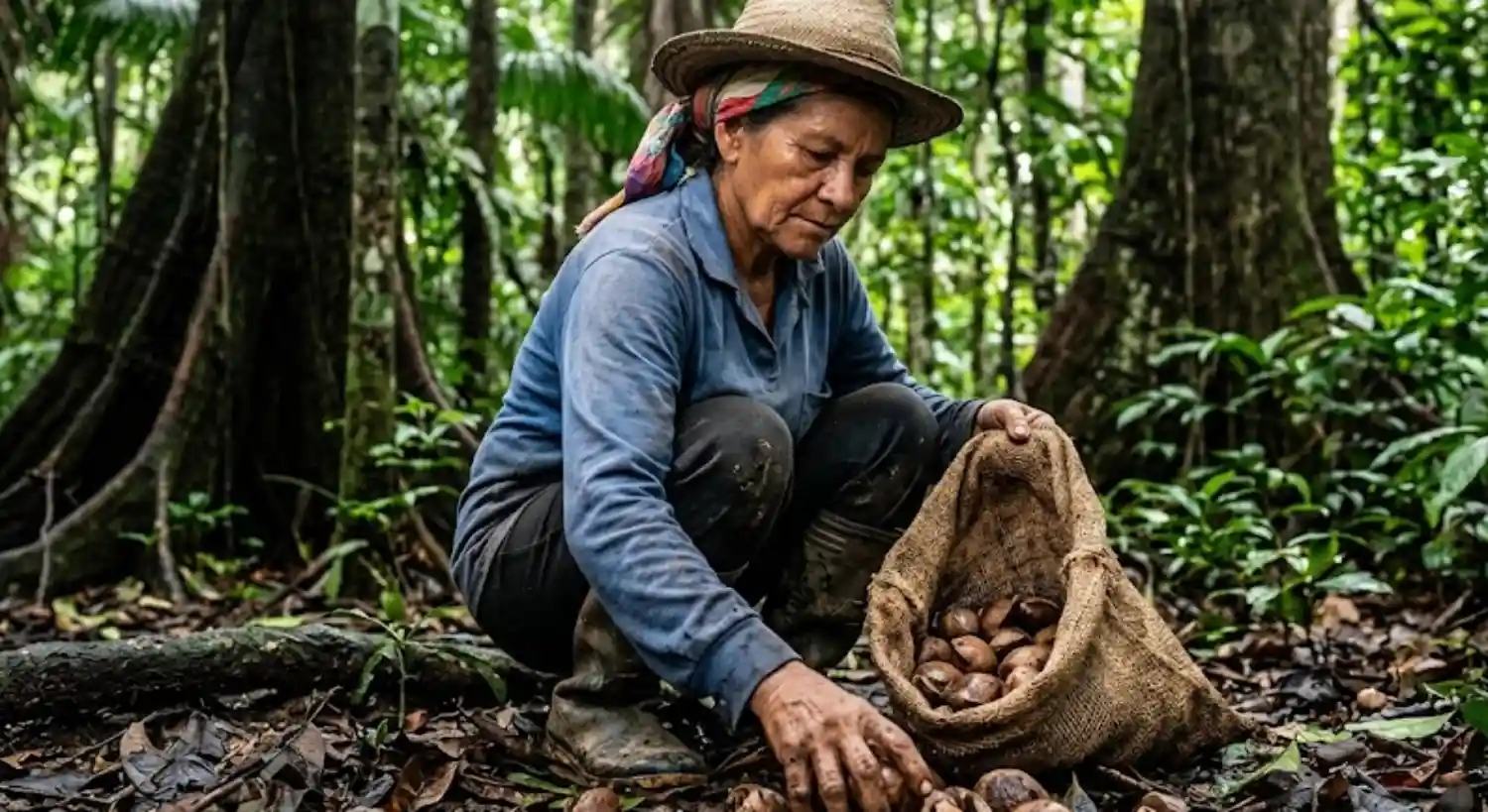
Able to produce fruits that fall naturally onto the forest floor during the flood season, the andiroba delivers seeds packed with a dense oil that works as a powerful natural repellent against mosquitoes and biting flies. The tree, known scientifically as Carapa guianensis, reaches up to thirty meters in height and stands out as one of the pillars of the sociobiodiversity and the extractive economy of the traditional and riverside populations of Brazil. Instead of felling the valuable timber for immediate profit, local communities understood that the sustainable gathering of the fallen fruits secures a continuous source of income year after year, keeping the forest standing while supplying an indispensable medicinal resource.
The biology of the tree and the seed cycle in the varzea
The andiroba is an emblematic plant species of the varzea forests and of the humid upland woods that spread across the entire Amazon Basin. It belongs to the same botanical family as mahogany and cedar, and it shows a straight trunk, a leafy crown and buttress roots that help anchor the tree in waterlogged soils shaped by the pulse of the rivers.
The reproductive cycle of the tree is closely tuned to the regime of the waters. When the rounded, woody fruits ripen high in the crown, they split open and drop dozens of angular, hard seeds onto the ground and into the rivers. Floating on the fluvial currents or piling up over the leaf litter, these seeds are carried by the water, which ensures the dispersal of the species across great distances and naturally renews the tree populations of the floodplain.
The harvest carried out by extractive families uses only the material that falls spontaneously. This process guarantees that the tree suffers no physical damage during the collection, and it allows wildlife to keep consuming part of the seeds while the remainder is directed to community processing inside the reserves themselves.
The chemistry of the oil and its repellent action against insects
The great economic and medicinal value of the andiroba lies in the vegetable oil extracted from the core of its seeds. The product obtained by pressing is rich in essential fatty acids, such as oleic, palmitic and stearic acid, and it also contains bitter substances known as limonoids and tetranortriterpenoids, which are responsible for much of its biological activity.
These active chemical compounds act directly on the sensory system of insects. The strong odor and the composition of the oil inhibit the ability to land and bite of flies, biting midges, ticks and the mosquito Aedes aegypti, a vector of serious tropical diseases such as dengue, zika and chikungunya. For that reason the oil became a valued ingredient in the industry of ecological repellents.
Beyond the repellent effect, andiroba oil has anti-inflammatory, healing and analgesic properties that are widely recognized by traditional medicine. Riverside dwellers apply the pure product on the skin to relieve muscle pain, bruises, insect bites and skin conditions, which turns the plant into a true natural pharmacy in the heart of the forest.
Local value chain and the conservation of the standing forest
The structuring of the productive chain of andiroba oil transformed the socioeconomic reality of hundreds of communities in the Amazon. Organized into local cooperatives and associations, the gathering families carry out the sorting, cooking, fermentation and pressing of the seeds in community mills installed within the extractive reserves.
This organization added value to the final product and allowed the oil to reach the national and international market of cosmetics and phytotherapics at fair prices. Perfume, soap and personal care industries use the native input in soaps, moisturizing lotions, shampoos and ecological repellents, meeting a growing demand for sustainable products of traceable origin.
The profitability of non-predatory extractivism offers a viable economic alternative to destructive activities, such as extensive cattle ranching, monoculture and the illegal logging of timber. A single andiroba tree kept alive in the forest produces fruits for decades and generates far more accumulated economic value over time than the one-off sale of its cut timber.
This model of bioeconomy strengthens the autonomy of riverside women, who often lead the stages of gathering, selecting and the artisanal extraction of the oil, securing financial independence and direct reinvestment in the health and education of their families.
Habitat preservation and the strengthening of extractivism
Despite the success of the andiroba chain, the varzea ecosystem faces threats arising from the advance of environmental degradation, from the pollution of the rivers and from the climate changes that alter the natural cycles of flood and drought in the Amazon. Extreme droughts and shifts in rainfall reduce the productivity of the trees and hinder the river transport of the collected seeds.
The protection of permanent preservation areas and the strengthening of community territories are urgent measures to consolidate sustainable extractivism. Guaranteeing land tenure and free access to natural resources for traditional populations is the most efficient strategy to fight deforestation and keep biodiversity intact.
Investing in appropriate technology for local processing and supporting the organic certification of extractive products broaden the reach of the ethical market and ensure fair pay for those who protect the forest every day with their labor.
As a consumer, you can directly support this cycle of conservation by choosing cosmetics and repellent products formulated with biological ingredients of traceable community origin. To value the bioeconomy of the forest is to make sure that the trees remain standing and that traditional knowledge strengthens the preservation of the Brazilian environmental heritage. Every fair purchase becomes a vote for the flooded varzea and for the families who read the rhythm of its waters.
Reporting: Anne Silva / Amazonia Mag. Source: revistaamazonia.com.br

Editor, English Edition — Amazonia Mag
Anne Silva is the editor of Amazonia Mag, the English-language edition of Revista Amazônia. She curates, translates and adapts the outlet's science and environment coverage for an international audience, reporting on Amazon wildlife, flora, rivers, climate and research. Every story she edits is grounded in peer-reviewed studies, official data and on-the-ground reporting from the Revista Amazônia newsroom in Belém, Pará, Brazil. More by Anne Silva →