
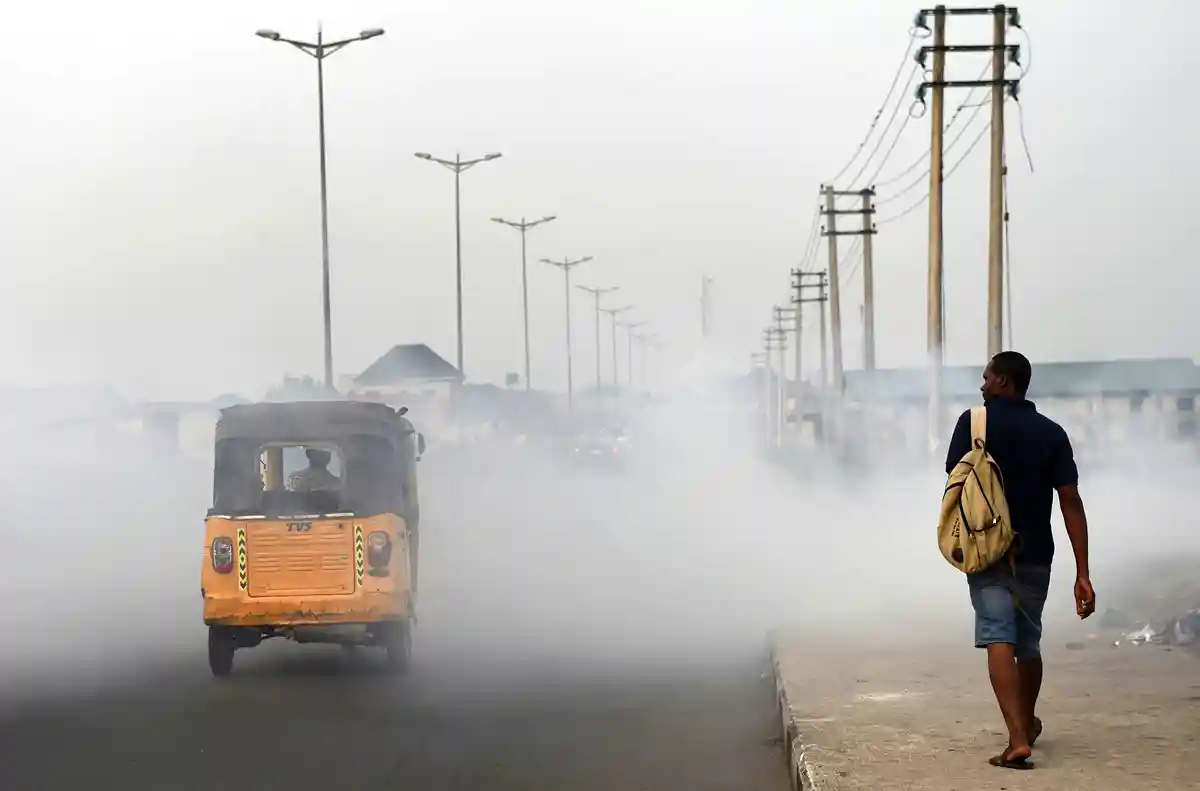
Cutting greenhouse gases is usually framed as an investment in a distant future. A new study says the payoff arrives much sooner, and it can be counted in human lives. Ambitious climate action to improve global air quality could save up to 1.32 million lives every year by 2040.
The catch is that many of those lives will not be saved by the country doing the cutting. They will be saved by its neighbors.
The research, led by Cardiff University and published in the journal Nature Communications, is the first of its kind to trace these cross-border pollution “exchanges” across almost every nation on Earth: 168 countries in total. The paper is titled “National climate action can alleviate, perpetuate or exacerbate international air pollution inequalities.”
Its central warning is blunt. A fragmented world, one with little collaborative policymaking on climate mitigation, would deepen health inequality for poorer nations that already have the least control over the air they breathe.
Why fine particles are the hinge
The work focuses on fine particulate matter, known as PM2.5, the leading environmental risk factor for premature death worldwide. The most recent estimates from the World Health Organization indicate that more than 4.2 million people die prematurely each year because of prolonged exposure to outdoor fine particle pollution.
PM2.5 and greenhouse gases often come out of the same smokestacks and tailpipes. That is why climate policy carries a public health dividend, what researchers call a co-benefit. But the study shows that poorly designed mitigation can also scramble the balance of pollution moving across international borders, putting equity at risk. Despite that potential, the effect of climate action on transboundary air pollution has been relatively little studied.
“While we know that climate action can benefit public health, most research has ignored how it affects air pollution that crosses international borders and creates inequalities between countries,” said lead author Dr. Omar Nawaz, of Cardiff University’s School of Earth and Environmental Sciences.
“Our analysis shows how climate mitigation decisions taken in wealthy countries directly affect the health of people in the Global South, especially in Africa and Asia,” he said.
Modeling four decades of choices
The team, which includes researchers from the University of Colorado Boulder, used advanced atmospheric modeling and NASA satellite data to simulate different future emissions scenarios for the year 2040. Paired with an estimate of the health burden, that allowed the researchers to work out exactly who benefits, and to measure how dependent each country is on decisions made elsewhere, when nations put climate mitigation policies in place.
The scenarios follow the Shared Socioeconomic Pathways, or SSPs. SSP1 describes a world that moves toward sustainability. SSP3 describes a world that fragments.
Under stricter mitigation, the share of health co-benefits that originate outside a country’s own borders rises in Africa by 8 percent under SSP1 and by a striking 53 percent under SSP3. In other words, the less the world cooperates, the more African nations depend on somebody else’s emissions cuts to clean their own air.
The same asymmetry shows up in the split between rich and poor nations. In the SSP1-26 pathway, the fraction of co-benefits originating externally is 0.76 in developing countries, against 0.65 in developed ones. Developing countries, in short, lean harder on action they cannot control.
Co-benefits peak in the most ambitious scenario of all, SSP1-19, the pathway that delivers the 1.32 million avoided deaths per year. Even there, however, the cross-border trade in clean air varies sharply from country to country.
Asia gains the most, Africa depends the most
“We wanted to see how the health benefits of acting on climate change might differ when there is stronger or weaker global cooperation,” Dr. Nawaz explained.
“We were surprised to find that, while Asia sees the largest total benefits from climate action because of its large share of the population, African countries are often the most dependent on external action, with the amount of health benefit they get from climate mitigation abroad increasing under fragmented future scenarios.”
The team’s projections also show something counterintuitive: the balance of pollution crossing borders can shift even when total global air pollution is falling. Cleaner air worldwide does not automatically mean fairer air.
That is vital information for policymakers and global aid organizations as they weigh the challenges of climate change against competing national and international priorities.
The case for holistic climate policy
Co-author Professor Daven Hance, of the Department of Mechanical Engineering at the University of Colorado Boulder, added: “Some climate policies can inadvertently worsen air pollution inequalities, especially for developing countries that may depend heavily on their neighbors for clean air. So it is not enough to focus only on domestic co-benefits. More inclusive climate strategies involve explicitly accounting for evolving cross-border inequalities.”
“Holistic climate policy must therefore assess how much a nation depends on emissions reductions by others, how mitigation scenarios reshape air pollution flows across borders, and whether global efforts are helping or harming equity,” he said.
The authors argue that headline totals for co-benefits, however large, are not enough on their own. Climate policy needs to account for how inequalities in transboundary air pollution evolve across distinct socioeconomic trends and mitigation strategies.
Next, the team plans to extend the analysis by exploring how climate change itself alters the weather patterns that carry pollution around the globe, and by examining other pollutant types such as ozone and organic aerosols.
Source: Cardiff University; Nature Communications.
Reporting: Anne Silva / Amazonia Mag
This article is the English edition of reporting originally published by Revista Amazônia. Images: Revista Amazônia archive.

Editor · Amazonia Mag
Anne Silva is the editor of Amazonia Mag, the English-language edition of Revista Amazônia. She curates, translates and adapts the outlet's science and environment coverage for an international audience, reporting on Amazon wildlife, flora, rivers, climate and research. Every story she edits is grounded in peer-reviewed studies, official data and on-the-ground reporting from the Revista Amazônia newsroom in Belém, Pará, Brazil. More by Anne Silva →