
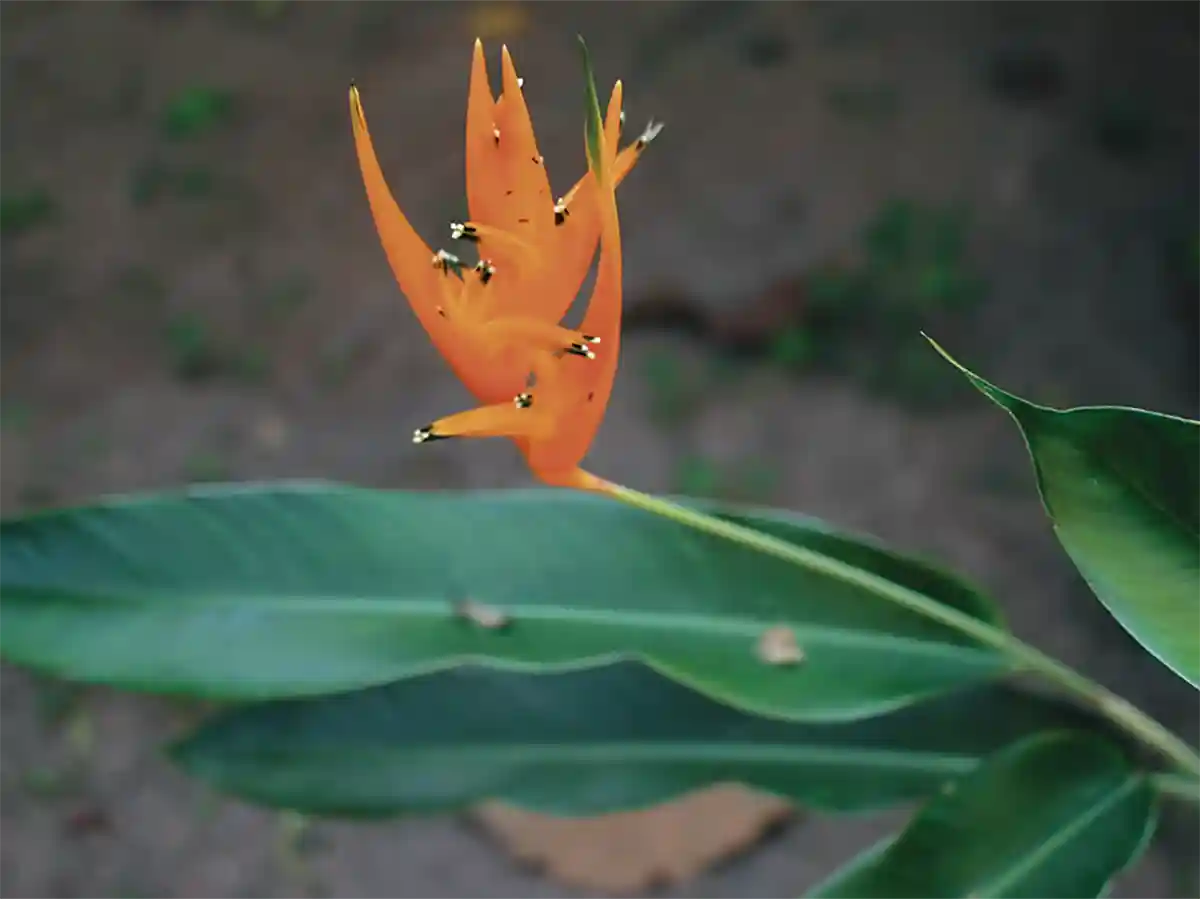
The Amazon still holds mysteries capable of surprising even the most experienced scientists. Among winding rivers, nearly invisible trails and a biodiversity that seems endless, new species are described every year. Now part of that scientific journey reaches the public in the form of a book.
Naturalist João Batista Fernandes, a researcher who spent more than four decades studying and protecting Amazonian flora, is launching in Brasília the book Onde andei valeu a pena (“Where I Walked, It Was Worth It”). The work gathers accounts of scientific expeditions and records 100 plant species identified over the course of his career.
The event, open to the public, will take place on March 25 at the headquarters of the Instituto Brasileiro de Mineração (Brazilian Mining Institute), in the Lago Sul district of Brasília. The gathering brings together researchers, students, public officials and anyone interested in the future of the Amazon.
More than a scientific compilation, the book becomes a genuine field diary, revealing little-known stories about research in the largest tropical rainforest on the planet.
A life devoted to understanding the forest
Over 40 years of work, João Batista Fernandes traveled through some of the most remote regions of the Amazon. His work was not confined to laboratories or universities. Much of what he discovered came from direct observation of the forest, walking natural trails and exploring areas that had barely been studied.
In this way he took part in the identification of roughly 100 species new to science, a remarkable figure even within the field of botany.
Among those findings, 18 species were identified in the Saracá-Taquera National Forest, in the western part of the state of Pará. The region is considered one of the areas of greatest botanical richness in the Amazon and remains an important natural laboratory for researchers.
The conservation unit is managed by the Chico Mendes Institute for Biodiversity Conservation (ICMBio), the agency responsible for protecting some of the most important areas of Brazil’s natural heritage.
A book that blends science and adventure
Unlike traditional academic publications, Onde andei valeu a pena adopts a narrative style that brings the reader closer to the experience lived in the field. The work weaves scientific descriptions together with behind-the-scenes stories, logistical challenges and memorable moments from the expeditions.
In many passages, the author describes long journeys through the forest, nights spent in improvised camps and the thrill of finding a plant that had possibly never been catalogued by science.
According to João Batista, the decision to immerse himself in the Amazon grew from a simple but powerful desire.
“When I decided to throw myself into the Amazon, I wanted to know it for real. Not just to study it from a distance, but to set foot on the forest floor and observe the plants exactly where they live,” the naturalist says.
A contribution to science and conservation
The book also marks the 25th anniversary of the Program for the Rescue, Salvage, Multiplication and Reintroduction of Flora, an initiative created by the company Mineração Rio do Norte (MRN).
The program aims to preserve plant species threatened by human activity, especially in mining areas. Before any intervention in the territory, specialized teams carry out a detailed survey of the vegetation and identify rare or sensitive species. Those plants are then rescued, grown in nurseries and later reintroduced into recovered areas.
Forest engineer and researcher Laércio Barbeiro, who organized the book, stresses that João Batista’s work goes beyond traditional botany.
“João is one of the few naturalists of the Amazon. While many researchers focused their studies only on flora, he observed different forms of life and their interactions within the ecosystem,” he explains.
Recording the scientific memory of the Amazon
Marco Fernandez, MRN’s general manager of Environmental Licensing and Controls, points out that João Batista’s path represents a rare model of dedication to science.
“João Batista’s story shows a passionate way of doing research. It is work that connects scientific knowledge with environmental commitment,” he says.
The Amazon plays a central role in the planet’s climate balance, storing billions of tons of carbon in its vegetation and soil. According to the Intergovernmental Panel on Climate Change (IPCC), preserving tropical forests is one of the most important strategies for reducing the impacts of global warming.
A journey that began in Maranhão
The story of João Batista Fernandes begins far from the major universities. Born in the municipality of São Domingos, in the state of Maranhão, he grew up surrounded by natural landscapes that sparked his curiosity from an early age.
Over his career, the naturalist traveled through more than 50 municipalities across 12 Brazilian states. On many of those trips he faced extreme conditions: crossings on rivers of the Amazon basin, long stretches along the Transamazônica highway and expeditions into hard-to-reach areas were part of his research routine. Each new trip carried the possibility of encountering still-unknown species.
Barely studied territories
Much of what the book records took place in regions that rarely appear on traditional scientific maps. Some of those areas lie far from urban centers and require days of travel by river or forest trail.
Recent studies published by the scientific journal Nature indicate that thousands of species of plants, insects and microorganisms in the region have yet to be catalogued. For researchers like João Batista, every expedition is a chance to expand that knowledge.
Many Amazonian plants hold medicinal properties that are still barely explored. Others contain chemical compounds that could be used in medicines, cosmetics or new industrial materials. Understanding the plant diversity of the Amazon is essential to conserving its ecosystems, since each species plays a specific role within the forest.
The launch in Brasília
The launch event in Brasília promises to draw a range of audiences interested in the Amazon. Researchers, university students, representatives of the environmental sector and public authorities are expected to discuss science, conservation and sustainable development.
Brasília has become a strategic place for this kind of gathering because it concentrates institutions tied to the shaping of environmental policy in Brazil, among them the Ministry of the Environment.
By bringing together 100 botanical discoveries and stories of expeditions, Onde andei valeu a pena offers readers a rare chance to see behind the scenes of research in the largest tropical rainforest on the planet. At a moment when the future of the Amazon has become central to global debates on climate and biodiversity, initiatives like this are a reminder that scientific knowledge remains one of the most important tools for protecting the planet’s natural heritage.
Reporting: Anne Silva / Amazonia Mag
This article is the English edition of reporting originally published by Revista Amazônia. Images: Revista Amazônia archive.

Editor · Amazonia Mag
Anne Silva is the editor of Amazonia Mag, the English-language edition of Revista Amazônia. She curates, translates and adapts the outlet's science and environment coverage for an international audience, reporting on Amazon wildlife, flora, rivers, climate and research. Every story she edits is grounded in peer-reviewed studies, official data and on-the-ground reporting from the Revista Amazônia newsroom in Belém, Pará, Brazil. More by Anne Silva →