
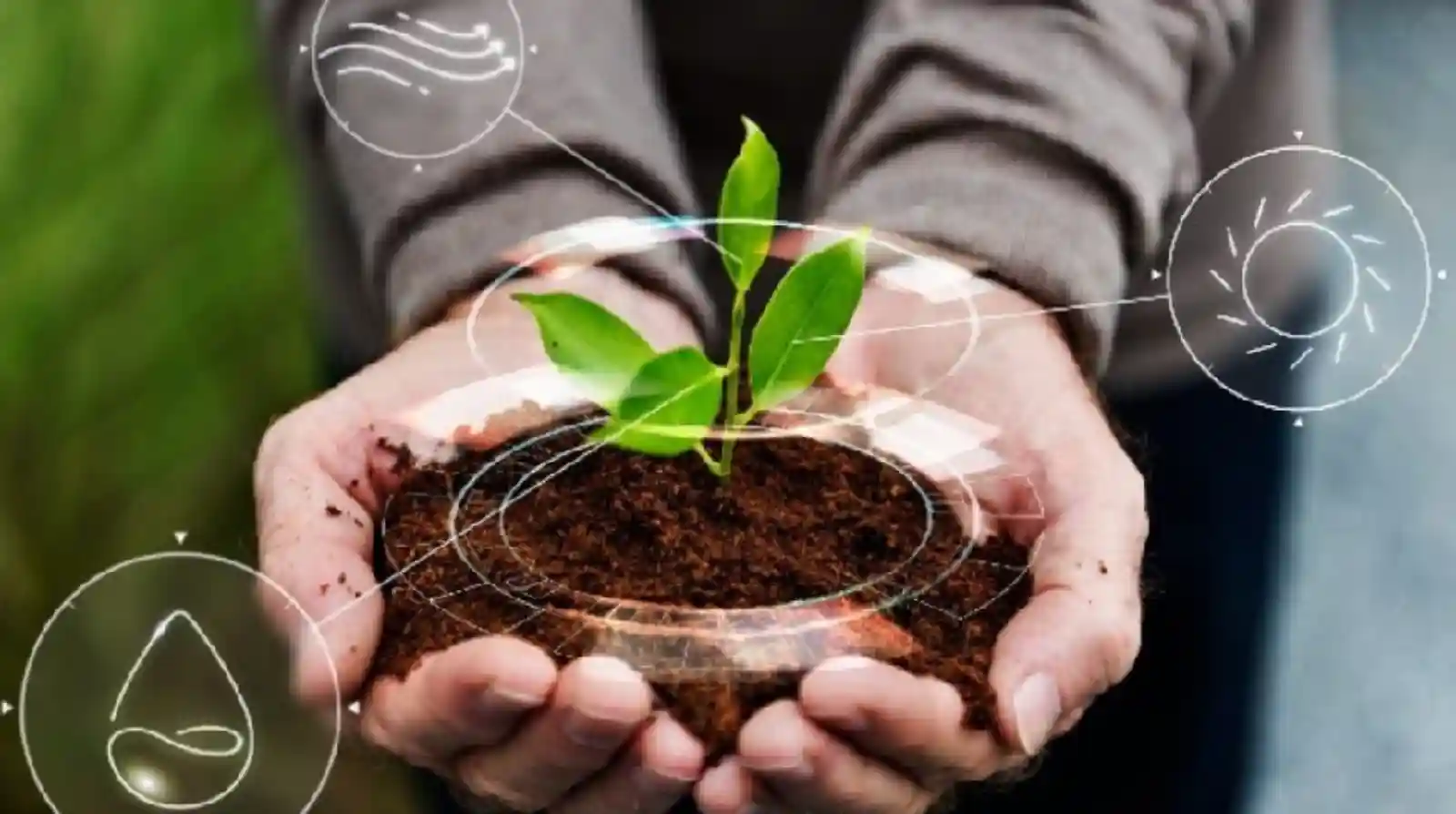
Cocoa husks and the fibrous cake left behind by the açaí press, thrown away for decades as plain rubbish, are being reclassified as high value raw materials through advanced biotechnological processes. The shift turns what used to be an environmental liability into a strategic economic asset: industry cuts production costs while the soil recovers naturally. The old idea of waste is giving way to the logic of the circular economy, in which every agricultural by-product returns to the production system, closes gaps of loss and creates new value chains benefiting everyone from the smallholder farmer to the largest industrial plants in the country.
The biological gold hidden in what gets thrown out
The technical analysis behind this movement points to striking results on a global scale. According to a report by the Argentine newspaper La Nación, biofertilizers developed from residues such as chicken guano are already recognised as biological gold for their ability to restore agricultural productivity without synthetic chemicals. In Brazil, applying the same technology to harvest leftovers does more than feed the plants: it also rebuilds the soil microbiota and raises the resilience of crops against pests and climate change. By turning organic nitrogen and phosphorus into assimilable forms, these solutions cut the dependence on imported fertilisers and strengthen national productive sovereignty.
The Amazonian starting point is unusually favourable. Cocoa (Theobroma cacao) and açaí (Euterpe oleracea) leave behind, every season, enormous volumes of husks, seeds and pressing cake that until recently were simply piled up or burned in the open air. Every tonne of that material holds fibres, sugars and minerals that biotechnology already knows how to separate and redirect towards industrial uses. What changed was not the residue itself, but the way it is read.
Accelerated composting, anaerobic digestion and pyrolysis
To make that transformation happen, Brazilian industry has been investing in three complementary routes: accelerated composting, anaerobic digestion and the pyrolysis used to produce biochar. These methods break complex organic compounds into simple molecules that become the basis for new products, among them bioplastics and green chemical additives. Technical efficiency is measured by the biomass conversion rate, and the goal never changes: to extract the largest possible amount of nutrients and energy from each batch processed.
The environmental gain does not stop at the factory gate. By reducing the volume of waste sent to landfills, the process sharply lowers methane emissions, one of the main drivers of the greenhouse effect. In other words, the same decision that makes production cheaper also brings agribusiness closer to global decarbonisation targets, a rare alignment in an agenda where environment and productivity are usually presented as opposing forces.
Biochar and the lesson of the Amazonian dark earths
Among all the by-products, biochar may be the most promising. It is obtained by burning biomass under very low oxygen, a process known as pyrolysis, and it works as a powerful soil conditioner inspired by the famous Terras Pretas de Índio, the dark earths found across the Amazon. The material has an uncommon ability to hold water and nutrients in the ground for far longer, and it also locks atmospheric carbon away in stable form for centuries. It is a technical answer that binds archaeological knowledge to modern biotechnology in order to confront soil degradation and global climate change at the same time.
Decentralised industry inside the forest region
Putting the circular economy to work in Amazonian agriculture carries a local development potential that no other region of Brazil reproduces easily. Turning harvest leftovers into bio-inputs within their own area of origin removes long logistical costs and encourages decentralised industrialisation. The result is qualified jobs in rural areas and a concrete incentive to keep the forest standing: when every cultivated hectare is used to its full extent, the pressure to clear new land falls.
The bioeconomy therefore behaves as an engine of sustainability, proving that it is perfectly possible to combine the growth of agribusiness with rigorous conservation of Brazilian biodiversity. This is not an abstract promise but a simple arithmetic of full use, applied to material that has already been planted, harvested and transported.
Consumers, laboratories and public policy
The public is pushing the change as well. Modern consumers look for traceable products that come from production chains without waste, and companies adopting agricultural residues in their operations do not merely improve their institutional image: they gain long term financial stability, because they shield themselves from the volatility of virgin raw material prices. It is a multiple gain strategy in which nature dictates the rules of an efficiency that industry is only now beginning to understand and reproduce at scale.
Integration between scientific research and the productive sector is the key to accelerating these discoveries. Brazilian universities have been leading studies on the extraction of polymers from tropical fruit peels and on biodegradable packaging able to decompose within a few months. Using residues is no longer an experimental alternative: it has settled into place as a pillar of industrial sustainability, and looking at the remains of a harvest and seeing technology is now a market decision rather than an act of idealism.
One piece is still missing, and it is a public one. Consolidating these sustainable raw materials demands policies that encourage research and development: support for biotechnology startups and the creation of certification seals for goods born of the circular economy. Once the market understands that sustainability is the better business, environmental protection stops being treated as a cost and starts being celebrated as the greatest competitive advantage Brazil holds.
Turning waste into resources is the clearest illustration of an old lesson: in nature nothing is lost, everything is transformed into value for society and for the planet. Thinking about the intelligent use of soil and its fruits reconnects the region with the ancestral wisdom of the land, this time through a technological lens.
The circular economy applied to farming teaches that abundance does not come from infinite extraction, but from the human capacity to build closed cycles of prosperity. By converting residues into life and innovation, the Amazon and every other Brazilian biome can remain a source of wealth and pride for many generations, proof that the secret of the future lies in respecting the perfect circularity the natural world has practised for millennia.
Reporting: Anne Silva / Amazonia Mag. Source: La Nación (Argentina) and reporting by Revista Amazônia.

Editor, English Edition — Amazonia Mag
Anne Silva is the editor of Amazonia Mag, the English-language edition of Revista Amazônia. She curates, translates and adapts the outlet's science and environment coverage for an international audience, reporting on Amazon wildlife, flora, rivers, climate and research. Every story she edits is grounded in peer-reviewed studies, official data and on-the-ground reporting from the Revista Amazônia newsroom in Belém, Pará, Brazil. More by Anne Silva →