
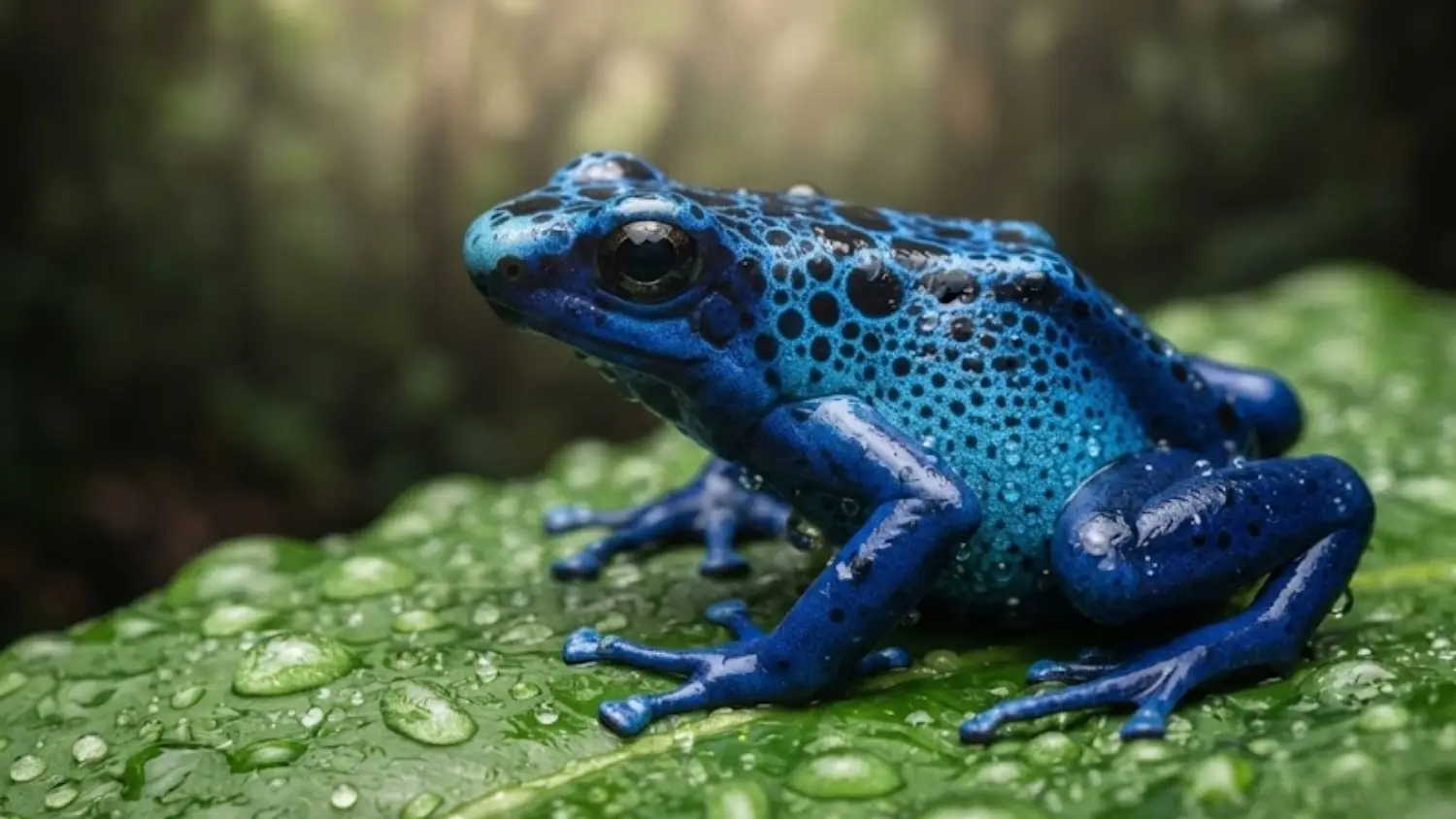
Deep inside the largest tropical forest on the planet, nature keeps molecular secrets that challenge the imagination, and many of them are stored in an unexpected place: the skin of amphibians. One of the most fascinating fields of scientific bioprospecting in the Amazon is the detailed study of the skin toxins produced by the toads and frogs that live in this ecosystem. These are compounds with therapeutic properties powerful enough to outperform the traditional painkillers medicine already knows. Every species that turns up in the damp leaf litter works as a living pharmacy assembled across ages of evolution, turning pharmacological research into a journey of discovery aimed at relieving severe pain in human beings.
A pharmacy built by evolution
Laboratory work on these skin secretions shows that the chemical complexity of the isolated peptides acts directly on specific receptors of the central nervous system. Those peptides block the transmission of pain signals without triggering the side effects commonly associated with synthetic opioids, and that is where much of the pharmaceutical interest lies. What is merely a defensive adaptation in the forest, a resource that protects the amphibian from the predators stalking it on the wet ground, now emerges as material of incalculable value for creating new generations of potent and safe analgesic drugs. The class Amphibia, and in particular the order Anura, which brings together toads and frogs, therefore attracts scientific attention far out of proportion to the size of these animals.
The detail matters. This is not a single substance but a complex chemical set in which each molecule performs a distinct role within the animal’s defensive strategy. Researchers analyse the molecular structure of these compounds to understand how they interact with biological tissues and how they modulate pain responses in the human body in a highly selective way. That selectivity is precisely what modern pharmacology has been chasing for decades: a drug able to switch off the pain signal without switching off everything else along with it. The advance of biochemical research, conducted with methodological rigour, also guarantees that pharmaceutical exploration happens ethically and remains fully integrated with the conservation of the region’s biodiversity.
Precision science without harming wild populations
Studying dermal secretions demands high precision laboratory techniques, capable of isolating the active molecules without harming the natural populations of amphibians that live in the tropical forest. That care is not a bureaucratic detail. The source of the knowledge is the living animal in its own environment, and careless collecting would destroy exactly what the research is trying to understand. This rigorous scientific approach opens innovative paths for contemporary medicine and allows the development of advanced treatments that combine the wisdom of natural evolution with the excellence of modern laboratory technology, with potential benefits for patients everywhere.
There is also a less obvious consequence to this work. Every molecule described and every receptor mapped expands the basic vocabulary of pain pharmacology, even when the original compound never becomes a commercial medicine. Nature proposes chemical solutions that no human team would have imagined from scratch, and simply describing them is already an advance. The laboratory and the forest therefore stop being two separate worlds and start working as two stages of the same process of knowledge.
A standing forest is worth more than a cleared one
Valuing the Amazonian genetic heritage through science strengthens the regional bioeconomy by demonstrating something that short term accounting tends to ignore: a standing forest holds economic and medicinal value incomparably greater than that of any predatory land use. A conserved patch of forest is not idle space waiting to be put to work. It is an active chemical archive, holding information accumulated over millions of years and still barely read. When that archive burns or is broken into fragments, information disappears that no later investment can recover.
Local communities that take part in environmental monitoring and sustainable management become strategic partners in preserving the natural habitats where these singular amphibians survive and thrive. Building production chains grounded in green biotechnology ensures that the biological wealth of the basin translates into concrete benefits for global public health and for the wellbeing of traditional populations. Without that link, bioprospecting risks repeating an old pattern: extracting value from a territory and returning very little of it.
Protecting habitat means protecting the research
Maintaining the ecological integrity of aquatic and terrestrial environments in the Amazon is an indispensable condition for the survival of species that depend on specific microclimates to complete their complex life cycles. Amphibians are especially sensitive to variations in humidity and temperature, so the destruction or fragmentation of igapó floodplain areas and of terra firme forest directly compromises the continuity of scientific research devoted to discovering new drugs of natural origin. A species that disappears before it is studied takes all of its chemistry with it.
Through public environmental protection policies and incentives for sustainable ecotourism, it becomes possible to reconcile rigorous biodiversity conservation with technological advance in the health sector, securing a prosperous future for the region. This is not a choice between science and preservation. The two depend on each other, because the raw material of the research only exists while the habitat exists.
Observing the biochemical wonders hidden in the skin of Amazonian amphibians invites a deeper rethinking of our place in the world and of our shared responsibility for protecting ecosystems. Once we understand that every molecule present in wildlife is the result of a long journey of evolutionary harmony, we realise that preserving the forest goes well beyond basic environmental conservation: it is an essential act of respect for the ancestral wisdom of nature itself.
Reporting: Anne Silva / Amazonia Mag. Source: Revista Amazônia, revistaamazonia.com.br.

Editor, English Edition — Amazonia Mag
Anne Silva is the editor of Amazonia Mag, the English-language edition of Revista Amazônia. She curates, translates and adapts the outlet's science and environment coverage for an international audience, reporting on Amazon wildlife, flora, rivers, climate and research. Every story she edits is grounded in peer-reviewed studies, official data and on-the-ground reporting from the Revista Amazônia newsroom in Belém, Pará, Brazil. More by Anne Silva →