
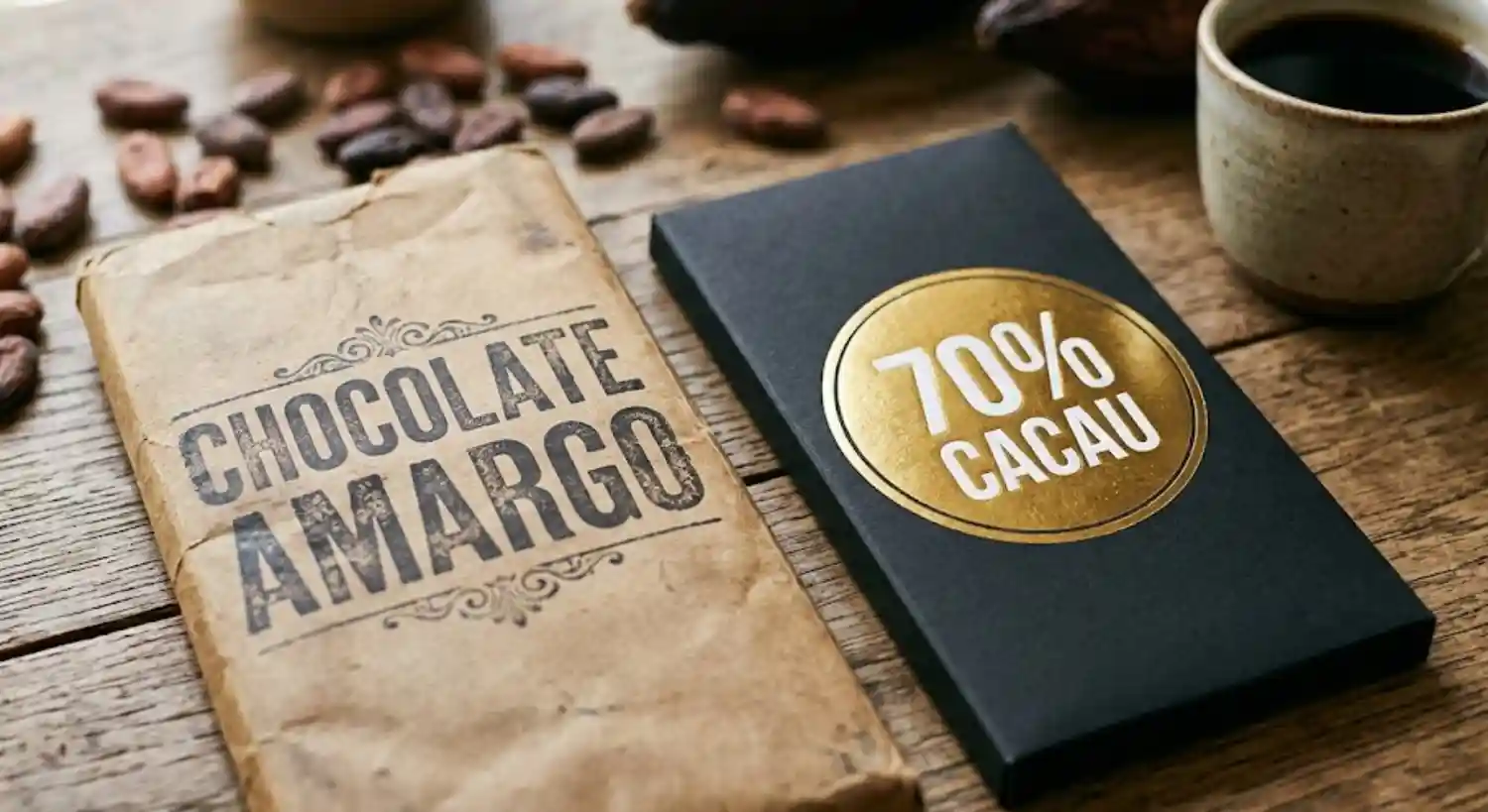
Dark chocolate is not disappearing from Brazilian shelves. The word is. With the signing of Law 15.404/2026, known in Brazil as the “cocoa law”, the adjectives the industry once used at its own discretion give way to a hard, checkable figure: the exact percentage of total cocoa solids, printed legibly and prominently on the front of the pack.
This is a Brazilian rule, and that is precisely why it travels. Brazil is both a major cocoa producer and one of the largest chocolate industries on the planet, so a law forcing more cocoa into every gram sold there moves demand for the bean itself. And the bean has an address. Theobroma cacao is an Amazonian tree, and the rainforest is its place of origin.
From adjective to number
For years, “bitter” was a discretionary term in Brazil. One brand could label a product with 40% cocoa as bitter while another used the same word for one with 70%. That grey zone penalised exactly the shopper who was after the flavonoids in cocoa and ended up buying something loaded with sugar and vegetable fats without knowing it.
The rule now is simple: the pack must mirror the composition. Where a label used to read “Special Semi Bitter Chocolate”, it will read something like “Chocolate with 55% cocoa”. Where it read “Intense Extra Bitter Chocolate”, it becomes “Chocolate with 85% cocoa”. The change hits the sensory marketing of large corporations head on, since many relied on dark colours and elegant typefaces to suggest a purity the ingredient list did not always support.
What Law 15.404/2026 does
The text grew out of Bill 1769/2019, led by senator Zequinha Marinho, which spent years moving through the National Congress before final approval in May 2026. The president signed it on 11 May 2026. Its stated aim is threefold: national standardisation of sales names, elimination of terms that mislead about purity or intensity, and appreciation of the raw material, encouraging cocoa solids instead of cheaper substitutes such as hydrogenated vegetable fat and refined sugar. The new standards can be consulted and enforced through Anvisa, the national health surveillance agency.
The new composition floors
The law did not change names alone. It raised the base recipe required for each commercial category. Under the signed text, the new hierarchy reads as follows:
Chocolate: equal to or above 35% total cocoa solids.
Milk chocolate: at least 25% cocoa solids plus 14% milk solids.
White chocolate: at least 20% cocoa butter plus 14% milk solids.
Cocoa powder: equal to or above 32% total cocoa solids.
Chocolate drink powder and coatings: at least 15% cocoa solids or cocoa butter.
The “total cocoa solids” cited in the law are the sum of cocoa mass, the dark part rich in flavour and antioxidants, and cocoa butter, the natural fat of the bean. The text also caps equivalent vegetable fats such as palm oil, shea butter or hydrogenated fat at a maximum of 5% of the total composition. Above that, the item loses the legal right to be called simply chocolate.
“Chocolate compound”, the name for what falls short
In Brazil it became common to use “chocolate flavoured coatings” in Easter eggs, low cost bonbons and bakery confectionery, products made mostly of sugar and vegetable fat with the bare minimum of cocoa for colour and aroma. Under the new rule, a product that does not reach the 35% cocoa solids floor for the pure dark version must carry the technical name on the front of the pack: “chocolate compound” or “chocolate flavoured coating”.
The distinction also explains price. It becomes far easier to see why an 80 gram bar from one brand costs R$ 18.00 while a similar one costs R$ 6.00, because the difference will be visible in the cocoa content.
What it means for Amazon cocoa growers
With more cocoa legally required in every gram of chocolate sold on Brazilian soil, domestic demand for the bean is expected to rise sharply. Brazil has world class production hubs in Bahia and in Pará, and the direct effect is an incentive for fine, organic and origin controlled cocoa rather than bulk commodity beans.
Technical bodies such as CEPLAC, the executive commission for the cocoa farming plan, already expect the law to trigger the revitalisation of degraded cocoa areas, promoting environmental sustainability through the cabruca system, in which cocoa grows under forest shade, and better returns for the thousands of family farmers in the chain. For industry the adjustment will be neither simple nor cheap: popular brands that used around 25% or 30% cocoa in products labelled bitter must either reformulate or accept reclassification as a compound.
The transition calendar
In May 2026 the law was published in the Official Gazette and the transition clock started. Between May 2026 and May 2027 runs the adaptation window of 360 days, during which companies may keep selling old stock, although every new production line must already align with the standards. Full enforcement begins in June 2027, with penalties that include heavy fines, seizure of goods and even suspension of the sales licence.
Imports are not exempt. If an item enters Brazilian territory to be sold, it must follow the Brazilian labelling standard. Easter 2027 should already be sold under the new rules.
So is dark chocolate over?
Going by what the signed text supports, no. Many consumers asked whether dark chocolate would be banned or recipes drastically rewritten, and the short answer is that what changes is visual communication and labelling. A brand already delivering a genuine 70% cocoa does not need to touch its formula. It simply cannot use “70% bitter” as the main sales name any more, and will highlight “70% cocoa” instead.
What can move is the price of entry level products, since a brand that used 25% cocoa and now has to reach 35% will face higher raw material costs. Premium bars already working with high percentages are expected to stay stable. And one habit still beats any number on the front: read the ingredient list on the back, always in descending order of quantity.
Reporting: Anne Silva / Amazonia Mag. Source: Revista Amazônia, Law 15.404/2026, Anvisa, CEPLAC.

Editor · Amazonia Mag
Anne Silva is the editor of Amazonia Mag, the English-language edition of Revista Amazônia. She curates, translates and adapts the outlet's science and environment coverage for an international audience, reporting on Amazon wildlife, flora, rivers, climate and research. Every story she edits is grounded in peer-reviewed studies, official data and on-the-ground reporting from the Revista Amazônia newsroom in Belém, Pará, Brazil. More by Anne Silva →