
The cross that shows up before the strike
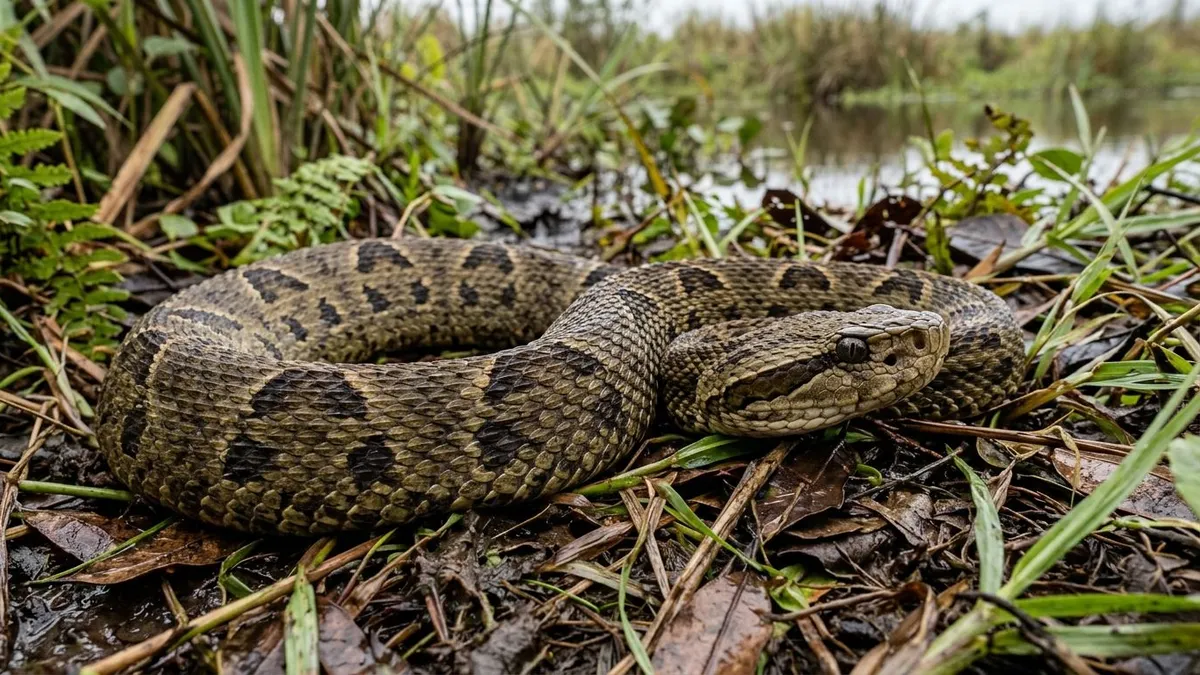
In the low vegetation of a marsh, the urutu can stay almost indistinguishable from the damp ground. The best-known pattern on its body is a cross-shaped mark on the back, which is where its popular name comes from. The snake is scientifically identified as Bothrops alternatus, a pit viper of the genus Bothrops. Its body is robust, its head is triangular, and its scales have a texture that breaks up the outline of the animal against leaves, mud and grass.
That combination means the encounter often happens a few steps away, when a person or another animal comes close without noticing the snake is there. The urutu’s reaction does not depend on a chase. When it is pressed or stepped on, it can throw the front part of its body forward in a short strike while the rest stays almost in the same spot. The movement is fast and concentrated, suited to a snake that hides and waits for prey or for a threat to come near.
The strike does not mean the animal intends to pursue people. It is a defensive response tied to immediate contact. The cross-shaped mark helps recognize the species, but it should not be used alone, because coloration can vary and other snakes also show contrasting patterns on the back.
A viper tied to wet ground
A preference for marshes, floodplains and other places where water is present sets the urutu apart from many vipers of the same group. These sites offer plant cover, uneven ground and shelter among accumulated leaves, roots and the edges of watercourses. The snake does not need to stay in the water to use this environment. It can use the damp strip around wetlands and temporarily flooded areas, where small vertebrates pass often. Staying close to the ground also lowers the silhouette of the body and favors silent waiting.
Like other lanceheads, the urutu combines camouflage, stillness and the sensing of cues from its surroundings. The structures between the eyes and the nostrils, known as loreal pits, help vipers detect thermal radiation given off by nearby animals. The feature does not turn the snake into an animal that sees in the dark, but it complements vision and the reading of vibrations.
Compared with species more associated with forests, clearings or dry areas, the urutu is remembered for its link to floodable terrain. That association does not mean every individual is always in a marsh, or that the species cannot occupy other environments.
The body stays anchored while the front advances
The urutu’s strike is a short-distance movement. The snake keeps part of its body resting on the ground and projects the front region forward, opening its mouth to reach the target. After the strike, it can quickly pull back to its starting position. The image of an animal that attacks without leaving its place describes the general mechanism, but it does not mean the body stays completely still. The front of the body moves, while most of the snake acts as a support to produce speed and precision.
This behavior matters most when contact is sudden. A footstep compresses the animal and cuts down its chances of escape, so the defense is aimed at the point of pressure. The snake does not need to advance several yards or chase an intruder to bite. The risk lies in proximity: the short strike covers the space immediately in front of the head. The exact distance varies with the size of the individual, its posture and the terrain.
For that reason, the safe advice around any snake is not to try to touch it, capture it or push it away with the hands or with objects.
Venom, ecological role and the limits of the portrait
The urutu’s venom has strong proteolytic action, meaning it contains components able to break down proteins. This activity takes part in the digestion of prey and is also linked to the injuries produced at the site of the bite. The composition of the venom can vary among individuals and populations, as can the amount injected in each accident.
The size of the snake, the part of the body struck, the depth of the bite and the time until treatment all influence the clinical picture. After a bite, the right response is to seek medical care immediately, without cutting the skin, sucking out the venom or applying home remedies. The animal should not be chased for identification.
In the food chain, the urutu is a predator of small vertebrates and contributes to controlling the animals available in the environment where it lives. It also makes up part of the diet of larger predators, although the protection its venom provides reduces the number of safe encounters for anything that tries to capture it. The species occurs in areas of Brazil and in other countries of South America, but its local presence depends on habitat conditions.
Recognizing an animal also means understanding its limits: the cross helps with identification, the marsh explains its setting, and the strike is a defense that works within a few inches.
Reporting: Natália Santos / Amazonia Mag

Editor · Amazonia Mag
Anne Silva is the editor of Amazonia Mag, the English-language edition of Revista Amazônia. She curates, translates and adapts the outlet's science and environment coverage for an international audience, reporting on Amazon wildlife, flora, rivers, climate and research. Every story she edits is grounded in peer-reviewed studies, official data and on-the-ground reporting from the Revista Amazônia newsroom in Belém, Pará, Brazil. More by Anne Silva →