
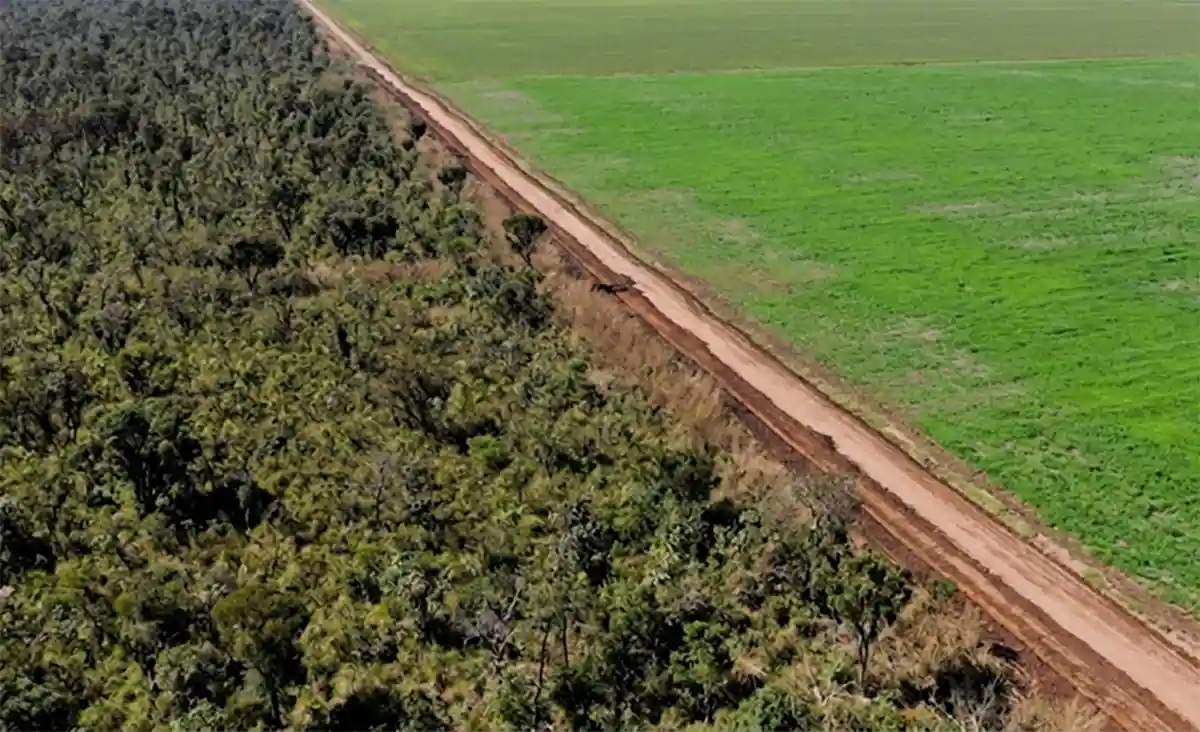
The environmental balance of the Amazon and the stability of Brazilian agribusiness have entered an unprecedented collision course. After nearly two decades acting as an invisible shield against deforestation, the Soy Moratorium has come to an end, leaving a trail of uncertainty that stretches from the rainforest all the way to supermarket shelves in Europe.
The decision to end the pact, which since 2006 had blocked the purchase of grain grown on deforested land, is not merely a bureaucratic change in the offices of São Paulo or Cuiabá. For the people who live in Brazil’s North and for those who depend on commodity exports, the outlook is now one of maximum alert, with millions of acres of native vegetation suddenly exposed to the advance of the machines.
The fragility of 32 million acres (13 million hectares) of forest
The greatest concern of environmentalists and industry experts now has an exact figure. Studies indicate that more than 32 million acres (13 million hectares) of native vegetation lie inside properties that already grow soy in the biome. Without the commercial blockade of the moratorium, that vast expanse of green becomes an immediate target for unrestrained agricultural expansion.
Of that total, roughly 2.1 million acres (835,000 hectares) could be cleared legally under the rules of the Forest Code because they are classified as reserve surplus. Yet the end of the agreement removes the extra layer of protection that went beyond the law, creating what specialists call a race to deforest, in which producers may try to convert the land before new international sanctions are put in place.
The impact goes beyond the felling of trees and hits both the Brazilian consumer’s wallet and the planet’s climate directly. Brazil made commitments under the Paris Agreement to cut greenhouse gas emissions. With the forest on the ground, the target of reducing emissions by up to 67% by 2035 becomes a distant dream, placing the country in a position of diplomatic and environmental isolation.
The domino effect on international markets
Soy grown in the Amazon does not stay in Brazil; it feeds the world. More than 80% of the grain crosses the ocean, with China and the European Union as its main destinations. By breaking the zero-deforestation guarantee seal, the supply chain is once again directly associated with forest destruction, setting off a red alert for major global buyers.
European retail giants such as Tesco, Sainsbury’s and Aldi have already reacted firmly. In a letter sent to the big trading houses such as ADM, Bunge and Cargill, these companies were emphatic: they will not accept soy from land deforested after 2008, regardless of the end of the national agreement. In practice, the European market is building its own barrier, one that may prove far stricter for the local producer.
This fragmentation of the market may trigger what is known as the spillover effect. While large landowners with capital can afford expensive private certifications, small and medium producers in the Amazon are left behind. Without the resources to prove their sustainability on their own, these workers may be pushed toward less profitable markets or into productive marginalization.
Why a 20-year agreement collapsed now
The collapse of the Soy Moratorium was triggered by a perfect storm of political and legal pressure. The spark was State Law No. 12,709/2024 in Mato Grosso, which banned tax incentives for companies taking part in environmental agreements stricter than Brazilian law. The message was clear: either the traders left the pact, or they lost billions in benefits.
Pressured by the loss of competitiveness and by investigations from the Administrative Council for Economic Defense (CADE), which questioned whether the pact limited free competition, ABIOVE began winding down the agreement in January 2026. Groups such as Aprosoja argue that the pact was an unfair barrier, since the Forest Code and new CONAMA resolutions would already be enough to protect the forest.
The reality in the field, however, is more complex. The end of the unified pact weakens the satellite monitoring systems that guaranteed the transparency of production. Without centralized, audited oversight, the traceability of soy becomes murky, making it easier for “dirty” grain to enter the market and staining the reputation of those who produce responsibly.
The future of soy and the survival of the forest
The absence of clear rules could also sharpen territorial conflicts. Where governance is weak, the advance of soy over public forests and the territories of traditional communities tends to grow, deepening social inequalities. The Amazon stops being seen as a bioeconomy asset and is once again treated as a frontier for rapid exploitation.
The future of agribusiness in the region now depends on a delicate balance. Brazil will have to prove to the world that it can produce without destroying, even without the umbrella of the moratorium. The risk is that, in trying to gain a few acres of planting in the short term, the sector ends up losing its most valuable customers and the respect of the international community in the long run.
The preservation of the Amazon is not just an environmental cause; it is an economic necessity. The end of the moratorium closes a chapter of stability and opens a period of uncertainty in which every felled tree can mean a door closed to Brazilian trade abroad.
Reporting: Anne Silva / Amazonia Mag
This article is the English edition of reporting originally published by Revista Amazônia. Images: Revista Amazônia archive.

Editor · Amazonia Mag
Anne Silva is the editor of Amazonia Mag, the English-language edition of Revista Amazônia. She curates, translates and adapts the outlet's science and environment coverage for an international audience, reporting on Amazon wildlife, flora, rivers, climate and research. Every story she edits is grounded in peer-reviewed studies, official data and on-the-ground reporting from the Revista Amazônia newsroom in Belém, Pará, Brazil. More by Anne Silva →