
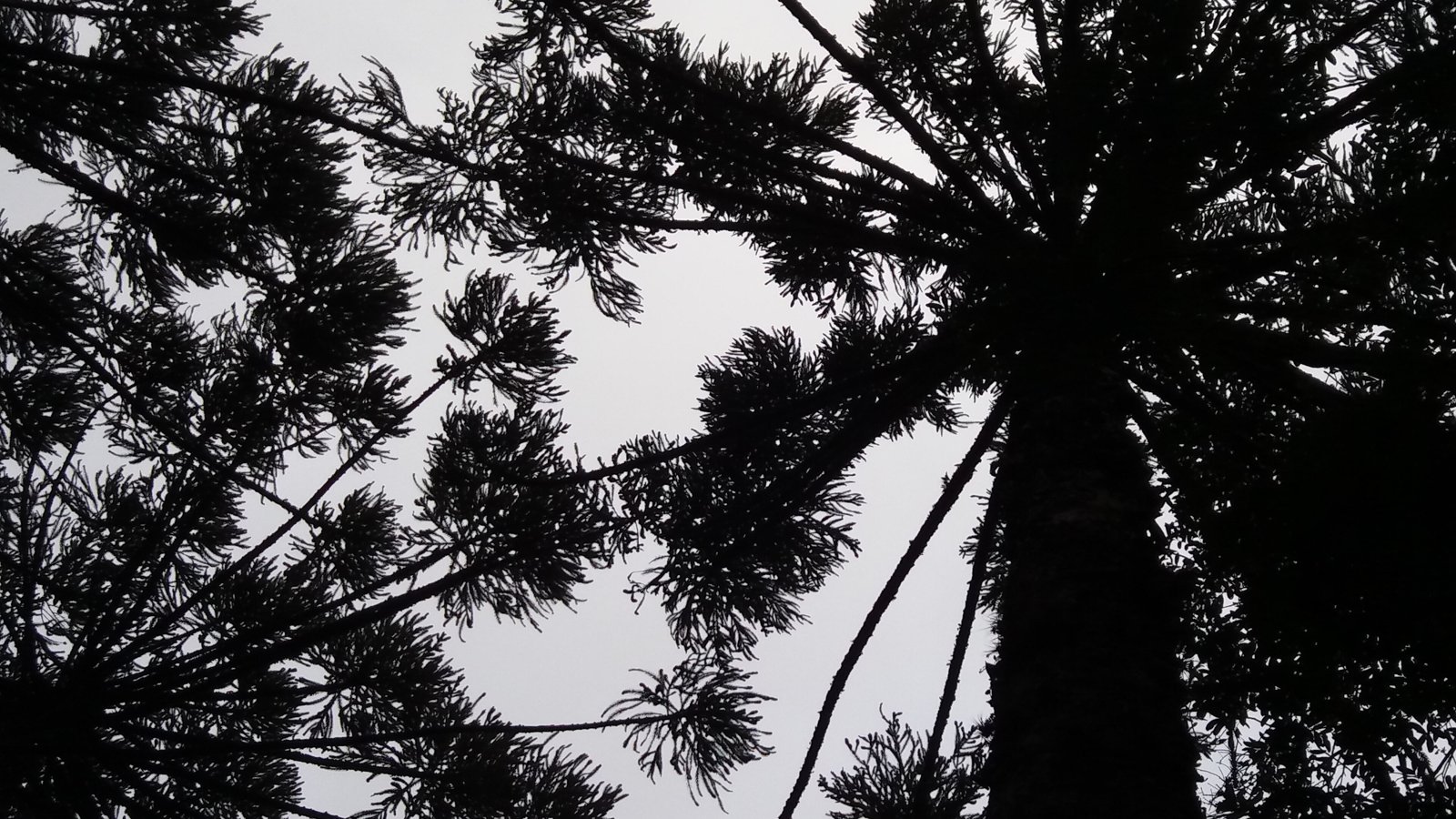
An araucaria 144 feet (44 meters) tall, with an estimated age between 400 and 500 years, toppled in Caçador, in the mid-west of the state of Santa Catarina, in southern Brazil, and nobody saw it happen. Known as Pinheirão, the tree was considered the fourth largest araucaria (Araucaria angustifolia), or Paraná pine, in Brazil. The fall probably took place in February 2026, but it was only discovered at the end of April, during maintenance work on a road that crosses the forest.
When researchers from Embrapa Florestas, the forestry unit of the Brazilian agricultural research corporation, arrived, they found a surprise: even though the tree had been on the ground for months, it still had living sprouts. That was the start of a race to save its genetics.
Sprouts four months after the fall
Pinheirão stood in the Embrapa Experimental Station in Caçador, an area where a unit of Epagri, the Santa Catarina agricultural research and rural extension company, also operates. Its position as the fourth largest in the country comes from the survey by Professor Marcelo Scipioni, of the forestry engineering program at the Federal University of Santa Catarina (UFSC), who catalogs the largest remaining araucarias.
Forest engineer Ivar Wendling, a cloning specialist at Embrapa, found branches putting out sprouts about four months after the probable fall. The team searched the trunk and branches for living material. The work even included climbing a large neighboring araucaria, from whose crown, more than 130 feet (40 meters) above the ground, Wendling collected sprouts.
Fifty seedlings by grafting
The samples were taken to the Embrapa Florestas headquarters, in the metropolitan region of Curitiba. In a greenhouse, the researchers produced about 50 seedlings by grafting, a technique that joins a branch of the tree to be copied with a young seedling grown from seed.
The young seedling works as a rootstock: it supplies the roots and the support. The part that grows from the Pinheirão branch keeps the genetic material of the mother tree. It takes about 100 days to confirm whether the graft has taken.
The reasoning behind the effort is simple. An araucaria that reaches 144 feet (44 meters) and survives for centuries carries valuable traits: resistance to pests, drought and frost, and vigorous growth. Keeping that genetics in living seedlings makes it possible to study those qualities and to use them in conservation and restoration programs. For Embrapa, the fallen Pinheirão became an opportunity not to lose a genetic heritage that took centuries to form.
What the trunk rings will tell
The team also cut a disc of wood from the trunk and sent it to a laboratory in the state of Paraná. The piece will dry slowly, so that it does not crack, and will then be sanded until the growth rings become visible.
The analysis of these annual rings, called dendrochronology, makes it possible to estimate the age of the tree and to reconstruct the climate it lived through. Wide rings usually indicate warm, rainy years, good for growth. Narrow rings may record droughts. In a tree four or five centuries old, the rings are an archive of the climate of southern Brazil going back to before colonizers arrived in the region.
The researchers also want to understand what brought the giant down. Excess rain is a risk for trees of this size: when the soil is soaked, the ground loses strength and the roots no longer hold the weight.
Giants that are growing rarer
In Scipioni’s survey, araucarias with a trunk diameter of 4.9 feet (1.5 meters) or more are considered giants. The largest recorded in the country is in the countryside of São Joaquim, in the Santa Catarina highlands. It is the only one with a diameter above 10 feet (3 meters), and its age is estimated at more than 600 years.
The scarcity has a historical explanation. In the twentieth century, the araucaria was one of the most heavily logged timber trees in Brazil, and the Araucaria Forest lost most of its original area. Today the species is classified as critically endangered on the international Red List of the IUCN.
That context changes how a single fallen tree should be read. Each giant that comes down is a living record of a forest that was once vast, and the number of such trees left standing is small. Saving the genetics of Pinheirão does not bring the old forest back, but it keeps one of its best examples within reach of research.
Questions and answers
What is the largest araucaria in Brazil? According to the UFSC survey, it is in São Joaquim (Santa Catarina), with a diameter above 10 feet (3 meters) and an age of more than 600 years.
Can a fallen tree be cloned? Yes, as long as living tissue remains. In the case of Pinheirão, Embrapa used branches with sprouts to make seedlings by grafting, which preserve the genetics of the original tree.
How long does it take to know whether the grafting worked? About 100 days.
Why did the tree fall? The researchers want to find out. Excess rain is a risk for trees of this size, because soaked soil loses strength and the roots stop holding the weight.
What will the wood disc show? Its growth rings can reveal the age of the tree and the climate it lived through.
Reporting: Revista Amazônia newsroom / Amazonia Mag

Editor · Amazonia Mag
Anne Silva is the editor of Amazonia Mag, the English-language edition of Revista Amazônia. She curates, translates and adapts the outlet's science and environment coverage for an international audience, reporting on Amazon wildlife, flora, rivers, climate and research. Every story she edits is grounded in peer-reviewed studies, official data and on-the-ground reporting from the Revista Amazônia newsroom in Belém, Pará, Brazil. More by Anne Silva →