
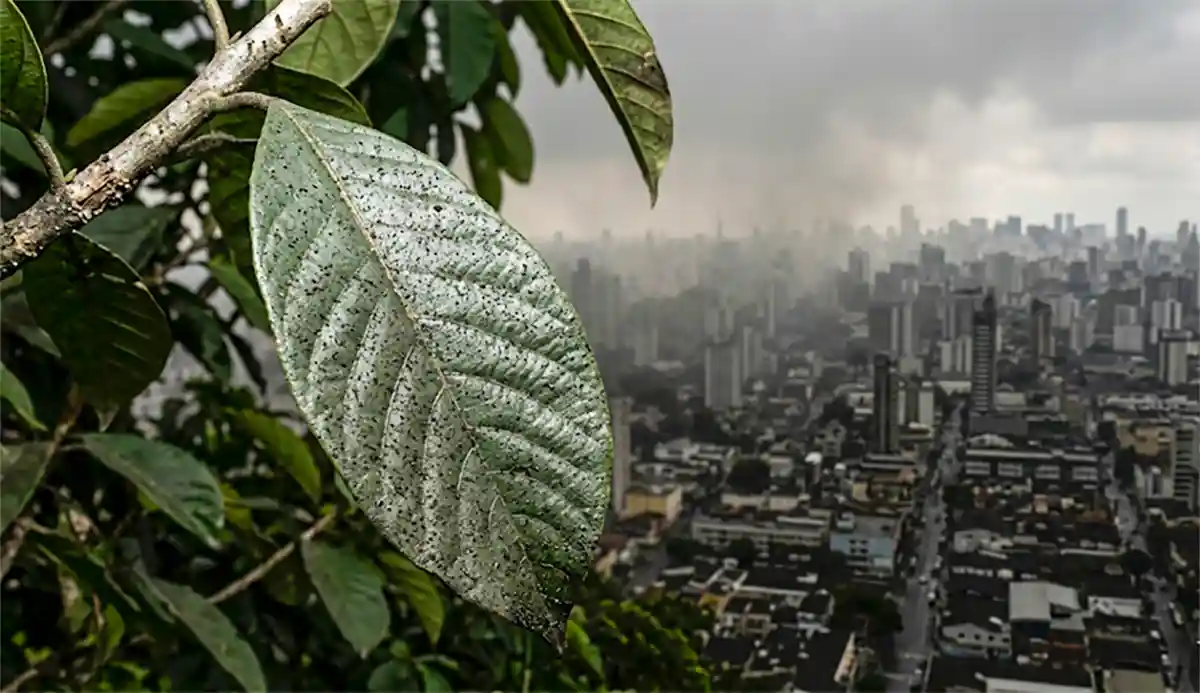
The air filling our lungs right now carries a story the eyes cannot see, yet the body feels with every breath. In the cities of the Amazon and in Brazil’s large metropolises, air pollution has stopped being a cold chart in laboratory reports and become an emergency knocking at the door, tying the fate of the forest to the health of the people who live within it.
To unravel that invisible mystery, Instituto Ar has launched a tool that promises to change the information game. The guide Air Quality Communication arrives as a strategic map for those who must translate complex data into messages that make sense at the ordinary citizen’s breakfast table.
A bridge that brings science into the backyard
Talking about the environment demands far more than piling up numbers or technical terms that nobody understands. According to Dr. Evangelina Araújo, director of Instituto Ar, pollution is a living phenomenon, with chemical processes that reach people in different ways depending on where they live or work.
The material, which has the strategic support of Instituto Itaúsa, was designed to tear down the wall of legal jargon and complicated acronyms. The goal is clear: when society understands how pollution is born, it gains a voice and the strength to demand solutions that guarantee cleaner oxygen for the generations to come.
A microscopic invader running through our veins
The guide raises the alarm about a silent danger known as particulate matter. Picture particles so tiny they slip past every natural filter in the human body. They do not stop at the nose or the throat: these particles travel deep, cross the lungs and hitch a ride straight into the bloodstream.
Breathing that invisible dirt day after day is an invitation to heart disease and severe respiratory crises. When the sky turns gray from wildfires or from the excess of exhaust pipes on the streets, the impact is not merely visual. It is a public health crisis that fills hospitals and silences lives far too early.
The tight knot between smoke and extreme heat
People often treat the smoke of the cities and the warming of the planet as if they were problems from different worlds. The guide, however, reveals that they are conjoined twins. The same sources that dirty the air today, such as the use of fossil fuels and fire in the forest, are the ones that accelerate global warming.
Cleaning the air of a single street or neighborhood is, in practice, helping to cool the planet. By simplifying that connection, communicators help the population see that fighting for clean public transport or for the end of deforestation is one single battle for survival and for the balance of the climate across the entire world.
Where our daily suffocation comes from
The document details the villains of our routine that rob oxygen of its purity. Old trucks and buses, industrial chimneys without filters, the burning of garbage and outdated farming practices form a suffocating siege. That scenario affects everyone, from the riverside dweller who breathes seasonal smoke to those who live amid the concrete of the capitals.
Even the way we deal with household waste enters this environmental account. The guide teaches that identifying these culprits is the first step so the debate can leave the field of opinion and focus on solid scientific evidence, fighting the misinformation that so often stalls progress.
Knowledge is the oxygen of social change
Released on March 24, the Instituto Ar guide bets on the idea that no one protects what they do not understand. When a communicator manages to explain why the horizon has vanished or why children are coughing more in a certain season, they hand the community a tool of defense.
Instituto Ar reaffirms its commitment to take science off the academic shelves and place it out on the streets. The aim is to turn dense reports into vibrant, accessible content, capable of mobilizing mayors, governors and companies to prioritize the most valuable thing we have: our capacity to breathe in good health.
Our region’s tomorrow depends on what we say today
This guide does not end on its last page. It is the starting point for a new dialogue about Brazil. The future of the Amazon depends directly on our ability to monitor the air and protect biodiversity, ensuring that economic progress never walks over the well-being of people.
The mobilization suggested by the study seeks to build smarter communities, where the act of breathing is not a calculated risk but a fully preserved right. By uniting science and daily life, we open the windows toward a real bioeconomy, where clean air is the most important indicator of development that is truly worthwhile.
Reporting: Anne Silva / Amazonia Mag
This article is the English edition of reporting originally published by Revista Amazônia. Images: Revista Amazônia archive.

Editor · Amazonia Mag
Anne Silva is the editor of Amazonia Mag, the English-language edition of Revista Amazônia. She curates, translates and adapts the outlet's science and environment coverage for an international audience, reporting on Amazon wildlife, flora, rivers, climate and research. Every story she edits is grounded in peer-reviewed studies, official data and on-the-ground reporting from the Revista Amazônia newsroom in Belém, Pará, Brazil. More by Anne Silva →