
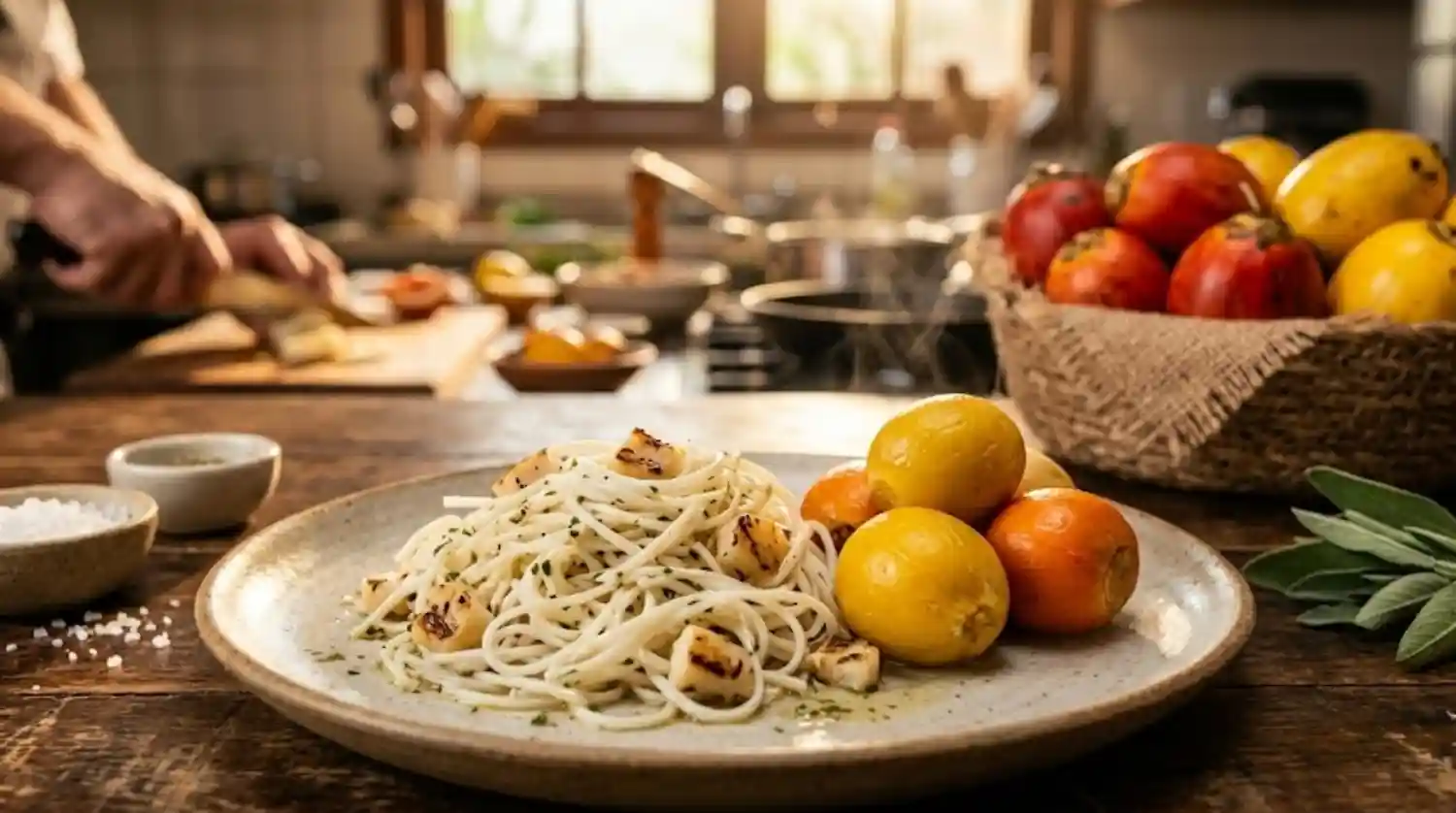
The pupunha, or peach palm (Bactris gasipaes), is a palm native to the Amazon region and an example of agrobiodiversity that has crossed millennia. Archaeological research indicates that it was one of the first species domesticated in the Americas, serving as a staple food for countless Indigenous populations long before Europeans arrived.
What makes the plant unique is its all-round versatility. The fruit is rich in carbohydrates and healthy oils, and the palm also yields heart of palm which, unlike that of other palms, can be harvested sustainably without killing the plant.
A plant that marks where ancient peoples lived
The relationship between Indigenous peoples and the pupunha is so old that the species is considered an “indicator plant” of pre-Columbian settlements. Archaeologists and ecologists who study the Amazon use the presence of dense stands of pupunha in the forest as evidence of past human management.
These areas are known as “cultural forests” or “Terra Preta de Índio” (Indigenous dark earth). They show that the Amazon rainforest is not a virgin jungle but a garden cultivated for millennia.
Managing the pupunha involved selecting varieties with larger, tastier fruit and, crucially, without spines on the trunk, which made harvesting easier. This ancestral knowledge of genetic selection and sustainable management is the foundation of the agrobiodiversity that now feeds high-end cooking. Protecting the pupunha and supporting the communities that grow it is therefore a way to safeguard both Brazil’s genetic heritage and its cultural knowledge.
From market basin to the chef’s plate
The fruit has historically been eaten cooked. Its texture is reminiscent of pine nut (pinhão) or sweet potato, and it is a “nutritional bomb” full of carotenoids, which are precursors of vitamin A, and of energy. In Belém, it is common to see it sold in basins at markets such as Ver-o-Peso, ready to be enjoyed with coffee.
Now the fruit is going beyond traditional consumption. Leading chefs of the new Brazilian cuisine turn it into gluten-free flours for breads and cakes, velvety purées that accompany Amazonian fish, gnocchi, and even mousses and ice cream. The fruit varies in color from vibrant yellow to intense red, which adds not only flavor but also a unique look to the plate.
The heart of palm has its own place in this story. Cut into thin strips, fresh heart of palm becomes the “pupunha tagliatelle”, a modern classic that offers a light and tasty alternative to traditional pasta.
Liquid gold from the pulp
Beyond the heart of palm and the fruit itself, the pupunha holds another treasure: a very high quality vegetable oil extracted from the pulp of the fruit. The oil is a vibrant orange because of its high concentration of carotenoids. It has a balanced lipid profile and a nutty flavor.
In cosmetics, the oil is valued for its moisturizing and antioxidant properties. In the kitchen, chefs are beginning to use it to finish dishes, giving them a unique aroma and color, comparable to the best olive oils but with the authentic essence of the Amazon.
Why sustainability sits at the center
The rise of the pupunha in contemporary cooking is closely tied to sustainability. For decades, heart of palm consumption in Brazil was dominated by predatory extraction of the juçara palm (Euterpe edulis), an Atlantic Forest species that dies after it is cut and takes years to grow.
The pupunha is different. It is a clumping species: it forms clusters and tillers aggressively. A stem can be harvested and, in a short time, new stems rise from the same base, which allows continuous and sustainable management in agroforestry systems.
That trait made possible a legal and ecologically responsible production chain. According to the Brazilian Agricultural Research Corporation (Embrapa), growing pupunha for heart of palm is highly profitable and helps recover degraded areas, since its biomass enriches the soil. Today, fresh pupunha heart of palm, with its tender texture and sweet taste, is a fixture in sophisticated salads and main courses at leading restaurants in São Paulo and Rio de Janeiro, replacing canned versions with an ethical advantage.
Challenges and the road ahead
The story of the pupunha on the Brazilian table is a promising model for the future of sustainable food. It shows how native species, grown ethically and integrated into the forest, can offer nutritional and economic solutions superior to export monocultures. Valuing the pupunha encourages family farming and agroforestry systems, which preserve biodiversity and sequester carbon, helping to fight climate change.
Rising demand in fine dining creates a value-added market that benefits local producers in the Amazon and in the Atlantic Forest, where the species has also adapted well. Platforms that support socio-biodiversity, such as the Socio-environmental Institute (ISA), stress how important it is to connect these producers with urban markets, so that success at the sophisticated table translates into dignity for producers and conservation in the forest.
Challenges remain. Fresh heart of palm is a perishable product and demands efficient logistics to keep its quality all the way to consumer centers. Processing the fruit into flours and oils still needs greater scale and technological investment. Even so, these are golden opportunities for innovation in Brazilian agribusiness focused on native and sustainable products.
With growing interest in plant-based diets and authentic ingredients, the pupunha is well placed as a versatile and ethical superfood. From the heart of the Amazon to award-winning restaurants, it teaches that true culinary sophistication lies in respect for our roots and in the intelligence of cultivating without destroying.
The pupunha is living proof that the Amazon rainforest is a garden of solutions for the future of humanity, tended with wisdom for millennia. Its journey from the Indigenous staple diet to the menus of fine dining invites us to reflect on the importance of valuing native agrobiodiversity. By choosing the pupunha, we are not only tasting an exceptional ingredient but also backing a model of development that joins flavor, nutrition and the active conservation of the forest.
Reporting: Anne Silva / Amazonia Mag

Editor · Amazonia Mag
Anne Silva is the editor of Amazonia Mag, the English-language edition of Revista Amazônia. She curates, translates and adapts the outlet's science and environment coverage for an international audience, reporting on Amazon wildlife, flora, rivers, climate and research. Every story she edits is grounded in peer-reviewed studies, official data and on-the-ground reporting from the Revista Amazônia newsroom in Belém, Pará, Brazil. More by Anne Silva →