
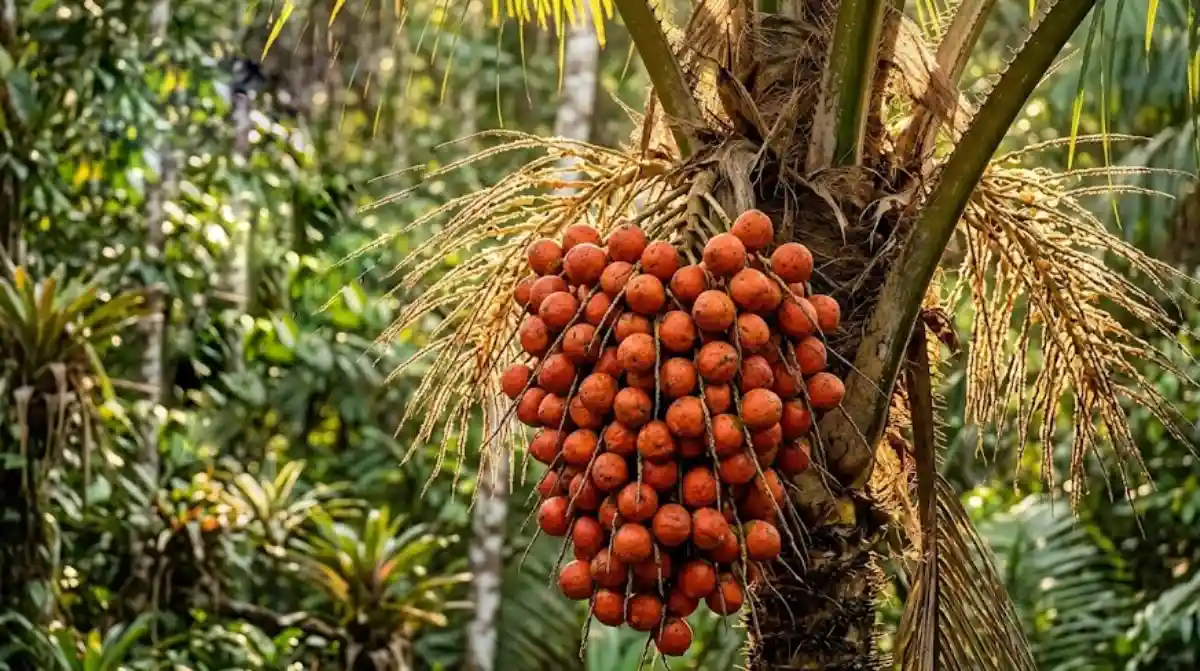
The fruit of the tucumã palm, Astrocaryum aculeatum, contains such a high concentration of vitamin A that it can exceed the amount found in carrots by as much as twenty times. That makes it a vital superfood in the diets of many animals and human populations in Brazil’s Northern region. Within the forest’s living network, few plant species are so widely shared and contested at the same time.
Its fibrous, oily flesh provides the energy needed for the flight of large macaws and the agility of primates. At the same time, the fruit’s economic and cultural importance to Amazonian people has made it one of the pillars of regional food security and culinary identity.
A palm built like a forest supply station
The tucumã palm’s architecture appears designed by nature for resilience. Long, black spines cover and protect its trunk, while the crown holds nutritional treasures in the form of fruit clusters.
Because the palm produces fruit during different periods depending on the microregion, ecologists classify tucumã as a key resource. In practical terms, when other fruits become scarce, it helps keep wildlife active and prevents critical hunger periods for pollinating and seed-dispersing species.
For macaws, tucumã is more than food. It is also a test of skill. With their powerful bills, these birds can break through the hard shell to reach the flesh and, eventually, the inner almond.
That feeding process is essential to forest regeneration. By carrying fruits away from the parent plant, macaws act as agents of natural reforestation. The relationship between the palm and wildlife works in both directions, reflecting the ecological balance of upland forest ecosystems.
From the forest to the X-Caboquinho
If the competition in the forest is between bills and claws, in Amazonian cities, especially Manaus, tucumã appears in markets and breakfast stalls. The fruit is the main ingredient in the famous X-Caboquinho, a sandwich made with French bread, queijo coalho, fried banana pacovã and generous slices of tucumã.
This culinary use supports an economic chain that provides a living for thousands of extractive workers. Using traditional techniques, harvesters climb the tall palms to collect the clusters at exactly the right stage of ripeness.
The socioeconomic impact of tucumã offers a practical example of how keeping the forest standing can be far more profitable than a degrading activity. Fruit sales move millions of Brazilian reais every year and encourage the preservation of native palms in managed areas.
For river communities and rural producers, tucumã is not simply a source of income. It is also a symbol of resistance for a way of life that respects the land’s cycles and values the authentic flavors of Brazilian biodiversity.
The science behind the orange flesh
Tucumã’s vivid orange color is not merely decorative. It signals an impressive chemical richness. In addition to beta-carotene, or provitamin A, the fruit is rich in unsaturated fatty acids such as oleic acid, which support human cardiovascular health.
Studies conducted by research institutions such as INPA, Brazil’s National Institute of Amazonian Research, confirm that regular tucumã consumption can strengthen the immune system and prevent degenerative diseases. These findings establish it as a high-value natural nutraceutical.
Even the part often discarded, the pit, has significant technological potential. The tucumã almond is rich in high-quality oil used by the cosmetics industry to make soaps and moisturizing creams, as well as in the production of biofuels.
This versatility shows how the entire fruit can be used as a foundation for sustainable bioindustries. The approach draws on the forest’s own intelligence to create high-value products without cutting down a single tree.
Challenges in harvesting and sustainable domestication
Despite its apparent abundance, tucumã faces challenges related to consumption pressure and the time required for the palms to grow. Because it is a slow-growing plant, predatory harvesting can threaten the future of natural populations.
For that reason, researchers have invested in domesticating the species and developing agroforestry systems where tucumã grows alongside other crops such as cacao and açaí. This strategy not only increases the fruit supply for the market, but also creates biodiversity refuges in areas that were previously degraded.
Sustainable domestication allows harvesting to take place more safely and efficiently, reducing losses and ensuring that wild animals still have access to fruit in reserve areas. Balancing human consumption with the maintenance of ecological functions is the central goal of modern management plans.
That balance is what can allow tucumã to remain an Amazonian feast for many generations. Conservation means not only increasing production, but also ensuring that the palm continues to perform its role within the forest’s web of life.
A biological and cultural heritage
Beyond calories and nutrients, tucumã carries the emotional memory of a people. Peeling the fruit, with a knife sliding across its thin skin to reveal the plant’s golden flesh, is a ritual found in homes across all social classes in the Amazon.
The fruit brings together Indigenous traditional knowledge, including the use of its fibers for crafts and fishing, and contemporary cuisine, which now presents tucumã in refined dishes served by high-end gastronomy around the world.
Beyond the fruit itself, the palm’s leaves provide an extremely strong fiber used for centuries by Indigenous communities to weave hammocks, baskets and accessories. Known for its durability and flexibility, the fiber is often dyed with natural pigments to create handicrafts that are genuine works of art.
The use of tucumã fiber is a clear example of how every part of a plant can have multiple sustainable purposes. Promoting the fruit and its derivatives also means promoting the Amazon and a development model that places life and the planet’s health first.
Tucumã shows that Brazil’s natural world can offer solutions for hunger, health and the economy within a single orange shell. The palm stands firm behind its spines, yet offers sweetness and energy to those who know how to respect it.
It is the link between a macaw’s flight and the Brazilian table. Protecting this resource helps ensure that the forest’s orchestra continues to play, nourishing not only bodies but also the spirit of those who recognize biodiversity as the greatest form of wealth.
Reporting: Anne Silva / Amazonia Mag

Editor, English Edition — Amazonia Mag
Anne Silva is the editor of Amazonia Mag, the English-language edition of Revista Amazônia. She curates, translates and adapts the outlet's science and environment coverage for an international audience, reporting on Amazon wildlife, flora, rivers, climate and research. Every story she edits is grounded in peer-reviewed studies, official data and on-the-ground reporting from the Revista Amazônia newsroom in Belém, Pará, Brazil. More by Anne Silva →