
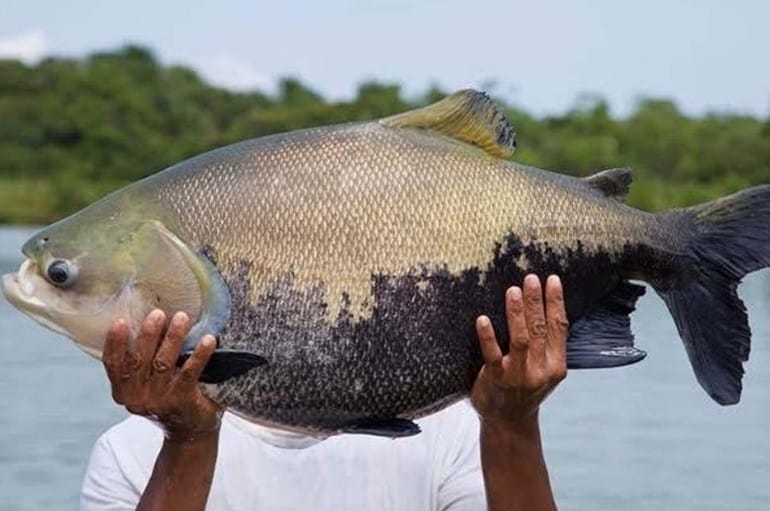
The tambaqui (Colossoma macropomum) is an Amazon fish that has become a pillar of aquaculture in northern Brazil. It is the second most produced fish species in the country, behind only tilapia. That position makes anything that threatens its growth a concern for fish farmers, and one intestinal parasite does exactly that.
Research by teams from São Paulo State University (Unesp) in Jaboticabal and Nilton Lins University in Manaus, published in the journal Aquaculture, shows that a tambaqui’s ability to cope with this parasite is shaped by its genes. The finding opens the door to breeding lines of fish that resist the infection.
A parasite that lives in the gut and drains the farm
The parasite is an acanthocephalan, a spiny-headed worm named Neoechinorhynchus buttnerae. It does not affect humans, and it is specific to the tambaqui. It settles in the fish’s intestine, a part of the animal that people do not eat.
Even so, the infection can seriously compromise production. It harms animal welfare and causes heavy financial losses. In confined systems with inadequate biosecurity, the parasite thrives and the fish are reinfected again and again.
Gustavo Valladão, of Nilton Lins University, explains the damage: acanthocephaliasis hurts fish growth, lowers productive performance and cuts into the farmer’s income. The disease is costly because of what it does to feed efficiency. Feeding accounts for between 70% and 80% of fish production costs, and infected fish do not convert their feed into weight gain as they should. The food is eaten, but it is partly wasted.
Two traits: resistance and resilience
The researchers did not treat the infection as a single outcome. They looked at two separate traits. Resistance is measured by the number of parasites found in the fish. Resilience is the fish’s ability to keep growing despite being infected.
The distinction matters for breeders. A resistant fish carries few parasites. A resilient fish may carry parasites and still gain weight. Separating the two traits lets researchers ask not only how many parasites a fish carries, but also what that burden costs in growth. Either profile is useful on a farm, because the goal is a fish that reaches market size even when the parasite is present in the water.
“We identified that certain tambaqui lines showed greater resistance or resilience to the parasite. We found fish with hundreds of parasites and others with only a few. The least parasitized fish were close relatives, which suggests a genetic component in resistance,” explains Diogo Hashimoto, of the Aquaculture Center at Unesp in Jaboticabal.
How the experiment was run
The team worked with tambaquis free of acanthocephalans and with fish that had been infected earlier. The infected fish were used to release parasite eggs into the experimental environment, so that the infection would spread the way it does on a farm.
Once the presence of eggs in the tanks was confirmed, the tambaquis to be tested were released into the environment and exposed to natural infection. For 60 days, the researchers monitored weight gain and the number of parasites in each fish. Those two measurements gave them the data on resilience and resistance, and the fact that the tanks were infected naturally, rather than by injecting the parasite, kept the test close to farm conditions.
The analysis showed that the genetically more resistant and more resilient fish were close relatives. In other words, these traits run in families, which means they can be passed on and selected. “We can select fish that resist and tolerate the disease while keeping reasonable productive performance,” Hashimoto says. He adds that genetic selection can significantly reduce the impact of the disease on aquaculture.
A DNA tool to avoid sacrificing fish
Measuring parasites in a fish’s intestine normally means that the fish has to be sacrificed. The researchers are therefore developing a genomic selection tool based on DNA markers, designed to avoid that step.
With a small fragment of fin, it will be possible to identify a fish’s resistance and resilience. The low-cost tool is expected to become available soon for use in tambaqui production. For breeders, it means selecting the best animals without losing them.
The study was supported by FAPESP and by the Amazonas State Research Support Foundation (Fapeam), and it involved international partners. The full paper, titled “Genetic parameters for host-response to acanthocephaliasis caused by the endoparasite Neoechinorhynchus buttnerae in the Amazon fish Colossoma macropomum,” is available on ScienceDirect.
What fish farmers can do in the meantime
A stock of more resistant and resilient tambaquis is still being developed, so prevention remains the first line of defense. Valladão suggests three measures: “It is crucial to ensure a water source free of parasites, to acquire certified stock and to carry out regular sanitary cleaning.”
Each of those steps targets a different route of infection. Clean water keeps the parasite out of the system. Certified fish avoid bringing it in with new animals. Regular sanitary cleaning breaks the cycle of reinfection that confined systems with poor biosecurity tend to favor.
Taken together, the work points to a future in which the tambaqui is both a symbol of the Amazon’s rivers and a more reliable animal in the ponds of the Brazilian North, with breeding programs and good management working side by side to protect the fish and the farmers who depend on it.
Reporting: Revista Amazônia newsroom / Amazonia Mag

Editor · Amazonia Mag
Anne Silva is the editor of Amazonia Mag, the English-language edition of Revista Amazônia. She curates, translates and adapts the outlet's science and environment coverage for an international audience, reporting on Amazon wildlife, flora, rivers, climate and research. Every story she edits is grounded in peer-reviewed studies, official data and on-the-ground reporting from the Revista Amazônia newsroom in Belém, Pará, Brazil. More by Anne Silva →