
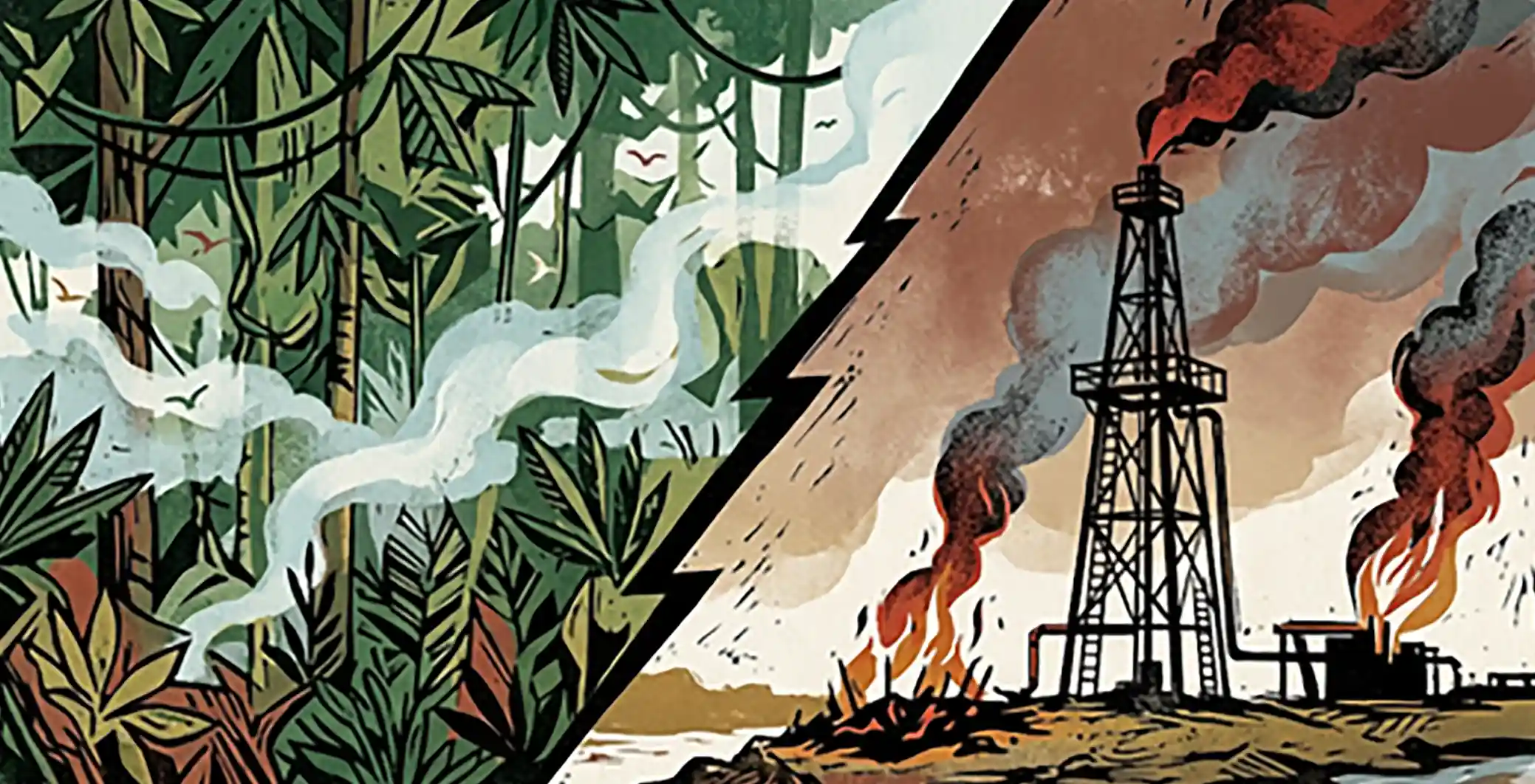
The planet has just logged another alarming thermal record, one that echoes from industrial megacities all the way to the heart of the rainforest. In 2025, global greenhouse gas (GHG) emissions reached an unprecedented 60.63 billion tons of CO2e. Although the pace of growth slowed slightly, Brazil finds itself in a delicate position on the geopolitical chessboard of climate: it now ranks as the 7th largest polluter in the world, accounting for 2.27% of global emissions.
The report compiled by Climate TRACE reveals that, despite progress in monitoring the Amazon, new culprits have quietly emerged within Brazil’s emissions profile. The balance between the power of agribusiness and the exploitation of fossil fuels has become the defining challenge of the decade.
The global paradox between China and the United States
The data carry a technological irony that reshapes what we thought we knew about the energy transition. For the first time in recent history, giants such as China and India posted unprecedented drops in pollution from power generation (0.39% and 2.6% respectively), driven by a massive rollout of solar panels and wind farms. That Asian effort, however, was partly cancelled out by the United States, which recorded a 1.8% rise in power-sector emissions.
On the macro level, the global appetite for oil and gas poured cold water on the targets of the Paris Agreement. The fossil fuel sector posted the largest absolute growth of the year (+1.56%), propelled by a 4.1% jump in worldwide production.
Brazil between the pasture and the pre-salt
For those who live in the Amazon and in the country’s major cities, the report paints a picture of shared responsibility. Agriculture and livestock remain the engine of national emissions, responsible for 42.8% of everything the country releases into the atmosphere. Land use and the protection of biomes such as the Amazon and the Cerrado remain the primary line of defense.
But one figure set off the red alert: emissions from oil and gas production in Brazil surged an astonishing 29.0% in 2025. That fossil expansion already accounts for nearly 7% of the country’s total emissions. Historically focused on fighting deforestation, Brazil now sees oil extraction as an increasingly aggressive contributor to global warming. While the government seeks a leading role at climate conferences (COP), the national energy infrastructure appears to be striding toward the very carbon the world is trying to leave behind.
The invisible cost of transport and cities
If the air feels heavier or you notice more trucks on the highways, the numbers explain why. The transport sector is responsible for 22% of Brazil’s carbon footprint, followed by manufacturing at 12.1%. Dependence on road freight and the slow shift to electric vehicles keep Brazil locked into an expensive, polluting logistics model. Freight transport across the Amazon region, often reliant on fossil fuels for long river and land distances, makes the picture worse.
Bioeconomy specialists argue that decarbonization is no longer an ethical choice but a matter of commercial survival: countries that fail to clean up their supply chains will face severe tariff barriers in the near future.
Innovation and the small but mighty villains
Not every problem comes from the smokestacks of large factories. The Climate TRACE report identifies specific niches that are global hotspots for reduction, such as the urgent need to cut methane in rice cultivation. Another point of attention is the electrification of mining equipment: in the Amazon, replacing diesel generators with clean energy could remove millions of tons of CO2e from the annual balance.
Data transparency as a line of defense
The use of artificial intelligence and real-time monitoring makes it possible to know exactly where emissions are rising. There is no longer room for greenwashing or for political promises without technical grounding. Brazil has the chance to use that transparency to attract green investment. Knowing where we are failing is the first step toward correcting course and ensuring that development reaches the front lines, respecting those who live in the forest.
The road to Net Zero demands a coordinated effort among those who plant, those who produce and those who govern. Protecting the Amazon remains the most valuable piece on the board: without the forest standing, no carbon-capture technology will be enough to prevent the collapse of the rainfall cycles that feed the rest of the country.
Reporting: Anne Silva / Amazonia Mag. Data: Climate TRACE 2025 report.
This article is the English edition of reporting originally published by Revista Amazônia. Images: Revista Amazônia archive.

Editor, English Edition — Amazonia Mag
Anne Silva is the editor of Amazonia Mag, the English-language edition of Revista Amazônia. She curates, translates and adapts the outlet's science and environment coverage for an international audience, reporting on Amazon wildlife, flora, rivers, climate and research. Every story she edits is grounded in peer-reviewed studies, official data and on-the-ground reporting from the Revista Amazônia newsroom in Belém, Pará, Brazil. More by Anne Silva →