
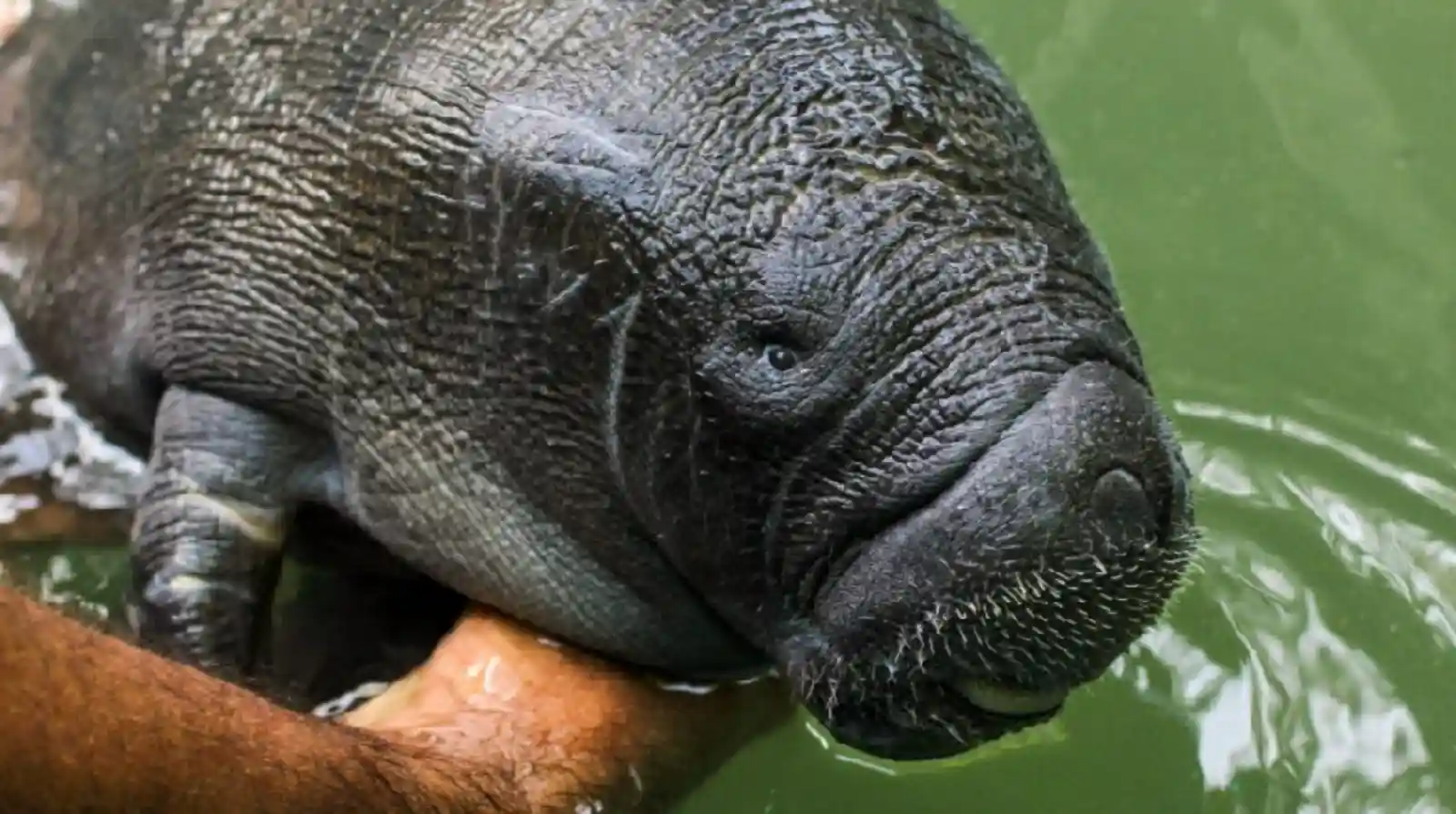
Scientists monitoring the Amazon Basin logged a figure that would have seemed improbable not long ago: during the recent extreme droughts, river water climbed past 39 °C. That heat was directly responsible for the loss of significant populations of river dolphins and manatees, animals finely tuned over millennia to the cycle of flood and ebb, yet now pressing against their physiological ceiling for thermal tolerance. The unprecedented warming does more than strip oxygen out of the water. It rewrites migration routes and reproductive patterns across the entire aquatic megafauna, as if the biological clock of the forest were being forced to run faster than it safely can.
Big bodies, heat that will not leave
On solid ground the large mammals face a different equation, no less punishing. The jaguar (Panthera onca) and the lowland tapir (Tapirus terrestris) are not merely coping with water scarcity. Rising average temperatures shift forest phenology, the calendar that tells trees when to flower and when to fruit. Because the tapir is the largest seed disperser in the region, any change in its feeding behaviour ripples straight into how the whole forest regenerates. In a drier climate these animals must cover far greater distances to find food, and the longer search exposes them to predators and to conflict with areas of human activity.
Thermal stress also cuts into reproductive success. The young of large animals are the most vulnerable to heat waves and dehydration. The biology behind it is blunt: big bodies shed heat more slowly because their surface to volume ratio is smaller. In an Amazon that keeps setting temperature records, these giants have begun showing atypical behaviour, seeking shelter in the densest patches of primary forest, which work as a kind of natural air conditioning. The trouble is that those patches are increasingly fragmented and increasingly far apart from one another.
When the flood pulse stops being predictable
The life of the great aquatic animals is governed by what researchers call the flood pulse, the annual swing between high water and low water. When that pulse turns erratic, with severe droughts followed by overwhelming floods, species such as the pirarucu and the manatee lose access to the floodplain lakes where they feed and raise their young. During extreme droughts many individuals end up confined in deep, isolated channels. There they become easy targets for illegal hunting, or they die of starvation and of oxygen loss in overheated water that can no longer sustain them.
Connectivity between rivers is vital. Species reintroduction projects in neighbouring ecosystems show that rebuilding whole populations is possible, but it works only when the climate offers a minimum of stability. In the Amazon the challenge is keeping the wet ecological corridors open, so manatees can move between basins without stranding on the scorching sandbanks that surface during an extreme ebb. A corridor that closes for two months of drought can isolate a breeding group completely.
New diseases in bodies already weakened
Climate change also acts as a catalyst for the emergence of pathogens. Global warming reshapes the distribution of insect vectors and of fungi inside the forest. Large animals, already worn down by water and nutritional stress, become far more susceptible hosts. Wildlife veterinary science has been recording the appearance of skin diseases and respiratory problems in populations of chelonians and mammals that until recently were considered healthy and relatively insulated from outside threats.
Institutions such as ICMBio, the Chico Mendes Institute for Biodiversity Conservation, work on monitoring these forest sentinels. When an apex predator like the jaguar starts falling ill for environmental reasons, it is a warning that the entire system is giving way. Studying the health of these giants yields valuable data for anticipating health crises that could, in time, reach local human populations and even spread more widely. It amounts to epidemiological surveillance conducted through wildlife.
Climate refuges and eyes on the river
Despite the difficult scenario, technology and field research offer concrete ways forward. Satellite thermal mapping of the Amazon lets conservationists identify climate refuge areas, places that stay cooler and wetter even through a crisis. Giving those sites legal protection first stands out today as the most effective strategy for making sure the megafauna has somewhere to go when the rest of the forest falls under extreme pressure.
The involvement of riverside communities in environmental monitoring has proved decisive. Whoever lives on the river is the first to notice a change in how the animals behave. Community management programmes, such as those built around the pirarucu, prove that where there is balance between human use and conservation, populations do recover even in the face of climate adversity. Citizen science, with local residents gathering data for researchers, remains the fastest tool available for tracking climate impacts in real time.
Jaguars in the canopy: plasticity with an energy bill
Recent studies show that jaguars are displaying a striking behavioural plasticity in response to the shifting climate. In floodplain areas, where the annual rise of the water has become unpredictable, these cats now spend longer and longer stretches living exclusively in the tree canopy, hunting small primates and birds. The adaptation speaks to the intelligence of the species, yet it also flags the high energy cost of that change of habit. Preserving large blocks of continuous forest is essential if these predators are to exercise their flexibility without running into geographical or human barriers they cannot cross.
What makes that shift worth watching is how much it compresses into a single animal. A jaguar that trades the forest floor for the canopy is telling researchers, in one gesture, that the flood regime changed, that the ground level prey base moved, and that the energy budget of a top predator is being renegotiated in real time. Read alongside the water temperature records and the stranded manatees, it stops being an isolated curiosity and becomes one more line in the same account.
The survival of the large Amazonian animals is not a regional matter alone: it is an indicator of whether Brazil is meeting its international climate commitments. Because the forest shapes the rainfall regime of the whole continent, the loss of Amazonian biodiversity to climate pressure would hit agriculture and water supply in regions far removed from the basin. Protecting manatee and jaguar habitat is, in practice, a way of holding together the climate stability that underpins the national economy and daily life across many latitudes.
The resilience of these animals is remarkable, but it is not infinite. The current data force urgent action on restoring degraded areas and on confronting the global drivers of warming. When we protect the giants of the Amazon we are protecting the guardians of a system that regulates life on Earth, and the sheer beauty of these species ought to be the engine pushing us toward sustainable and immediate solutions.
Reporting: Anne Silva / Amazonia Mag. Source: Revista Amazônia, with Amazon Basin monitoring data and ICMBio (Chico Mendes Institute for Biodiversity Conservation).

Editor · Amazonia Mag
Anne Silva is the editor of Amazonia Mag, the English-language edition of Revista Amazônia. She curates, translates and adapts the outlet's science and environment coverage for an international audience, reporting on Amazon wildlife, flora, rivers, climate and research. Every story she edits is grounded in peer-reviewed studies, official data and on-the-ground reporting from the Revista Amazônia newsroom in Belém, Pará, Brazil. More by Anne Silva →