
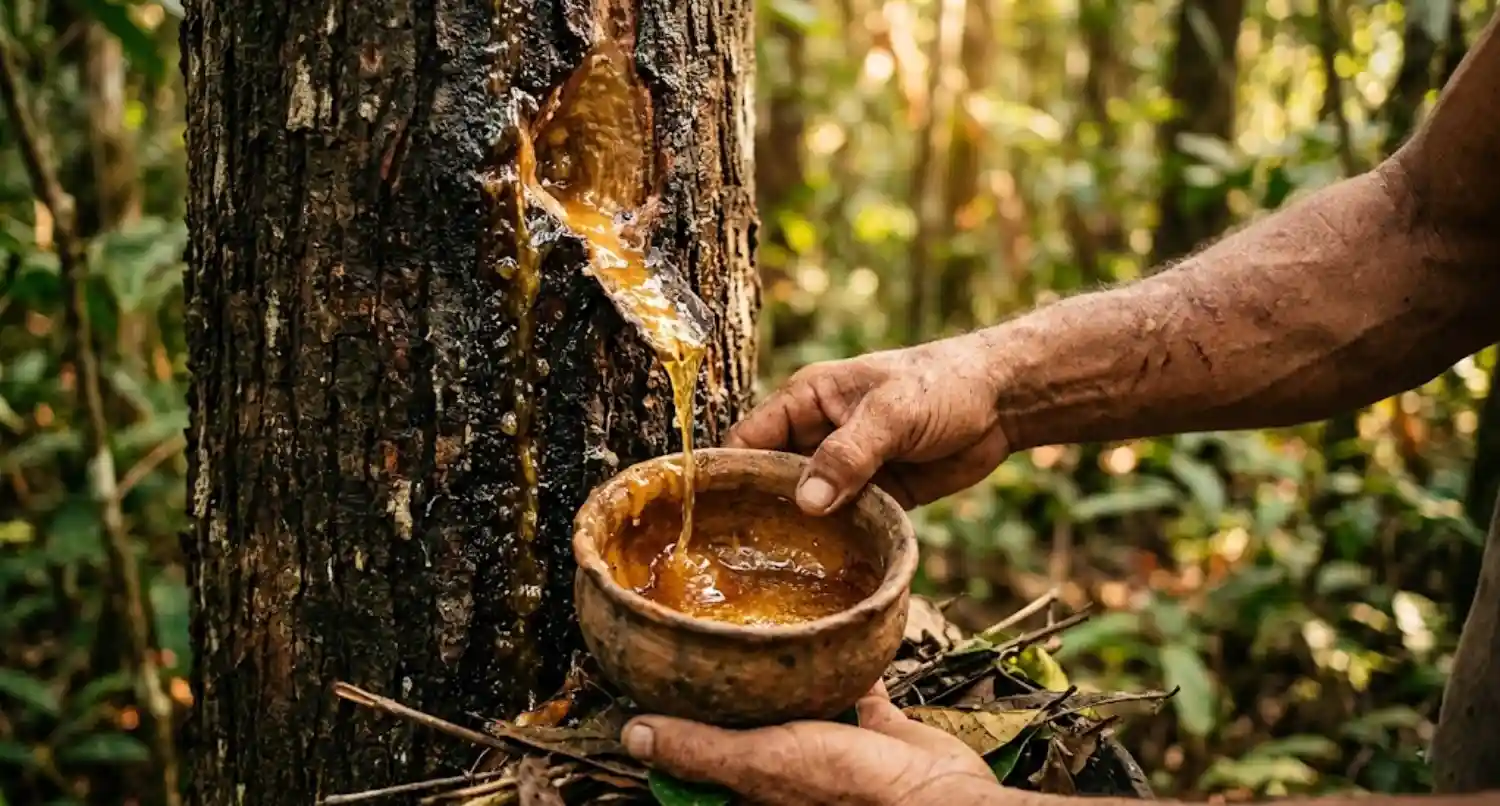
Deep in the Amazon rainforest, a majestic tree produces a liquid that has been part of traditional life for centuries. Copaiba releases a golden or greenish oleoresin, a resinous oil used by local communities as a resource for easing inflammation, pain and some skin and respiratory problems.
Researchers have examined this Amazonian balm and the compounds that may help explain its effects. The studies described in this report point to anti-inflammatory and antimicrobial substances in the oleoresin, generating interest in possible pharmaceutical, cosmetic and complementary therapeutic applications.
That scientific attention does not diminish the knowledge of people who live in the forest. Instead, it shows how observations accumulated by traditional communities can guide research into forest species and into an economy based on products that do not require trees to be cut down.
Harvesting the resin while the tree remains standing
Copaiba is collected through a carefully controlled tapping technique. Unlike logging for timber, the harvester makes a small hole in the trunk, usually about one meter, or 3.3 feet, above the ground, using a manual auger.
If the tree is ready, the oleoresin begins to flow slowly. A single hole can yield from a few hundred milliliters to several liters of oil, depending on the species and environmental conditions. Its color may range from greenish to golden.
After collection, the hole is carefully sealed with clay or natural wax. This protects the tree from attacks by fungi and insects, allowing it to recover and continue producing resin for decades.
The method depends on detailed knowledge of the forest and careful treatment of each tree. When it is properly controlled, harvesting turns copaiba into a source of income while keeping the rainforest standing and productive, rather than converting it into timber, pasture or a monoculture.
The compounds behind copaiba’s studied effects
When scientists analyze the balm’s composition, they find compounds that help explain its properties. Among them are sesquiterpenes associated with Copaifera langsdorffii, a species linked to research on copaiba oleoresin.
Beta-caryophyllene stands out among these compounds. It can interact directly with endocannabinoid receptors in the human body, the same targets affected by substances found in medical cannabis, but without any psychoactive effect. This interaction is connected to signaling pathways involved in pain and inflammation.
The mechanism is especially intriguing because the tree’s chemical defense evolved to help it heal its own wounds and fight organisms that attack it. That same chemistry can interact with the human body in ways that research continues to examine.
Copaiba oleoresin also shows robust antimicrobial action. Studies cited in this report tested its effectiveness against bacteria resistant to common antibiotics, including Staphylococcus aureus. The sesquiterpenes and diterpene acids in the oil disrupt the cell membrane of these microorganisms and prevent them from multiplying.
A traditional first-aid resource and a versatile ingredient
For river communities, copaiba oleoresin is much more than a commercial ingredient. For centuries, it has been used for cuts, scratches, rheumatic pain and respiratory infections. It is also applied topically during massages to ease muscle and joint tension.
Local populations have developed purification methods for internal use as well. In those practices, drops of the oil are taken with honey or water to address gastritis, ulcers and inflammation of the urinary tract.
Scientific confirmation of active compounds can give broader recognition to this ancestral knowledge. It also underlines the need for research and commercial supply chains to respect local practices and acknowledge the role of communities that manage the species.
The cosmetics industry uses copaiba in regenerative creams, antiseptic soaps and products for scalp care. Its antimicrobial properties add to the interest in the raw material. In pharmacology, research is investigating its potential as an adjuvant in the treatment of autoimmune diseases and as an anticancer agent because of its ability to modulate the immune response.
Protecting copaiba means protecting an entire web of life
The challenge is to scale production without abandoning sustainability standards. Oleoresin reaching store shelves should remain connected to respectful harvesting practices and traceability systems that prevent overexploitation and ensure a fair distribution of benefits.
Dozens of species in the genus Copaifera are spread across the Amazon Basin and matter for much more than their resin. Their broad crowns shelter rich biodiversity, and the trees form part of ecological networks that support many animal species.
Strengthening supply chains based on non-timber forest products can therefore offer an economic alternative to deforestation and the conversion of land for pasture or monoculture. When a community recognizes that a living copaiba producing oil is worth more over time than the wood from a felled trunk, it has a reason to protect both the tree and the territory that supports its family.
The journey from riverside harvesting to laboratories and, finally, to consumers illustrates one possible path for sustainable Amazonian development. Science and tradition can work together to understand the forest’s resources while protecting the conditions that allow those resources to exist.
Copaiba shows that the Amazon’s true wealth lies not only in what can be extracted, but also in the ability to preserve a living pharmacy. Keeping trees standing, supporting local communities and respecting biodiversity can allow the golden oil to remain part of an economy tied to the life of the rainforest.
Reporting: Anne Silva / Amazonia Mag

Editor, English Edition — Amazonia Mag
Anne Silva is the editor of Amazonia Mag, the English-language edition of Revista Amazônia. She curates, translates and adapts the outlet's science and environment coverage for an international audience, reporting on Amazon wildlife, flora, rivers, climate and research. Every story she edits is grounded in peer-reviewed studies, official data and on-the-ground reporting from the Revista Amazônia newsroom in Belém, Pará, Brazil. More by Anne Silva →