
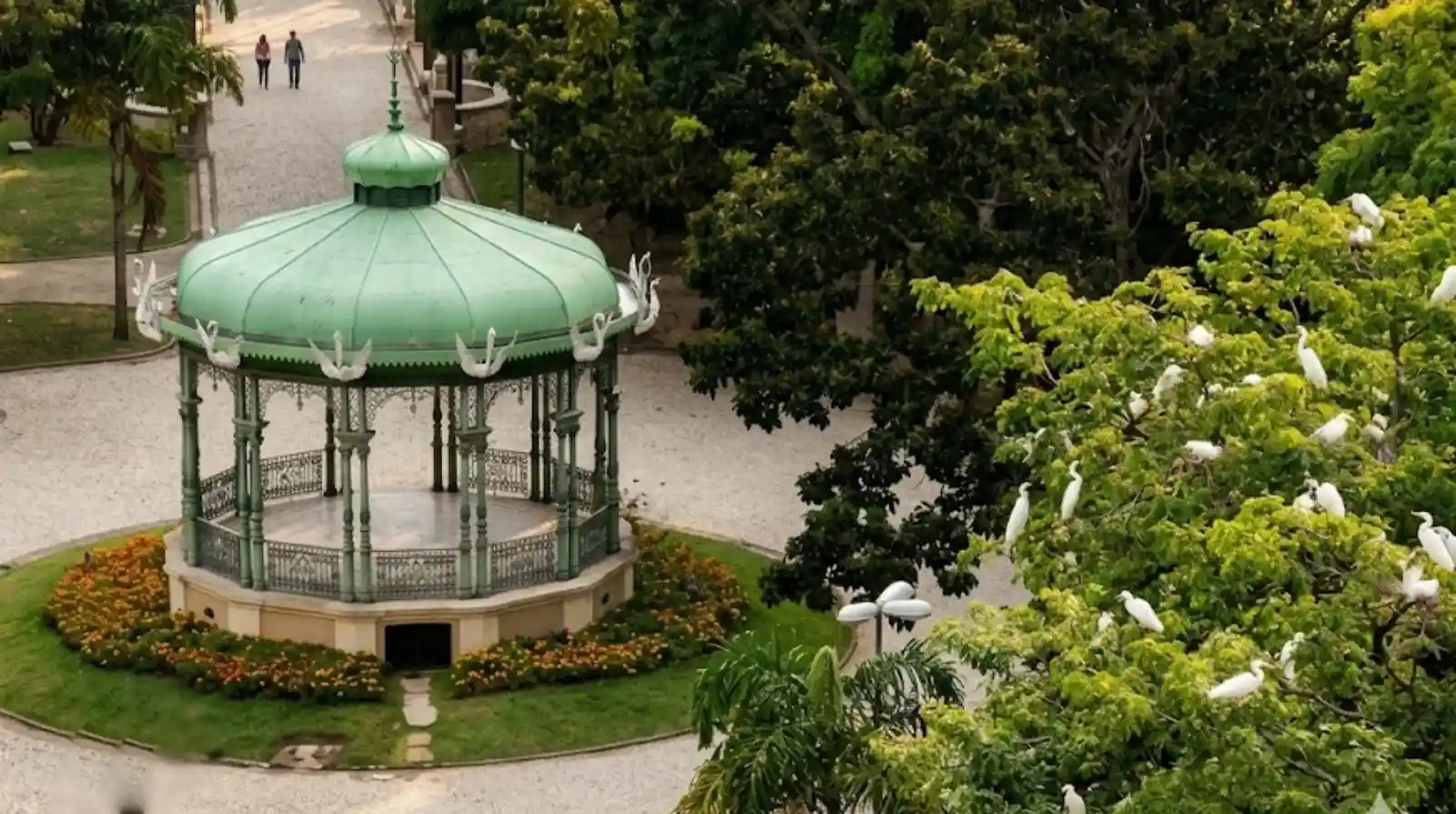
The large concentration of herons at Batista Campos Square in central Belém has become a public health problem. The buildup of birds and droppings on the ground creates conditions favorable to Cryptococcus, a fungus responsible for a respiratory infection known as cryptococcosis.
The warning comes from Mioni Brito, a professor at the Federal University of Pará’s Faculty of Pharmacy, UFPA, and a researcher at the State University of Pará’s Dermatology Outpatient Clinic, UEPA. In an interview with the program Amazônia no Ar, the specialist explained how material accumulated in the square can become a source of contaminated particles.
The concern is linked mainly to what happens when the droppings dry and the ground is disturbed. Under those conditions, contaminated particles can spread through the air and be inhaled by anyone who visits the site. The issue requires attention because the square is in an urban area used by local residents and other visitors.
How the fungus reaches the lungs
According to Mioni Brito, cryptococcosis is transmitted exclusively through the respiratory system. She explains that when the ground is disturbed, dust rises and carries particles of the fungus, which can enter through the nostrils.
Inhalation is therefore the central concern identified by the researcher. The issue is not simply contact with the birds, but the release of contaminated particles when dry droppings and soil are disturbed.
The risk increases on dry and windy days because those conditions allow the particles to disperse more widely. In a square where many herons are concentrated, movement across the ground can carry accumulated material from the surface into the air.
People’s presence in the area is also important. Anyone walking through the square, living nearby or spending time there may breathe the air when particles become dispersed, particularly during periods of dryness and wind.
Children, older adults and immunocompromised people
Children who play in the square are among the groups facing greater risk, according to Mioni Brito’s explanation. They may spend time in areas with a higher concentration of droppings, and their immune systems are still developing.
Older adults and immunocompromised people are also among those more vulnerable to infection. The researcher’s warning highlights the need to reduce exposure to contaminated particles, especially while structural measures have not yet been put in place at the square.
The concern is not limited to an isolated presence of birds. The more herons gather in one location, the greater the volume of droppings on the ground and the greater the fungal load that may be present there.
For that reason, the condition of the square must be understood as both an environmental and a public health problem. The progressive accumulation of material on the ground and in the dust may increase the possibility of airborne spread within a busy urban space.
Environmental disorder in the heart of Belém
Mioni Brito describes the situation as a “major problem of environmental disorder.” According to the researcher, urban development and the absence of natural predators favor the continued presence of herons in unsuitable places, including squares and parks in the city center.
This setting contributes to the progressive increase of contamination in the soil and dust. When birds remain concentrated in the same location, droppings continue to accumulate, increasing the amount of material that can dry out and become airborne.
The problem, therefore, cannot be solved only through occasional sweeping or cleaning. The concentration of birds, the management of droppings and the prevention of new colonies are part of the same environmental and health challenge.
The researcher says authorities need to act to prevent the square from continuing to be occupied by heron colonies. Without environmental and sanitary control policies, recolonization may keep the problem in place and allow contaminated material to continue accumulating.
Measures recommended for the square
Mioni Brito recommends three immediate measures to reduce the risk to the public. The first is to intensify cleaning at the square with bleach, in order to keep droppings from drying out and prevent contaminated particles from dispersing through the air.
The second measure is population control of the herons by environmental agencies. This control should involve appropriate management and the transfer of the birds to suitable areas, reducing their concentration at the square.
As an example of a place prepared to receive the birds, the researcher cites Mangal das Garças. Her reference is connected to the need to move the herons to suitable areas rather than allowing them to remain concentrated in an urban square.
The third measure is the adoption of public policies for environmental and sanitary control that prevent new colonies from recolonizing the square. Cleaning and bird management must be accompanied by action capable of stopping the problem from returning.
Masks as immediate protection
Until structural measures are adopted, the specialist recommends that visitors and residents in the area around Batista Campos Square wear masks when moving through the site. The recommendation is directly related to the mode of transmission described by the researcher.
“Transmission of the disease is exclusively respiratory. For that reason, wearing masks is recommended,” Mioni Brito emphasizes. Immediate protection does not replace cleaning, environmental management or public health policies, but it is intended to reduce exposure for people who need to pass through the area.
According to the researcher, the situation at Batista Campos Square combines a large concentration of birds, accumulated droppings, ground that can be disturbed, and dry and windy conditions that may favor dispersal. Addressing it will require coordinated action by environmental and health authorities.
Until those measures are adopted, the central recommendation is to avoid unprotected exposure in the area and wear a mask when crossing the square. For Mioni Brito, bird management, cleaning with bleach and preventing new colonies are necessary steps to reduce the risk of cryptococcosis in central Belém.
Reporting: Anne Silva / Amazonia Mag

Editor, English Edition — Amazonia Mag
Anne Silva is the editor of Amazonia Mag, the English-language edition of Revista Amazônia. She curates, translates and adapts the outlet's science and environment coverage for an international audience, reporting on Amazon wildlife, flora, rivers, climate and research. Every story she edits is grounded in peer-reviewed studies, official data and on-the-ground reporting from the Revista Amazônia newsroom in Belém, Pará, Brazil. More by Anne Silva →