
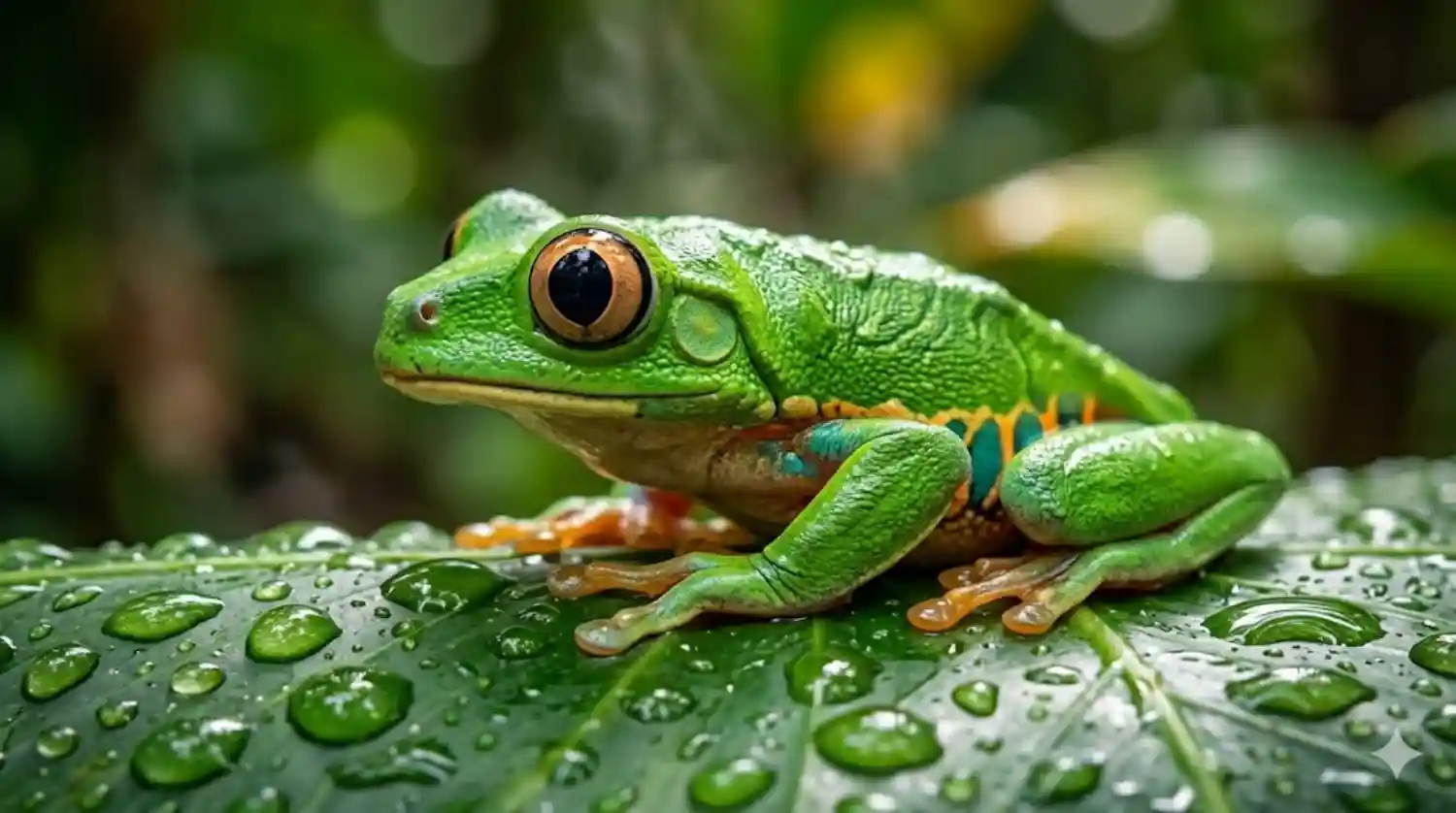
One molecule can open the door to many possibilities. Brazilian and international scientists are studying the skin secretion of Phyllomedusa bicolor, a species popularly known as the monkey frog or “Kambô.” What was once associated primarily with ancestral purification rituals has also become a subject of interest for modern pharmacology.
The secretion of this Amazonian frog contains peptides capable of crossing the blood-brain barrier, according to the line of research described by scientists in Brazil and other countries. These compounds have shown powerful antidepressant effects in the studies cited, placing amphibians among the possible sources of new tools for mental health.
The research, led by scientists from UNB and MPEG, focuses on specific compounds such as dermorphin and deltorphin. Both interact with opioid receptors in the brain, although in a different way from traditional morphine. That interaction may promote a sense of well-being and emotional modulation without the high risk of severe chemical dependence associated with morphine.
A secretion that acts on the brain
Interest in the secretion of Phyllomedusa bicolor is connected to its possible action on mechanisms involved in depression. Unlike common antidepressants, which can take weeks to alter brain chemistry, peptides extracted from this frog show a rapid response in the research described.
These compounds act by modulating dopamine and serotonin, neurotransmitters associated with “pleasure.” Their proposed action is not limited to that modulation. The peptides also have a neuroprotective effect, helping regenerate synaptic connections damaged by chronic stress.
The secretion is not made up of a single substance. It is a complex chemical cocktail. In the laboratory, researchers isolate each component to remove unwanted effects from the raw venom, including nausea and tachycardia, while strengthening the fraction that targets anhedonia, the inability to feel pleasure.
The search for natural drugs in the Amazon has never been more intense in the field of mental health. Growing resistance to conventional treatments for major depression is driving research into amphibians as a source of medicines and bringing the millennia-old knowledge of Indigenous peoples into conversation with molecular biology.
From frog secretion to a laboratory compound
The current stage of the pharmacological research is advanced preclinical testing. The next major challenge is laboratory synthesis. For a treatment to become a shelf-ready medicine, it would not be necessary to extract venom directly from animals in the wild.
The alternative is to replicate the molecule in a controlled environment. This approach protects biodiversity and ensures standardized doses, two essential conditions for transforming a complex secretion into a defined pharmaceutical compound.
The research is not intended to send raw venom directly to patients. The goal is to identify molecules with therapeutic potential, separate the components responsible for unwanted effects and strengthen the fraction connected with the antidepressant response and protection of synaptic connections.
Institutions such as Butantan and Fiocruz are closely following the regulation of these new drugs. Their involvement is linked to the challenge of determining how substances derived from Amazonian biodiversity should be evaluated and regulated before they can become treatments.
Biodiversity, biopiracy and traditional knowledge
The main obstacle identified by this research is biopiracy. Protecting Amazonian genetic heritage is essential so that the economic benefits of discoveries return to the communities that preserve and transmit the traditional knowledge associated with the species and its uses.
According to data from INPA, the Amazon has the greatest diversity of amphibians in the world. Yet fewer than 5% of those species have had their secretions chemically analyzed. The figure shows both the extent of existing knowledge and the enormous range of possibilities that remains unstudied.
Every frog that disappears because of deforestation may represent an entire pharmacy lost before it can ever open. In this context, protecting the forest means more than preserving landscapes or individual animals. It also means maintaining a chemical heritage that scientists are only beginning to decode.
The research brings together two forms of knowledge. On one side are the ancestral purification rituals associated with Kambô. On the other are the analyses of peptides, opioid receptors, neurotransmitters and synaptic connections carried out by pharmacology and molecular biology.
The health bioeconomy
Turning venom into medicine is one of the pillars of the bioeconomy. Instead of selling timber, value lies in the chemical intelligence of the living forest. Amphibian molecules come to represent a resource whose potential depends on conserving the ecosystem and continuing scientific research.
Reports from Imazon suggest that the market for drugs derived from biodiversity could generate billions of dollars for Brazil’s North region. That possible economic return could become an incentive to conserve the Amazon, provided that genetic heritage and community rights are protected.
Depression is considered the “disease of the century” and affects millions of people around the world. If an answer to this global problem were to come from a small green amphibian deep in the forest, the world would have a concrete economic reason to ensure that the Amazon remains intact.
Science is only beginning to translate the forest’s chemical language. What shamans called the “science of Kambô,” doctors now call precision neuropharmacology. The future of mental health could lie, literally, in the skin of a small Amazonian frog, in the molecules it produces and in humanity’s ability to study them without destroying their source.
Reporting: Anne Silva / Amazonia Mag

Editor, English Edition — Amazonia Mag
Anne Silva is the editor of Amazonia Mag, the English-language edition of Revista Amazônia. She curates, translates and adapts the outlet's science and environment coverage for an international audience, reporting on Amazon wildlife, flora, rivers, climate and research. Every story she edits is grounded in peer-reviewed studies, official data and on-the-ground reporting from the Revista Amazônia newsroom in Belém, Pará, Brazil. More by Anne Silva →