
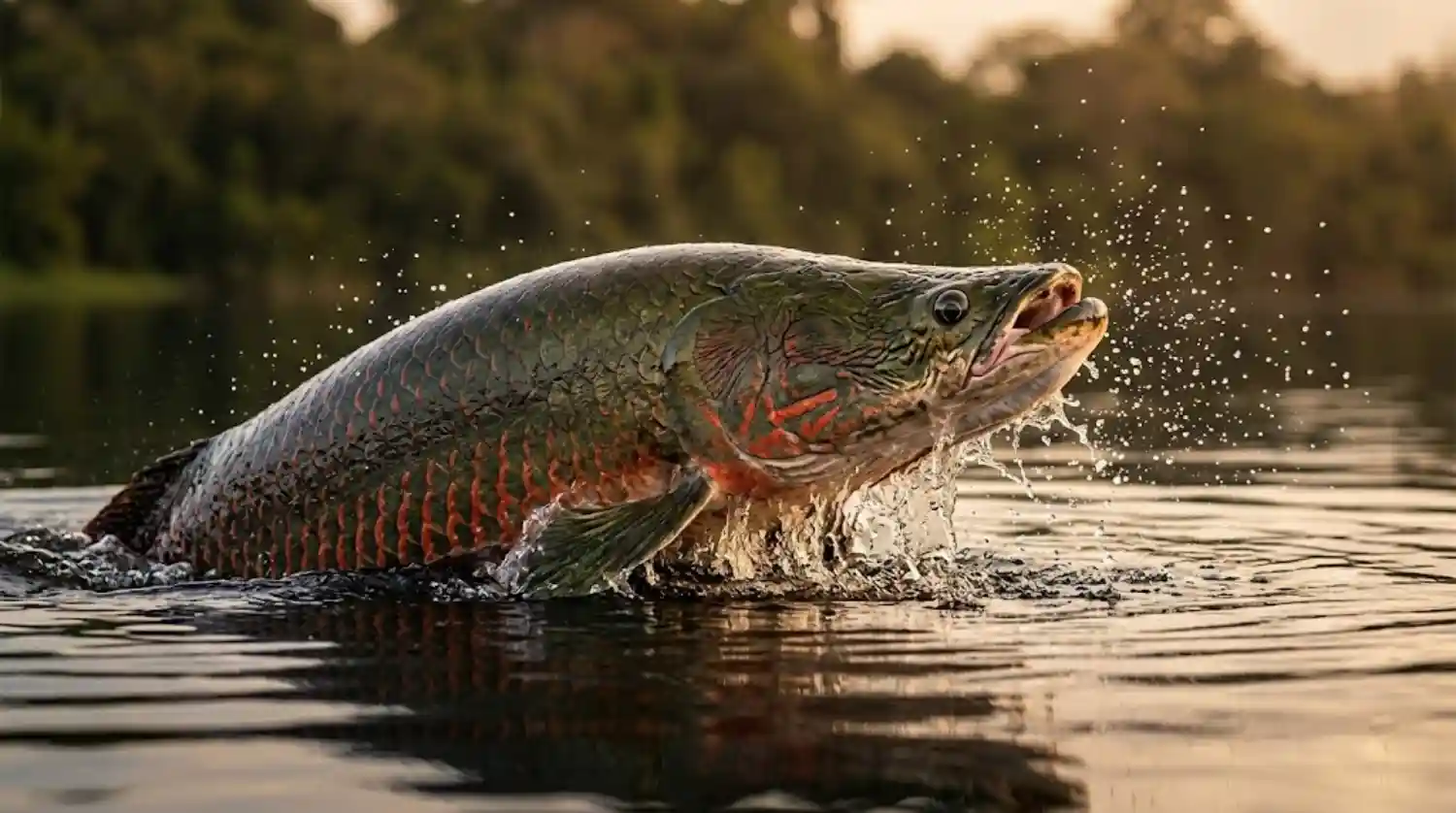
The pirarucu, scientifically known as Arapaima gigas, is one of the Amazon’s most remarkable fish. It can reach up to 9.8 feet in length, or 3 meters, and weigh about 441 pounds, or 200 kilograms. Yet its size is not its only extraordinary feature. Its biology, defined by an obligatory need to breathe air, has become the foundation of a new conservation strategy on the Juruá River in Brazil’s Amazonas state.
On average, the fish must rise to the surface every twenty minutes to take in oxygen. When it comes up, it creates a small whirlpool and a distinctive sound across the calm waters of Amazonian lakes. For years, that behavior made the species easier for illegal hunters to target. Today, the same physiological need allows river communities to locate and monitor pirarucu with drones carrying high-resolution cameras.
A breathing pattern becomes a monitoring tool
The pirarucu’s ability to breathe at the surface is linked to a modified swim bladder that works like a lung. This adaptation allows it to survive in waters with extremely low oxygen levels, where other fish would perish. But relying on regular trips to the surface also makes the animal vulnerable during the brief moment when its back appears above the water.
In the Juruá’s extractive reserves, remotely piloted aircraft are changing how the fish are counted. Communities record management areas on video and can later analyze the images with software that identifies the approximate size of each animal. This makes it possible to follow the fishing quota authorized by Ibama with strict attention and to ground the quota in visual evidence considered nearly incontestable.
Before drones, counts depended on the so-called “cattle counters”, experienced fishers who could identify the fish during the exact second when it exposed its back. Their traditional knowledge remains impressive and essential, but the margin of error could vary with an observer’s fatigue or the sun’s reflection on the water. Aerial recordings make it possible to review observations and improve the precision of the work.
Community protection comes before fishing
Management begins long before a net is lowered into the water. For months, river residents organize watch schedules to protect lakes from intruders. It is an exhausting task, especially in areas that are difficult to reach by canoe, and drones now provide extra support by surveying places that would otherwise be hard to monitor.
The technology does not replace people. It extends their field of vision, helps build records and strengthens decisions that still depend on local experience. As the fishing season approaches, aerial counting data indicate exactly how many adult fish can be removed without compromising the species’ reproduction rate.
The goal is for the fish stock to grow each year rather than decline. In the Juruá region, sustainable management has reversed the species’ local extinction risk and increased the population by more than 400 percent over the past ten years. The figure shows how surveillance, community rules and respect for the fish’s life cycle can work together.
Conservation that also supports livelihoods
The financial results of this social organization are visible in villages and communities along the river. Sustainably managed pirarucu reaches markets that value traceability and forest conservation. Unlike predatory fishing, in which middlemen keep most of the profit, community management allows local associations to negotiate directly with major distribution chains and high-end restaurants.
The money raised is reinvested in community infrastructure. The improvements described include solar power systems, water treatment and education. The model shows that a live fish managed carefully can be worth far more than the immediate, disorderly exploitation that marked past decades.
The species also supports a production chain designed around zero waste. Its meat is highly nutritious and boneless, its scales are used in handicrafts, and its hide, after tanning, becomes an exotic leather with high value in the international luxury market.
A model spreading across the Amazon
The system developed on the Juruá is already being replicated in other Amazonian regions. Technicians and community leaders from the river are traveling to the Javari Valley and the Middle Solimões to share flight and data-analysis methods. Their experience shows that a high-precision tool can become part of local routines without severing ties to ancestral territory.
Young river residents are helping accelerate that process. Drones give them a way to connect with modern technology without leaving behind their roots or their communities. The bridge between electronic circuits and the biology of the world’s largest freshwater fish is reshaping environmental surveillance in the world’s largest tropical forest.
Pirarucu does not live alone. When residents protect a lake for management, they create sanctuaries where other species can thrive with fewer threats. Turtles, caimans and river dolphins benefit from areas without fine-mesh nets or the noisy engines of large fishing boats.
For that reason, pirarucu acts as an umbrella species. Protecting it helps preserve the integrity of the entire local food web and extends protection to other animals that share the same aquatic habitat.
Technology in service of the river
The Juruá’s results show that technology can be a powerful ally when local communities take ownership of it and combine it with traditional knowledge. The experience brings economic productivity and environmental regeneration together, without separating nature protection from the autonomy of traditional populations.
The future of Amazon conservation necessarily depends on democratic access to high-precision tools. Every drone that rises above the river’s muddy waters carries a camera, but it also represents hope for a form of development that respects nature’s timing.
The real innovation is not only in the machine. It lies in people’s ability to learn from the river, organize surveillance and use intelligence so that future generations can still watch the great pirarucu emerge majestically beneath the midday sun.
Reporting: Anne Silva / Amazonia Mag

Editor, English Edition — Amazonia Mag
Anne Silva is the editor of Amazonia Mag, the English-language edition of Revista Amazônia. She curates, translates and adapts the outlet's science and environment coverage for an international audience, reporting on Amazon wildlife, flora, rivers, climate and research. Every story she edits is grounded in peer-reviewed studies, official data and on-the-ground reporting from the Revista Amazônia newsroom in Belém, Pará, Brazil. More by Anne Silva →