
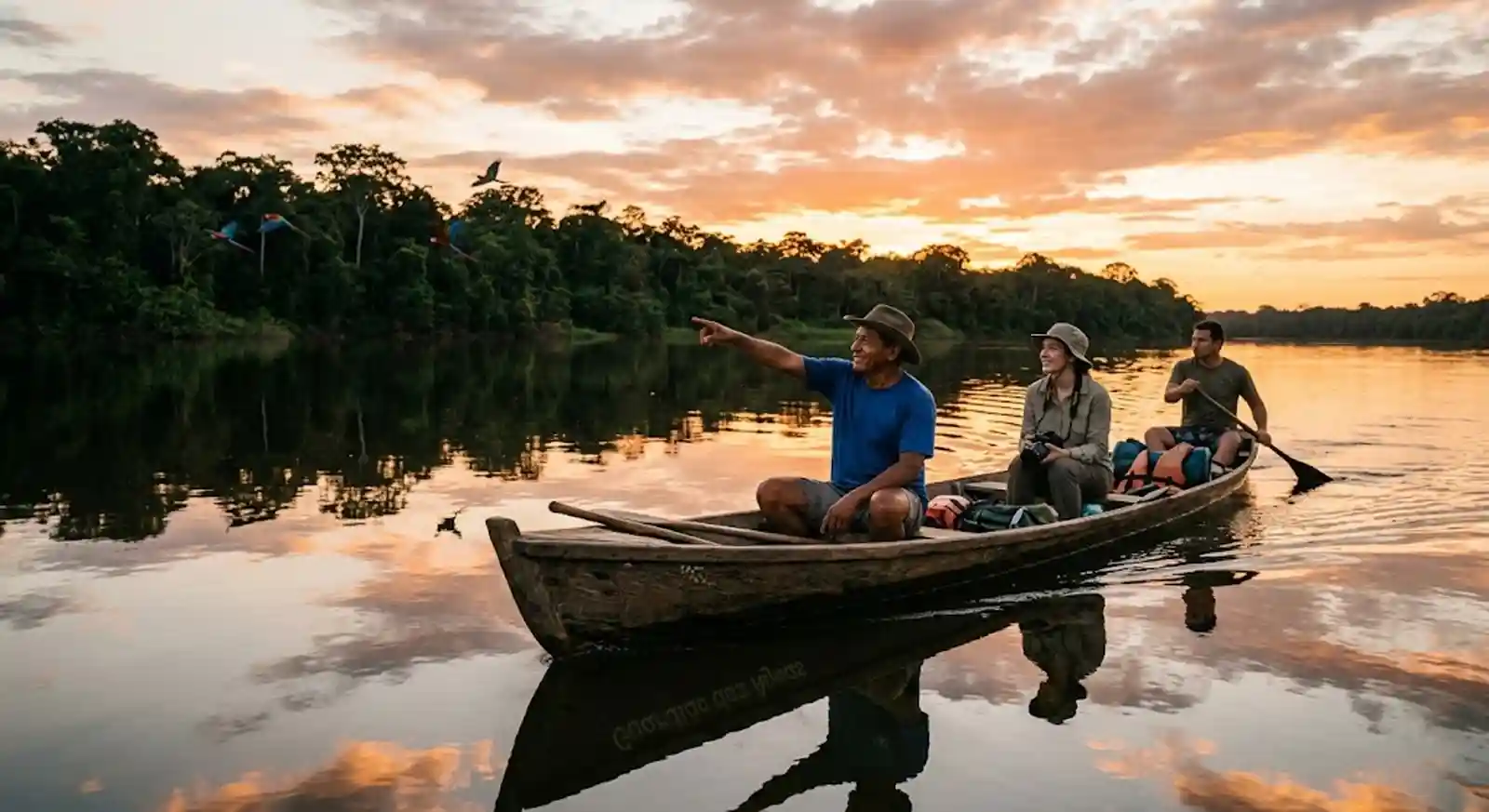
Along the rivers of Tocantins, river communities are changing the way visitors arrive and the way families imagine their future. After implementing tourism routes fully controlled by local residents, household income rose by as much as 40% in only two years, according to the information presented in this report.
The result moves away from the traditional model built around large resorts. Here, the experience begins with genuine hospitality and with routines that were once seen only as subsistence activities. Fishing, gathering, preparing food and traveling by river become immersive encounters for travelers from around the world who are looking for purpose, nature and a more direct relationship with local communities.
The transformation also has an environmental effect. Activities that were once treated as ordinary parts of daily life have become valuable conservation assets, because residents understand that a standing forest and a clean river are their best partners. According to the information presented, tourism shows that protecting the territory is not an abstract idea, but a condition for maintaining local life, culture and income.
Keeping control in local hands
In central Tocantins, groups of traditional communities decided they would not be background figures or low-paid labor for large agencies. They organized themselves into cooperatives to offer community ecotourism, a model that gives priority to the carrying capacity of ecosystems and keeps profits within the village.
Organizing their own routes changes the relationship with visitors. Residents decide what they want to show, how they want to be seen and what limits should guide each activity. The traveler is no longer a distant observer, but a participant in an experience that recognizes the autonomy of the people who live in the territory.
The routes include rare-bird watching, lessons in crafts made with golden grass and the production of artisanal flour. Each activity presents part of local life without separating it from its setting. Visitors do not encounter an isolated performance, but knowledge and work that are part of the communities’ identity.
The difference lies in the perspective of people born there. They know every bend in the river, every sound in the forest and the rhythm of the waters. That familiarity offers a depth that no outside guide could reproduce in the same way, because the landscape is interpreted through memory, work and each family’s history.
Rivers, forests and an invisible network
Sustainable tourism routes in northern Brazil have gained strength especially in the Middle Tocantins region and near Cantão. In places where deforestation once threatened to move forward, an invisible protection network now exists, formed by local guides and boat operators.
This network is not separate from daily life. It is made up of people who know the territory, lead the trips and depend on preserving the landscape to keep their work. Every boat outing, trail and visit reinforces the idea that a protected environment has cultural and economic value.
A visitor who chooses these routes is not simply watching. That person also becomes a funder of preservation, because their presence supports an activity organized by local residents. Money remains in the community and helps strengthen an economic alternative connected to protecting the river and forest.
The ideal season for visiting these communities is from May through October. During the dry season, white-sand beaches and crystal-clear water emerge, while river travel and wildlife observation become easier.
To reach these hidden destinations, travelers generally leave Palmas and head toward hub municipalities such as Caseara or Pedro Afonso. From there, the journey continues in speedboats or regional boats. The trip itself is part of the experience, allowing a gradual transition from the fast pace of cities to nature’s slower rhythm.
Lodging, food and local autonomy
At family-run guesthouses, river tourism offers simple but extremely comfortable accommodations. The luxury is the quiet of the night, interrupted only by animal calls, and food seasoned with local herbs gathered in the yard.
The simplicity of these places does not mean a lack of care. Hospitality is based on a direct relationship with visitors and on the possibility of sharing everyday life without giving up identity. The home, kitchen, yard and river become part of an experience in which the territory is not a backdrop, but the central character.
The economic impact of this movement can be seen in improvements to local schools and basic infrastructure in the villages. Communities do not have to give up their cultural identity to achieve these gains. Tourism organized from within allows development to respond to the needs of the people who live there.
Building their own routes also strengthens mutual respect between residents and tourists. River communities decide what to share and retain the right to set boundaries. This autonomy keeps local culture from being reduced to a product and creates a more balanced relationship with outsiders.
An experience that keeps young people connected
The model works as a practical lesson in environmental management. Academic science meets ancestral knowledge to create a viable future in the Legal Amazon. The experience shows that development does not have to arrive from the outside, because it can also grow from the skills, decisions and knowledge of the territory itself.
In this setting, sustainability is not an abstract marketing concept. It is a tool for survival and pride. Every trail that opens and every meal that is served strengthens young river residents’ connection to their territory, reduces rural-to-urban migration and reinforces local traditions.
The link between tourism and conservation also changes the way community work is valued. Fishing, gathering, boating, cooking, guiding and making crafts are no longer invisible activities. They become forms of knowledge that can support an economy while protecting the conditions that make it possible.
When visitors return home, they take more than photographs with them. They carry an understanding that the planet’s balance depends directly on the autonomy of peoples who have historically been the true guardians of some of the world’s greatest natural treasures.
A conscious traveler’s pocket guide
What to bring: biodegradable insect repellent, physical sunscreen, which is less polluting for the water, and quick-drying clothing.
High-water season: from November through April, the focus shifts to spotting animals in the treetops during the floods.
Connection: internet service is limited. That encourages a “digital detox” and a real connection with local culture.
Currency: prioritize carrying cash, since many communities do not accept cards because of unstable service.
In Tocantins, the new map of the waters is being drawn from the riverbanks and by the people who know every stretch of the territory. The river is more than a transportation route: it is the foundation of a proposal that brings together autonomy, hospitality, conservation and community pride.
Reporting: Anne Silva / Amazonia Mag

Editor, English Edition — Amazonia Mag
Anne Silva is the editor of Amazonia Mag, the English-language edition of Revista Amazônia. She curates, translates and adapts the outlet's science and environment coverage for an international audience, reporting on Amazon wildlife, flora, rivers, climate and research. Every story she edits is grounded in peer-reviewed studies, official data and on-the-ground reporting from the Revista Amazônia newsroom in Belém, Pará, Brazil. More by Anne Silva →