
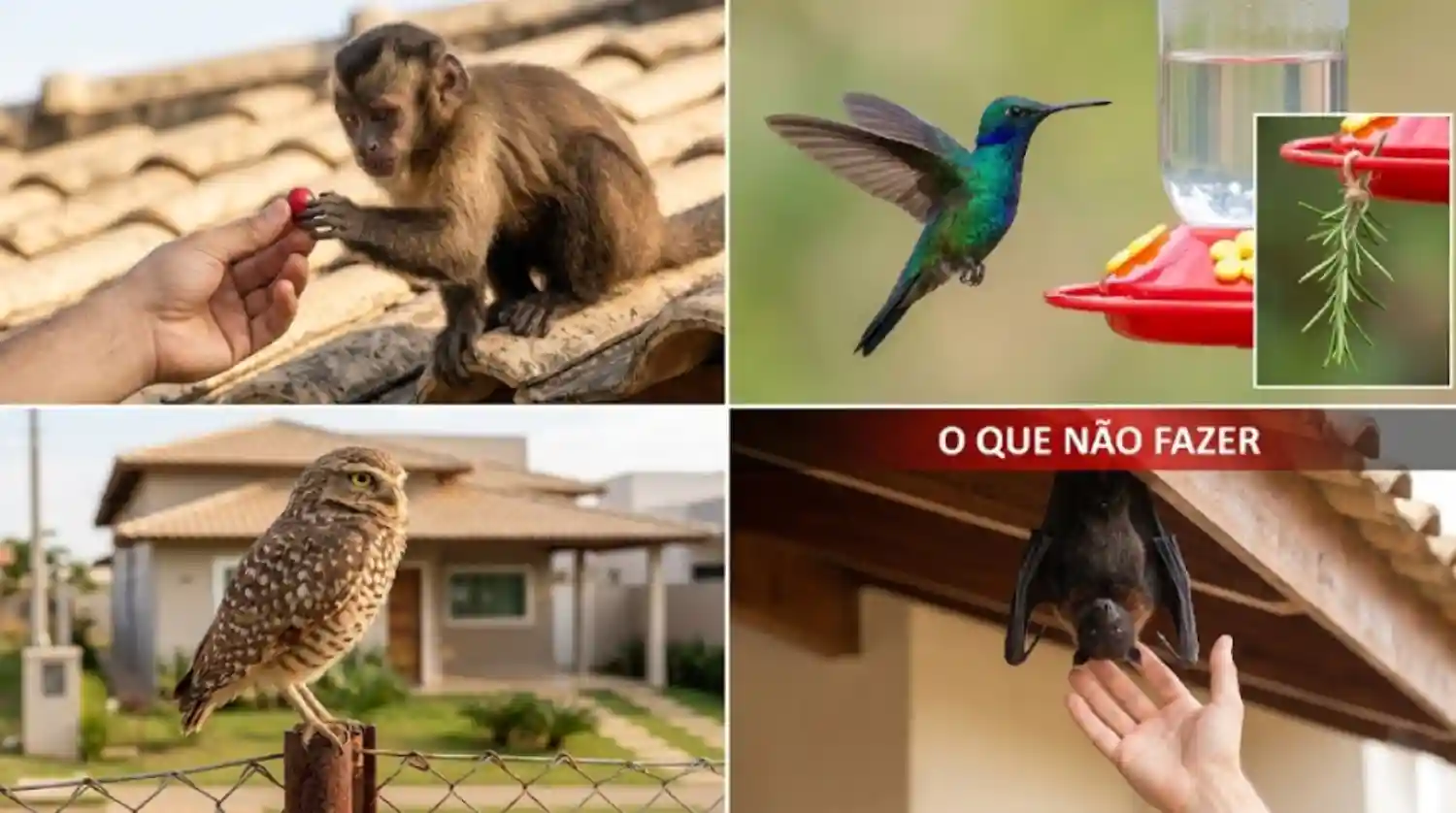
Wildlife in cities is not merely a curiosity. It is a complex, verifiable biological phenomenon known as urban biophilia. One striking and verifiable biological fact is that certain generalist species, among them some owls, opossums and birds, are adapting their circadian rhythms and their foraging behaviour in order to thrive in environments marked by light pollution and abundant artificial resources. That process of behavioural adaptation, unfolding in real time, is proof of the resilience of life and raises fundamental questions about how we ought to coexist with these new neighbours. As Brazilian cities expand into forested areas, encounters between people and wild animals become inevitable and often produce fear or inadequate responses. This practical guide sets out to turn those encounters into conservation opportunities.
Understanding the ecology of coexistence
To live safely alongside wild animals, the first step is to understand that they are not invading our space. They are trying to survive in an environment that used to be theirs. Habitat loss and forest fragmentation are the main drivers of that displacement. Urban coexistence, therefore, is not about taming wild animals or getting rid of them. It is about creating spaces where both species can live without conflict.
That shift is as much cultural as it is technical. It requires a change of mindset, moving from reactive control to proactive, informed management. The difference shows up in small daily decisions: how a household stores its rubbish, what kind of glass goes into a window, which plants fill a backyard. Each of those choices quietly determines whether a street becomes a conflict zone or a corridor where wild neighbours can pass through without incident.
How to react to an immediate encounter
The moment of the encounter can be stressful. Studies indicate that most accidents occur when people try to capture or drive away animals that feel cornered. The golden rule is twofold: stay calm and keep your distance. Never try to touch, capture or hand feed a wild animal.
For safe handling, the best course of action is always isolation. If the animal is inside a room, close the doors leading into the rest of the house and open a window or a door to the outside, allowing it to leave on its own. For larger animals or in complex situations, the official recommendation is to isolate the area and call the competent authorities, such as the Environmental Military Police or the Fire Brigade. That call is not an admission of failure. It is the correct step whenever the situation exceeds what a resident can safely manage from a distance.
Hygiene as a pillar of coexistence
Wild animals are usually drawn into residential areas by the search for food and shelter. Simple waste management practices can prevent most problems. Keep bins closed at all times with firm lids, and avoid leaving rubbish bags exposed on the street for long periods. Organic waste is a banquet for opossums, rodents and even birds of prey, which in turn attracts snakes. Another crucial point is the hygiene of bird baths. Standing water becomes a breeding ground for the dengue mosquito. Frequent cleaning of bird baths and a daily change of water are indispensable. One natural and effective tip is to add a sprig of rosemary to the bath, which helps keep the water clean for longer without chemical products.
That habit is not only tradition, it has a biological basis. Rosemary has natural antimicrobial properties thanks to compounds such as rosmarinic acid. Those compounds inhibit the growth of bacteria and fungi that thrive in standing water, helping to keep the environment sanitary. It matters for preventing the proliferation of vectors of zoonotic disease, such as the mosquito Aedes aegypti. Changing the water daily remains the most effective method, while rosemary acts as an additional natural barrier of hygiene.
The danger of artificial feeding
Deliberately feeding wild animals is one of the most harmful practices of all. Studies show that a constant supply of artificial food disrupts natural foraging behaviour, makes animals dependent, pushes population density above the carrying capacity of the environment and facilitates disease transmission. Inappropriate foods such as bread and sweets can also cause serious health problems in animals. Instead of providing food, invest in bioarchitecture: plant native species that supply fruit and flowers naturally. That attracts wildlife in a balanced way and promotes cross pollination, which is essential to the health of the urban ecosystem.
Adapting your home for everyone’s safety
Adapting domestic infrastructure is a long term strategy. Avoid fully transparent glass on windows and facades without visual markings, since that is one of the leading causes of bird mortality in urban areas. Install protective screens on windows and seals on doors to prevent animals from entering unwanted. Fine mesh screens also help block insects and small mammals from reaching ceilings and roofs. To protect against pigeons and other birds that nest in unwanted places, use suitable netting or spikes that do not cause injury, always prioritising methods that merely discourage perching, and never methods that cause physical harm.
Coexistence and public health
Coexistence with urban wildlife should be managed under the concept of One Health, which integrates human, animal and environmental health. Certain animals can be vectors of zoonotic diseases such as rabies or toxoplasmosis. For that reason, interaction must always be mediated by safety. Monitoring sentinel species, such as the bats that feed on insects and help control pests, is vital. Understanding the ecological role of each species helps to dispel unfounded fears and to value their presence. Coexisting safely protects biodiversity and our own health at the same time.
Brazilian science and long term monitoring
Brazilian scientific research plays a fundamental role in understanding urban ecology. Long term monitoring is essential to assess population trends and the impact of coexistence practices. Citizen science, in which anyone can record sightings, is becoming a powerful tool for mapping biodiversity in cities. It helps researchers identify critical areas and develop more effective management strategies. Environmental education, which translates scientific knowledge into everyday practice, is the final link that allows society to put those strategies to work.
A new look at urban biodiversity
Understanding urban biodiversity forces us to rethink our definition of green space. If cities were once seen as asphalt deserts, today they are recognised as dynamic ecosystems. Coexistence with wildlife is an opportunity to reconnect with nature without leaving home. By adopting good practices we are not only protecting individual animals, we are strengthening the web of life that sustains the planet. Urban biodiversity is an indicator of the health of our cities and, therefore, of our own quality of life.
Towards urban biocentrism
The presence of urban wildlife should not be seen as a problem, but as a challenge and a privilege. Urban biophilia teaches that conservation does not happen only in distant reserves, it begins in our own backyard. By adopting safe practices of hygiene and home adaptation, we are practising a form of urban biocentrism in which life in all its forms is valued. May we look at our wild neighbour with the same curiosity and respect we give our human neighbours, learning to share space fairly and sustainably. For more information on the safe handling of wild animals, the official reference is IBAMA. In the state of São Paulo, the CETESB portal offers specific guidelines for wildlife management.
Reporting: Anne Silva / Amazonia Mag. Source: Revista Amazônia, IBAMA, CETESB.

Editor · Amazonia Mag
Anne Silva is the editor of Amazonia Mag, the English-language edition of Revista Amazônia. She curates, translates and adapts the outlet's science and environment coverage for an international audience, reporting on Amazon wildlife, flora, rivers, climate and research. Every story she edits is grounded in peer-reviewed studies, official data and on-the-ground reporting from the Revista Amazônia newsroom in Belém, Pará, Brazil. More by Anne Silva →