
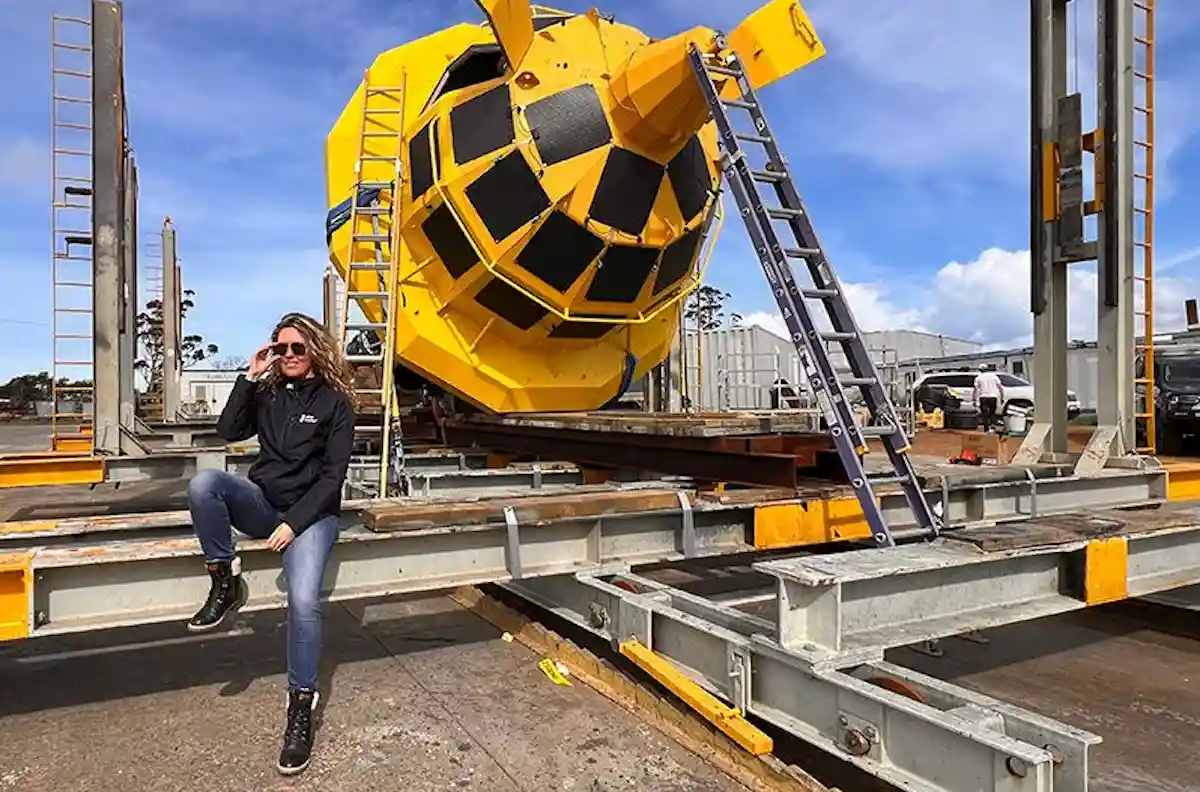
Heat and lack of oxygen are killing fish by the million in rivers and coastal waters around the world. An Australian startup wants to fight that collapse with an elegant idea: let the ocean itself supply the energy to heal. The company Blue Carbon won KPMG’s Nature Positive Award, worth 100,000 US dollars, and also the People’s Choice Award, worth 20,000 dollars, the first time a single company has taken both prizes in the challenge.
What the oPod is
The system, called the oPod, is a floating device that monitors, cools and oxygenates seawater using buoys powered by solar and wave energy. An artificial-intelligence layer turns its sensor data into local forecasts: it can anticipate events such as water stratification, falling oxygen and the risk of algal blooms, which often precede large fish die-offs.
The underlying goal is to decouple food and water security from energy, avoiding reliance on a fuel supply chain for ocean and coastal industries. By using only the renewable energy of waves and sun, the device promises a low-impact solution.
What it is for
The oPod is designed for several uses: aquaculture, reef restoration, desalination and carbon capture. It is already being tested with aquaculture operators to reduce thermal stress on fish, stabilize water conditions and lower operational risk. Direct ocean desalination is also being trialed, to produce drinking water straight from the sea.
The image driving the project is stark: in the Darling River system in far-western New South Wales, up to a million fish died in episodes of hot, oxygen-starved water. Such events recur when extreme heat and pollution combine.
Nature and technology on the same side
KPMG’s annual challenge backs startups that deliver measurable environmental results with circular models and artificial intelligence. Blue Carbon, founded in 2022 and led by Ana Novak, plans to use the prize to scale up these passive, ocean-powered systems.
For regions with vast freshwater systems and living coastlines, like the Amazon and its shoreline, the lesson is clear: protecting aquatic life against warming depends not only on cutting emissions, but also on concrete tools that help ecosystems hold on while the climate shifts.
Reporting: Anne Silva / Amazonia Mag. Source: KPMG Nature Positive Challenge; Blue Carbon.
This article is the English edition of reporting originally published by Revista Amazônia. Images: Revista Amazônia archive.

Editor · Amazonia Mag
Anne Silva is the editor of Amazonia Mag, the English-language edition of Revista Amazônia. She curates, translates and adapts the outlet's science and environment coverage for an international audience, reporting on Amazon wildlife, flora, rivers, climate and research. Every story she edits is grounded in peer-reviewed studies, official data and on-the-ground reporting from the Revista Amazônia newsroom in Belém, Pará, Brazil. More by Anne Silva →