
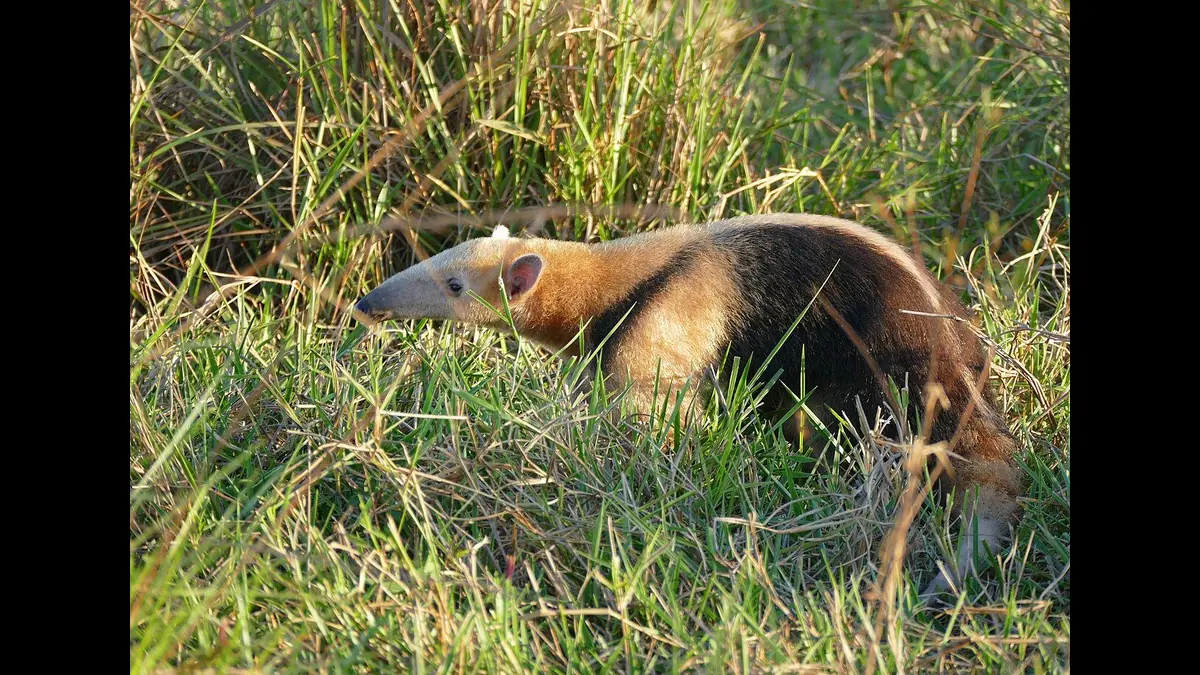
In the early hours of Friday, 6 November 2026, a tamanduá-mirim turned a routine bakery run into a wildlife rescue in Campo Grande, the capital of Mato Grosso do Sul. The animal, known in English as the southern tamandua or lesser anteater (Tamandua tetradactyla), showed up on Avenida Eduardo Elias Zahran, one of the busiest avenues in the city. Customers kept it safe for about two hours while they waited for the Military Environmental Police (PMA).
The rescue was completed at around 8 a.m. The anteater was thirsty, was given water and was taken away for evaluation. Its presence in a commercial area with no native forest nearby raised questions about how it got there.
A bakery run that became a rescue
Nurse Franciane Magna Batista Martins was on her way to buy bread, at about 6 a.m., when she found a woman trying to hold the tamanduá with a coat. The woman said she was a biologist and was looking for a box to protect the animal. The people gathered there were trying to reach the Environmental Police.
Franciane remembered that she had a box in her car and decided to help. The box kept the anteater contained and, at the same time, warm until the team arrived. The woman who had first helped the animal had to leave for work, so Franciane stayed to wait for the PMA.
The encounter took place in the yard of a gas station, across from a bakery on Avenida Zahran, in the Jardim TV Morena neighborhood. The commotion drew the attention of people passing through the area.
Seen before dawn, crossing the avenue
While she waited, Franciane met a friend who was at a nearby gym. He told her the tamanduá had been seen at around 5 a.m., roaming that stretch of the avenue. According to that account, the animal crossed Avenida Zahran by way of the central median until it reached the gas station, where customers contained it.
That timing fits what is known about the species. The tamanduá-mirim is mainly active at night and lives alone, moving through its territory in search of food. A person who sees it in the early morning is therefore probably catching the end of its night shift, not the start of its day.
Two explanations from the police
The location surprised the environmental officers. The main hypothesis offered by the PMA is that the animal made a “trip” hidden in a car or a pickup truck. Sergeant Wagner Azevedo explained that wild animals look for shelter in vehicles, often attracted by the warmth of the engine, and end up carried from outlying or rural areas to the city center. When the vehicle stops, the animal simply climbs out.
The sergeant said that calls involving mammals in the central area are not a daily occurrence, but similar situations are recorded often with other species, such as snakes and opossums (gambás).
A second explanation came from the PMA deputy commander, Major Gabriel Gomes da Rocha. He linked the animal’s presence to the proximity of green areas. The closest one, he said, would be the region of the Córrego Bandeiras, near Avenida Três Barras.
A city with wild neighbors
According to Major Rocha, Campo Grande has a large urban area with a good deal of vegetation, which makes it common to find wild animals in different parts of the city. He pointed out that the tamanduá is a nocturnal animal and tends to cover longer distances at night.
Asked whether such cases are becoming more frequent, the officer said the data would have to be consulted before confirming a trend. He stressed, however, that Campo Grande is the municipality with the largest number of wild animal captures in Mato Grosso do Sul.
A commentary published on 9 November revisited the bakery episode to discuss the importance of preserving the paths used by wildlife. It linked urban encounters like this one to territorial planning and to the protection of vegetated areas.
What the species eats, and why it wanders
The tamanduá-mirim is a relative of the giant anteater, but it is much smaller and spends more time off the ground. According to the assessment sheet of ICMBio, the Brazilian federal conservation agency, its diet is generally made up of termites and ants. It can feed both on the ground and in trees, which gives it access to arboreal termite nests. A diet study carried out in southern Brazil found that ants accounted for 55 percent of the items eaten and termites for 23.2 percent.
Because its food is scattered and small, the animal has to cover a lot of ground to find enough of it. That helps explain why a nocturnal forager can end up far from where a person would expect to find it. A night of walking along a median strip, a gas station yard or a parking lot can look, from the animal’s point of view, like one more stretch of territory to be searched.
What happened next
When the PMA team arrived at around 8 a.m., the animal was taken. According to Sergeant Azevedo, it was thirsty and received water. The next step announced by the corporation was an evaluation by veterinarians and biologists to make sure the tamanduá was fit before returning to its natural habitat.
According to the PMA, if the animal was healthy it would be returned to the wild in a reserve in the rural zone of Campo Grande. If it showed injuries, it would be sent to the Wild Animal Rehabilitation Center (CRAS).
In other cases of wild animals found inside towns, the PMA has asked residents not to try to capture them and to call the specialized teams instead. In Campo Grande, the improvised box and the coat were what kept the animal protected until officers arrived.
That morning, the episode ended with the animal removed from the commercial area. The mobilization had begun with people going about their everyday routine who found an unusual visitor in front of the bakery.
Reporting: Revista Amazônia newsroom / Amazonia Mag

Editor · Amazonia Mag
Anne Silva is the editor of Amazonia Mag, the English-language edition of Revista Amazônia. She curates, translates and adapts the outlet's science and environment coverage for an international audience, reporting on Amazon wildlife, flora, rivers, climate and research. Every story she edits is grounded in peer-reviewed studies, official data and on-the-ground reporting from the Revista Amazônia newsroom in Belém, Pará, Brazil. More by Anne Silva →