
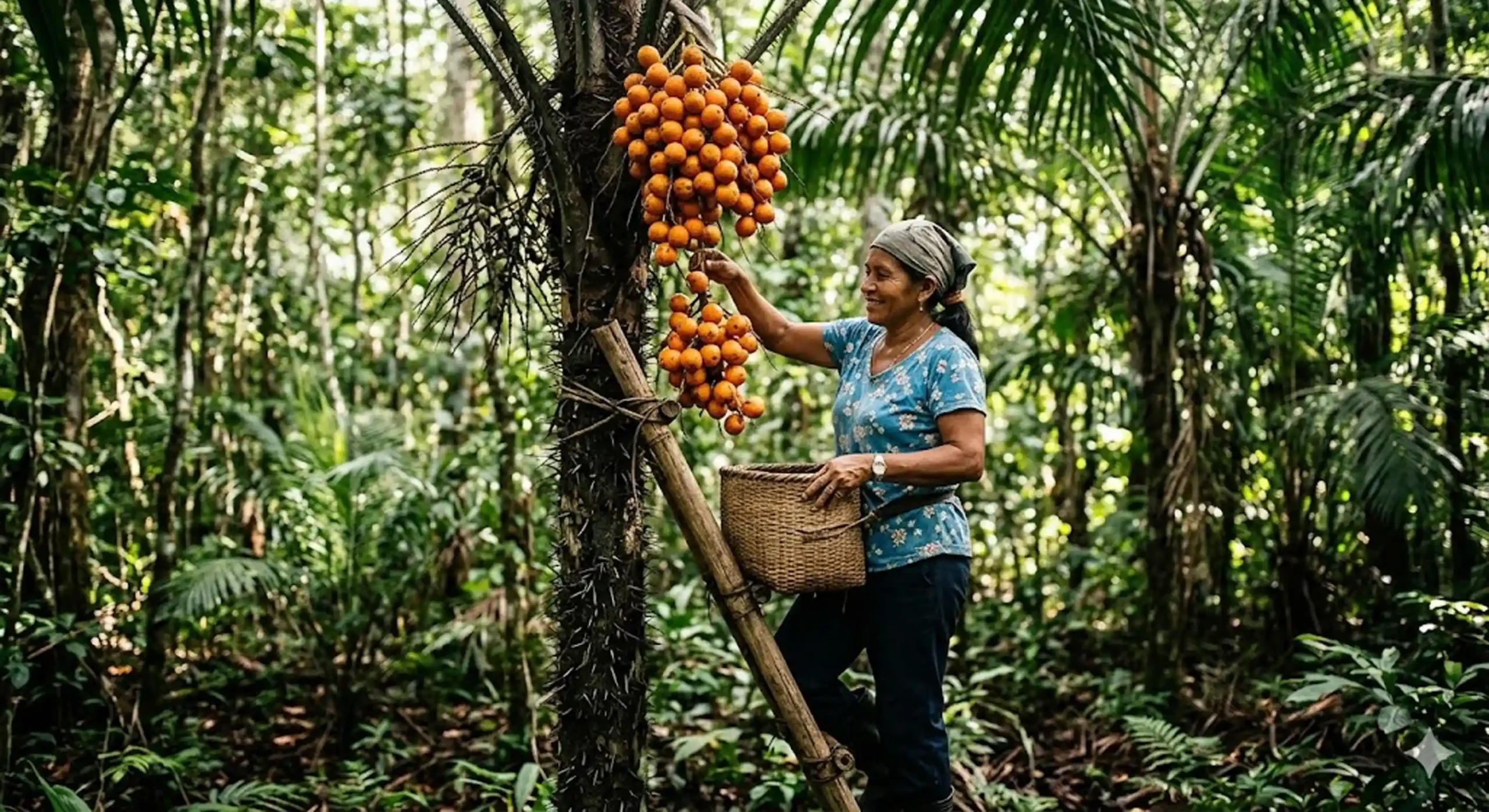
In the Amazon, tucumã is the orange fruit of a spiny palm that science calls Astrocaryum aculeatum. It grows in heavy clusters, guarded by a stone so hard that it resists almost everything, and it holds a firm, oily and deeply coloured pulp under a thin skin. That pulp is the reason the palm matters far beyond the landscape it decorates. At least fifteen animal species in the Amazon depend directly on tucumã to survive during periods when other food runs short in the forest. The scientific record turns the tree into a genuine hub for the distribution of energy across local biodiversity, and into one of the most valued fruits on the tables of northern Brazil.
From colourful birds such as macaws to ground mammals such as the tapir and the agouti, the orange fruit works as a pillar of biological support. The fatty and nutritious pulp delivers the calories those animals need to carry out their vital functions and, in return, they help disperse the seeds, guaranteeing the natural regeneration of the forest without any direct human intervention. The relationship works like a silent calendar. When other plants stop producing, the palm keeps its pantry open and sustains entire populations of birds and mammals that would otherwise have to travel far greater distances in search of a meal.
The agouti that buries a seed on the bank of a creek becomes, without knowing it, the gardener of the next generation of palms. The ecology of tucumã as a food resource for wildlife and for human communities shows how nature organises almost perfect systems of cooperation, in which every participant takes something and leaves something behind. Nothing in that exchange was designed in an office and nothing in it requires a subsidy. The forest simply pays itself back, fruit after fruit, season after season, and the animals do the planting for free.
From riverside breakfast to celebrated cuisine
In the riverside and quilombola communities of Pará, in northern Brazil, the fruit is a sacred item of the morning diet. The image of bread filled with tucumã and cheese, served early alongside coffee, explains the place the palm occupies in the food identity of the region better than any statistic could. The pulp, firm and intensely coloured, with a flavour nobody forgets, is eaten plain and without ornament, and the gesture repeats itself across entire riverside villages, generation after generation. What used to be seen only as a regional subsistence habit is now taking on the shape of technological innovation and large scale economic sustainability.
The move from popular breakfast to signature cooking happened without the fruit losing its origin. Chefs and traditional cooks explore the pulp in savoury and sweet preparations, taking advantage of the natural richness that tucumã brings to any recipe. That richness has a chemical explanation: science found that the oil extracted from both the pulp and the kernel has superior regenerative properties, high in beta carotene and in fatty acids that are not found in plants from other biomes in the world. The same component that feeds a tapir in the forest is the one that gives colour and texture to a dish served in the city.
An oil that travelled from the forest to Europe
That chemical wealth allowed tucumã oil to become a solid and growing presence in the European market. Cosmetic industry giants in France and Germany began sourcing the ingredient for moisturising creams, anti ageing products and high performance hair treatments. The international interest is no accident, because tucumã oil forms a protective barrier on the skin that prevents water loss, with an effect similar to that of synthetic silicones but with the advantage of being fully biodegradable and of plant origin. The oil is also considered one of the richest sources of vitamin A in the world, beating the carrot in beta carotene concentration.
To meet that qualified demand, the tucumã bioeconomy in Pará organised itself around transparent and ethical supply chains. Extractivist cooperatives in municipalities such as Abaetetuba and Cametá were trained to improve the harvesting and the processing of the fruit, making sure the extracted oil keeps the purity required for export. Organic certification and fair trade seals became the passport a product needs to reach European shelves. The model allows the added value to stay in the forest and turns the traditional knowledge of local populations into a powerful economic asset that discourages deforestation.
The economic dynamic created by the palm proves that a standing forest is far more profitable than land converted into pasture. While extensive cattle ranching degrades the soil, tucumã regenerates areas and sustains the water flow of the region. The bioeconomy also creates decent jobs for young people and for women in rural areas, who now see in seed processing a real alternative to migration towards the big cities. It is a mechanism in which commercial success in Europe directly funds the conservation of Amazonian wildlife and the dignity of those who protect Brazilian natural sanctuaries.
Nothing is wasted in the cycle of the fruit
Exporting the oil also pushed biotechnology research inside universities in Pará. Researchers are now studying how the residues of extraction, such as the extremely hard stone, can be turned into activated charcoal or into biomass for clean energy. Nothing is lost in the tucumã cycle. What begins as food for an agouti on the bank of a creek ends as an essential component in a boutique in Paris, closing a circle of respect and appreciation that defines what development in the Amazon should look like in the twenty first century.
Sustainable extraction generates income for thousands of families in Pará and guarantees the preservation of ecological corridors that are vital for birds and mammals. By choosing certified products, European consumers help keep wildlife protected and extractivist communities resilient in the face of global climate change. Understanding the real value of every fruit that falls to the forest floor is the first step towards guaranteeing that future generations still find the vibrant and productive Amazon we know today.
Reporting: Anne Silva / Amazonia Mag. Source: original reporting by Revista Amazônia.

Editor, English Edition — Amazonia Mag
Anne Silva is the editor of Amazonia Mag, the English-language edition of Revista Amazônia. She curates, translates and adapts the outlet's science and environment coverage for an international audience, reporting on Amazon wildlife, flora, rivers, climate and research. Every story she edits is grounded in peer-reviewed studies, official data and on-the-ground reporting from the Revista Amazônia newsroom in Belém, Pará, Brazil. More by Anne Silva →