
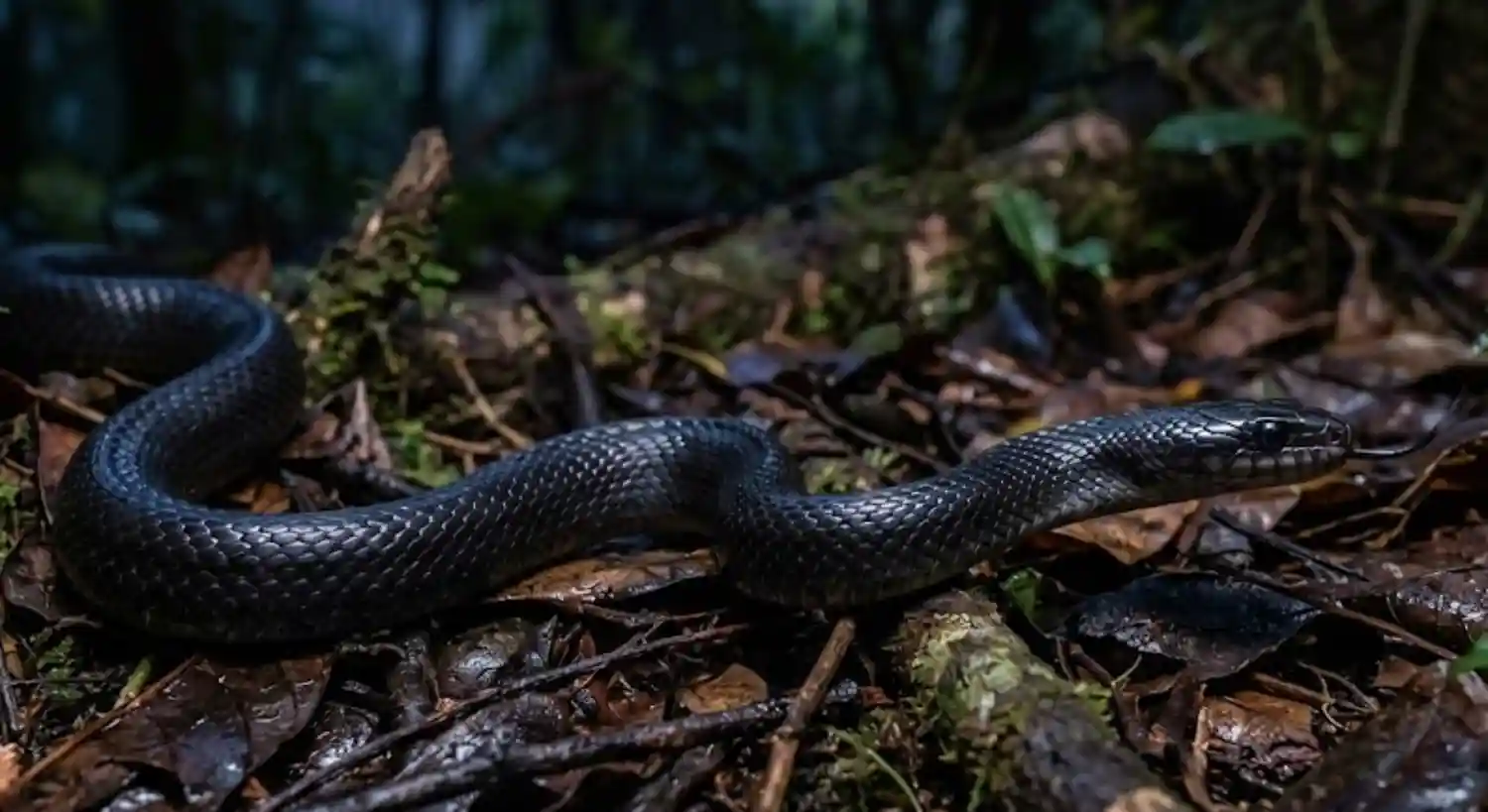
Among all the snakes of Brazil, one stands out for a reason that sounds like fiction: it hunts, subdues and swallows other snakes, including highly venomous species such as the jararaca pit viper and the cascavel rattlesnake. This is the mussurana, a reptile widely distributed across the tropical zones of the country, which evolved a natural immunological resistance to toxins that would be lethal to most vertebrates. Established herpetological facts show that its body neutralises the destructive effects of venom proteins in the bloodstream, turning a dangerous predator into a routine meal on the forest floor.
A diet made of other snakes
The feeding behaviour centred on eating other reptiles is scientifically called ophiophagy, and it places this animal in a very specific ecological niche of high environmental relevance. Its survival strategy does not rely on producing venom of its own to paralyse targets, because it is not a venomous snake but a constrictor. The efficiency of the attack comes from an uncommon combination: the chemical neutralisation of the bites received during the confrontation, and the application of superior mechanical force to immobilise the prey.
That double condition, immunity plus constriction, explains why the mussurana can afford a menu that for almost any other animal would amount to a death sentence. Most predators that run into a venomous snake end the encounter with severe injuries or die within hours. Here the opposite happens: the fight is part of the feeding routine and repeats itself throughout the year, without the reptile paying any visible physiological price for it.
The biomechanics of constriction and combat
The hunt requires a silent approach and a strike aimed, in most cases, at the head or the upper third of the other snake’s body. Once the initial bite is locked in, the mussurana quickly wraps the target’s body with its own muscular coils, applying constant pressure that interrupts the prey’s blood flow and motor activity. Even when the venomous snake manages to counterattack and inject venom into the tissues of its attacker, the molecular defences of the latter prevent necrosis or circulatory collapse from setting in.
This systemic immunity is directed mainly against bothropic venoms, typical of the jararacas, which in other animals cause severe tissue damage and haemorrhage. Biochemical factors present in the blood plasma of the mussurana bind to metalloproteinases and other destructive venom enzymes, inactivating their ability to digest the walls of blood vessels. That internal barrier allows the reptile to carry on with swallowing even after taking multiple doses of toxins during the mechanical restraint of its opponent.
A quiet ally of the countryside
The presence of this predator in forest transition areas and in farmland next to fragments of native woodland has a direct impact on the safety of local human communities. By keeping populations of venomous snakes under natural biological control, the species reduces the likelihood of accidental encounters between people and venomous animals in fields and along rural paths. That factor earned the animal its historical reputation as an ally of farmers, who avoid killing the reptile once they recognise its practical usefulness in managing local wildlife.
Its efficiency in population control comes down to a simple fact: a single adult mussurana needs a steady supply of organic matter, which over the course of a year means consuming specimens of a size similar to its own. The animal’s digestive tract is adapted to process the long skeleton and dense tissues of other snakes slowly and completely. Gastric acids break down even the venom glands and the injecting fangs of the swallowed snake, ensuring that the nutrients are fully used without additional risk to the predator’s stomach.
From juvenile red to blue-black
Young individuals display a colour pattern that is markedly different from the one seen in the adult stage of the life cycle. Juvenile mussuranas show a reddish dorsal colouring, with a dark band across the head region and a pale collar around the neck, a visual trait that changes gradually as the animal reaches sexual maturity. During growth, melanin production increases continuously, so that the scales take on a uniform, glossy blue-black or dark grey tone in adulthood.
That chromatic shift goes hand in hand with the expansion of its hunting range and the move towards larger prey in the understorey. While juveniles occasionally feed on small lizards and rodents, limited by the size of their jaws, adults focus their energy almost exclusively on the search for other snakes. The highly flexible jaw, joined by elastic ligaments, allows the animal to expand its mouth cavity enough to swallow prey with a body diameter equal to or slightly greater than its own.
A role in the food web
As a specialised predator at the top of the reptile subnetwork, the species carries out the fine regulation of ground-level biodiversity in Brazilian ecosystems. The removal or decline of these ophiophagous snakes in a given habitat sets off a cascade effect that alters the density of rodents and amphibians, shifting the balance of seed and insect consumption. The stability of tropical forests and of Cerrado areas depends on the correct functioning of those cross-predation pressures among snake species themselves.
The animal moves mainly during twilight and night hours, when ambient temperature drops and venomous snakes begin their ambush foraging. The mussurana makes active use of its vomeronasal organ to track the chemical trails left by other snakes on damp soil or in low vegetation. That precise chemical tracking lets it locate the shelters and ambush points of the jararacas, starting the fight under conditions that favour the immune predator.
Protecting what already protects us
Understanding the biology of the mussurana reinforces the need to conserve reptiles as vital components of the country’s environmental health. Often neglected or persecuted because of a general lack of knowledge about their ecology, these snakes show how the balance of nature rests on complex and efficient self-regulating mechanisms. Protecting the habitats that shelter these animals means securing the continuity of free ecological services that safeguard biodiversity and improve biological safety across Brazilian rural landscapes.
The blood plasma of the mussurana contains specific proteins that bind to the toxins of bothropic venom, inactivating the destructive action of the enzymes in circulation. This biological mechanism allows the reptile to withstand the defensive bites of its prey and to complete the process of mechanical constriction without suffering systemic damage or necrosis in the tissues affected by the fight. It is, in short, a lesson in natural history worth remembering before raising a blade against any snake found in the field.
Reporting: Anne Silva / Amazonia Mag. Source: Revista Amazônia, revistaamazonia.com.br

Editor · Amazonia Mag
Anne Silva is the editor of Amazonia Mag, the English-language edition of Revista Amazônia. She curates, translates and adapts the outlet's science and environment coverage for an international audience, reporting on Amazon wildlife, flora, rivers, climate and research. Every story she edits is grounded in peer-reviewed studies, official data and on-the-ground reporting from the Revista Amazônia newsroom in Belém, Pará, Brazil. More by Anne Silva →