
Amid the asphalt and concrete of Belém’s Batista Campos neighborhood, there is a portal to the tropical forest that can surprise even experienced researchers. In a space covering just five hectares, the Museu Paraense Emílio Goeldi shelters a concentration of tree and animal species greater than that found in many native areas of similar size.
Visiting Museu Goeldi Belém means following dirt trails that reproduce part of the complexity of primary forest without leaving the urban center. The Amazon seems to have been condensed into a small refuge of living biodiversity, preserved inside a historic city and surrounded by streets, buildings and the everyday pace of Belém.
A concentrated forest in the middle of the city
According to the scientists who have studied the site, the density of trees and animals is one of the park’s most remarkable features. The fact helps explain why such a limited area can offer such an intense encounter with nature.
The dirt paths are lined with imposing, centuries-old trees. Brazil nut trees, kapok trees and andiroba trees form a protective canopy that provides shade and creates an atmosphere very different from that of the avenues around the museum.
Under that canopy, visitors can see Amazonian animals in spacious, well-maintained enclosures. The Belém zoobotanical park is a living exhibition that offers access to species that are often difficult to spot in the wild because of the forest’s vastness and density.
A sloth may be seen slowly climbing a trunk, while a black caiman rests in the sun along the edge of a pool. High above, a harpy eagle watches the activity from the treetops. Mammals, birds, reptiles and fish are all part of this diversity gathered in one place.
The Amazonian manatee, one of the park’s best-known residents
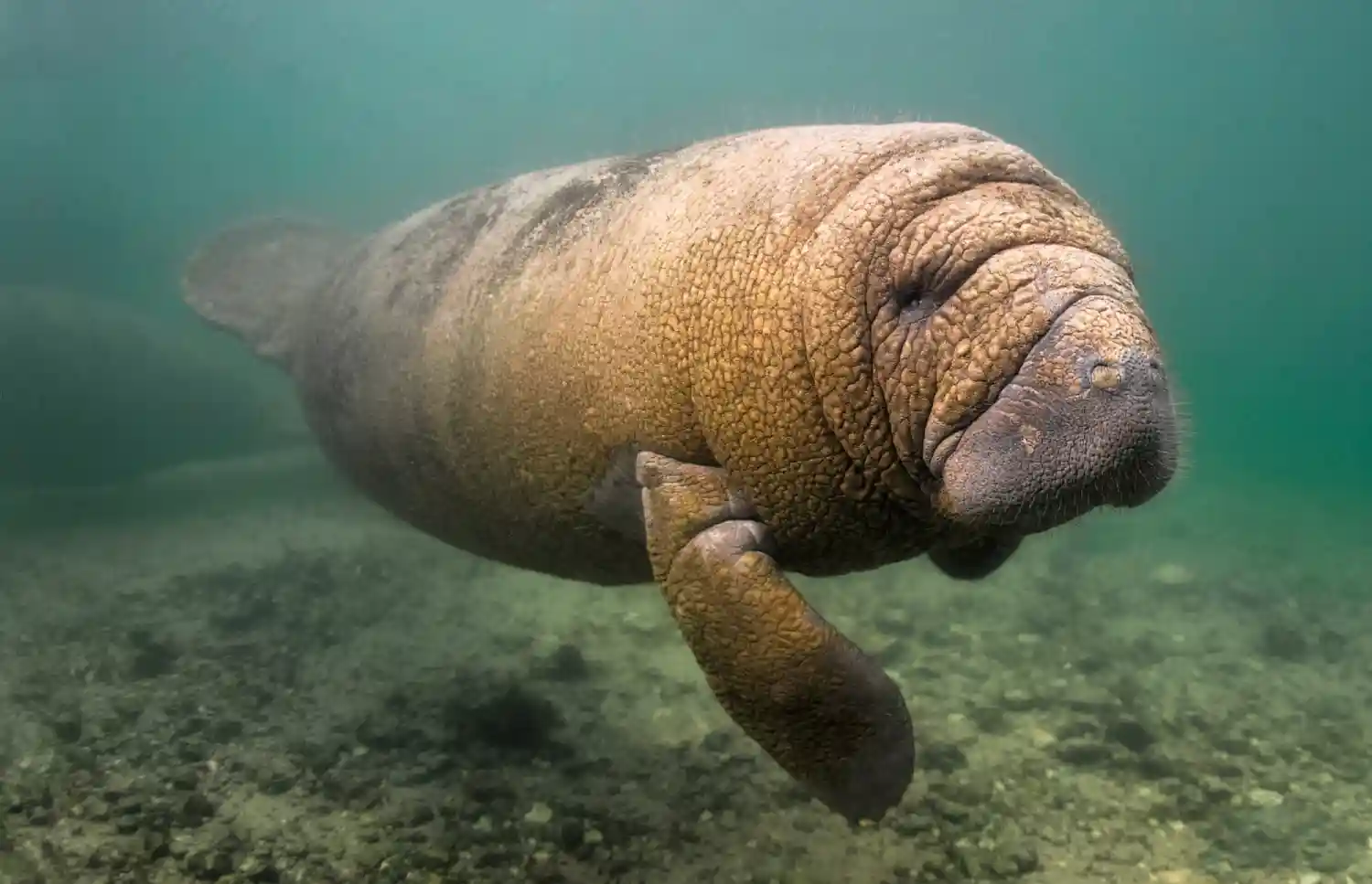
Among Goeldi’s most distinguished and captivating residents is the Amazonian manatee, a gentle aquatic mammal that once stood on the brink of extinction. The museum’s tank provides these animals with a safe home and serves as the focus of important conservation programs.
Watching them feed becomes a lesson in biology and protection. When they surface to consume large amounts of aquatic vegetation, the manatees make visible the relationship among animals, plants and freshwater environments in the Amazon.
The museum’s mission extends well beyond displaying animals to the public. It also plays a role in rehabilitating and reintroducing animals rescued from trafficking or illegal captivity, linking environmental education with direct wildlife protection.
Interaction with the animals is designed to be safe and educational. Observation, rather than spectacle, helps explain that each species belongs to an ecological network and that conservation depends on understanding how that network works.
History, architecture and Amazonian science
The site’s history is as rich as its nature. Founded in 1866, the Museu Paraense Emílio Goeldi is the oldest research institution in the Amazon and one of the earliest in Brazil.
The museum’s history includes 25 years devoted not only to preservation, but also to cutting-edge scientific knowledge about the region’s fauna, flora, geology and human populations. Over more than a century, researchers from around the world have crossed its gates to study its collections.
Those collections include millions of items. They contain specimens of plants, animals, fungi and minerals, along with an extensive archaeological and ethnological archive. For Amazonian science, these materials are essential to research into the region’s biodiversity and human history.
The collections also support public policies concerning conservation and the sustainable use of the forest’s natural resources. Behind the trails and animal enclosures, therefore, is a scientific structure that expands knowledge of the Amazon.
The park also contains historic buildings that are part of Belém’s architectural heritage. The Aquarium and Rocinha are examples of structures associated with the rubber era. Today, they house temporary exhibitions and research laboratories.
Victoria water lilies and the art of noticing
The combination of exuberant nature and historic architecture gives the museum a distinctive, nostalgic atmosphere. A visitor can move from a shaded trail to a historic building and then to an enclosure where Amazonian wildlife appears in a carefully managed setting.
The Victoria water lily ponds are among the park’s most photographed spots. Their enormous circular leaves and flowers that open at sunset create one of the most recognizable scenes along the route.
Late in the afternoon, the light emphasizes the blue and green tones of the vegetation and the reflection of historic façades in the water. At that moment, Belém’s architecture and the visual force of Amazonian flora occupy the same landscape.
Walking through Goeldi is also an exercise in patience. The slowly climbing sloth, the motionless black caiman and the harpy eagle surveying the park from above all show that observing nature requires attention to small movements, pauses and sounds.
Environmental education and a visit connected to the future
The Museu Goeldi’s social impact is closely tied to its role as an environmental education center. Children and adults learn there why Amazonian biodiversity matters and how scientific knowledge can help protect it.
Guided visits and interactive activities awaken scientific curiosity and strengthen ecological awareness among younger generations. By presenting the Amazon in a five-hectare setting, the museum shows that living forest has immeasurable value.
It also demonstrates that coexistence between people and nature is possible and necessary. The zoobotanical park, historic buildings, ponds and scientific collections are parts of one experience in which conservation, research and education reinforce one another.
To organize a visit, it is best to set aside at least half a day. The museum is open from Tuesday through Sunday, and admission is affordable. Comfortable clothes and insect repellent are recommended for walking along the trails.
A visit to Goeldi is a journey through time and nature. It offers a way to reconnect with the roots of the Amazon, observe animals that need protection, encounter centuries-old trees and understand that conservation can also take place in the center of a city.
The Museu Emílio Goeldi is much more than a zoobotanical park. Behind its public spaces are some of the world’s largest scientific collections about the Amazon, with millions of plant, animal, fungal and mineral specimens, as well as a vast archaeological and ethnological archive.
Every step along the trails connects that scientific history with a living experience. The visit encourages an appreciation of biodiversity and renews the commitment to one of the world’s greatest natural and scientific treasures.
Reporting: Anne Silva / Amazonia Mag

Editor, English Edition — Amazonia Mag
Anne Silva is the editor of Amazonia Mag, the English-language edition of Revista Amazônia. She curates, translates and adapts the outlet's science and environment coverage for an international audience, reporting on Amazon wildlife, flora, rivers, climate and research. Every story she edits is grounded in peer-reviewed studies, official data and on-the-ground reporting from the Revista Amazônia newsroom in Belém, Pará, Brazil. More by Anne Silva →