
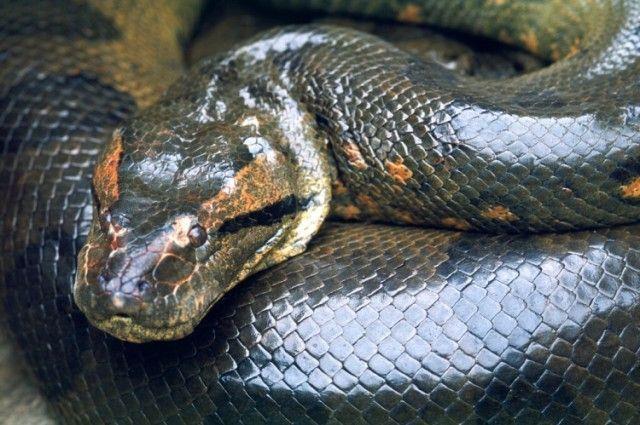
The Brazilian Amazon contains one of the planet’s most diverse reptile communities. According to official data from the Chico Mendes Institute for Biodiversity Conservation, ICMBio, the region is home to 189 snake species, ranging from giant constrictors to small snakes with highly lethal venom.
In Amazonas state, where urban expansion frequently meets the forest, these animals are more than figures in local folklore. They are also important parts of ecological balance and contributors to a scientific frontier that is turning dangerous substances into potential tools for modern medicine.
The relationship between snakes and people therefore requires caution, knowledge, and respect. Some species can cause severe accidents, while others perform essential environmental functions and help reveal the biotechnology potential contained in Amazonian biodiversity.
Jungle giants that rely on strength
Contrary to popular belief, the region’s largest snakes are not venomous. Boas and anacondas belong to the Boidae family and capture prey through muscular strength rather than venom.
Instead of relying on a venomous bite, these animals use constriction to immobilize their prey. Their strategy is associated with the size and power of their bodies, which place them among the most prominent large reptiles in the Amazon forest.
According to biologist Luciana Frazão of the Federal University of Amazonas, UFAM, specimens in this group can reach an impressive eight meters, or about 26 feet, in length. Although their size often fuels stories and fears, the biologist says they rarely pose a direct threat to people in their natural habitat.
The presence of these giants also shows why size alone is not enough to determine danger. Constrictors should not be confused with venomous snakes of medical importance, because their prey-capture method and the risks associated with it are different.
The four groups of medical interest
The most significant public health danger is concentrated in specific groups responsible for severe snakebite accidents. Health authorities classify venomous snakes of medical interest as lanceheads, bushmasters, rattlesnakes, and coral snakes.
Lanceheads, in the genus Bothrops, account for 87% of snakebite accidents in Brazil. They are adaptable snakes that tolerate environments modified by people, a characteristic that can bring them closer to occupied areas.
The bushmaster, Lachesis muta, is considered the largest venomous snake in the Americas. It can reach four meters, or about 13 feet, and prefers primary forests. Its Portuguese name, surucucu-pico-de-jaca, refers to the pointed scales that resemble the skin of the jackfruit.
Rattlesnakes, in the genus Crotalus, are easily identified by the rattle on their tails. They prefer open areas and fields, and they are the group associated with the highest number of deaths from snakebite in the country because of the lethality of their venom.
True coral snakes, in the genus Micrurus, have the most potent neurotoxic venom among the groups listed. Even so, bites are rare because of their shy behavior and their habit of living beneath dry leaf litter on the forest floor.
From venom to medicine
Science has transformed part of the fear surrounding snakes into a source of hope. Substances extracted from lancehead venom were fundamental to the creation of Captopril, a revolutionary medication for controlling blood pressure.
This connection between venom and treatment shows that a substance capable of causing harm can also provide valuable information for human health. The potential is not limited to medicines used to control blood pressure.
Highly efficient surgical adhesives for healing nerves and tissues in people with diabetes are also being developed from these toxins. The work demonstrates that conserving Amazonian species is both a way to protect natural heritage and an investment in human health.
The reproduction credit associated with this content is listed as aca.org.br. Information about the anaconda as a guardian of the waters and its true role in the ecosystem is also presented as a related topic for understanding these snakes and Amazonian waterways.
Prevention starts with the surroundings
For specialists, safer coexistence depends on caution and cleanliness. Accumulated garbage and debris attract rodents, which provide food for snakes and may bring them closer to homes.
The recommendation is not to chase the animals, but to reduce the conditions that encourage their approach. Keeping surrounding areas clean can decrease the availability of food near houses, as part of an environmental prevention strategy.
It is also important to observe a snake’s characteristics without trying to capture it. Identification can help health professionals choose the specific antivenom, such as anticrotalic or antibothropic serum.
What to do after a bite
After an accident, wash the site only with soap and water. Take the victim to the nearest hospital immediately, because clinical evaluation and the appropriate treatment are priorities.
If possible, take a photograph of the snake or identify its characteristics. This information can support the choice of a specific antivenom, always within hospital care.
Some measures must be avoided completely. Never apply a tourniquet, cut the wound, or suck the bite site, and do not use home remedies that could mask symptoms and delay clinical diagnosis.
Snakes play a vital role as pest controllers in nature. Protecting people therefore also requires recognizing their ecological function and distinguishing species that pose a medical risk from those that, like the great constrictors, contribute to the balance of the forest in another way.
“Respect and investment in science are the keys to extracting benefits from these animals while ensuring the safety of populations,” concludes Dr. Luciana Frazão of UFAM.
Reporting: Anne Silva / Amazonia Mag

Editor, English Edition — Amazonia Mag
Anne Silva is the editor of Amazonia Mag, the English-language edition of Revista Amazônia. She curates, translates and adapts the outlet's science and environment coverage for an international audience, reporting on Amazon wildlife, flora, rivers, climate and research. Every story she edits is grounded in peer-reviewed studies, official data and on-the-ground reporting from the Revista Amazônia newsroom in Belém, Pará, Brazil. More by Anne Silva →