
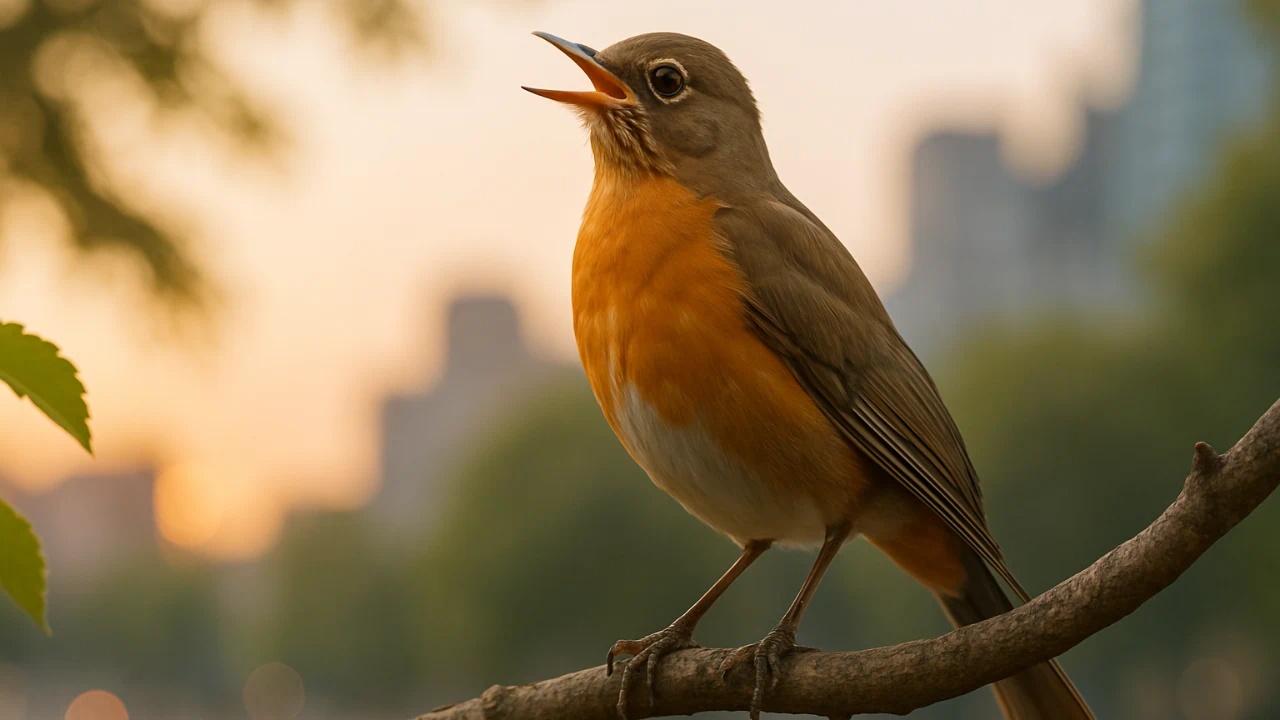
If you have ever been woken before sunrise by a strong, melodious song drifting through the window, chances are it was a rufous-bellied thrush, known in Brazil as the sabiá-laranjeira (Turdus rufiventris). This bird, a symbol of the country, is one of the best loved and most recognized, not only for its beauty but for the unmistakable sound that announces the dawn.
Even surrounded by buildings and urban noise, it manages to keep alive a rare connection between nature and city life. What makes this thrush so special?
Why it sings so early
The song of the rufous-bellied thrush is one of its most appealing traits. It starts singing its melodies long before sunrise, while the silence of the small hours still reigns. The choice is not random: singing at that time lets its voice ring out free of competing sounds and travel farther.
For the thrush, the ritual serves two purposes. The first is to mark territory, a way of telling other males that the space already has an owner. The second is to attract the attention of females. In cities, traffic and human activity noise can even change the time at which the bird begins to sing, another sign of how attuned these birds are to their soundscape.
There is a simple logic behind the schedule. In the small hours there are few sources of noise, so a powerful song is heard clearly over long distances. For a bird that needs to announce its presence to neighbors and potential mates, taking advantage of that silence is an economical and effective way to be heard.
A bird that adapts to the rhythm of cities
The rufous-bellied thrush is a true example of adaptation. Originally a resident of forests and woodland, it found a new home in cities. Squares, backyards and even balconies became safe refuges with plenty of food.
The secret lies in its varied diet: it eats fruit, insects and small worms, which makes survival in urban settings easier. A species that accepts very different foods does not depend on a single resource, and so it can get by in a garden, a park or a neighbor’s fruit tree.
Another striking trait is its boldness. Unlike many birds, the thrush is not so wary of people. It quickly learns to live alongside movement and even comes close to eat fruit left in gardens. That friendly coexistence made it a symbol of resilience and of harmony between people and nature.
The symbol that stands for Brazil in sound and color
Few people know it, but the rufous-bellied thrush has been Brazil’s national bird since 2002. The choice was no accident: it stands for the cheerful, resilient and musical spirit of the Brazilian people. The orange-toned underparts recall the warmth of the tropics and the energy of the climate, while the song expresses freedom and emotion.
Its presence in practically every region of the country also strengthens its national identity. From the south to the northeast, it is common to hear it sing in the first hours of the day, a reminder that, even among concrete, living nature still pulses.
The thrush’s ecological importance
More than a talented singer, the thrush plays an essential role in nature: it helps spread seeds. By eating fruit and later dropping the seeds in other places, it contributes to the growth of new plants and the regeneration of green areas. That process is vital for keeping ecosystems going, especially in cities, where vegetation is scarce.
In many regions these birds are called “nature’s gardeners,” because they bring life to unlikely places. Every tree that grows from a seed they dispersed is a quiet reminder of how much small actions by wildlife shape the balance of the environment.
Details that delight observers
The song changes by region: just as people have accents, the thrush’s song varies from place to place, and researchers describe song types tied to each geographic area. A thrush from the northeast can sound different from one in the south.
Both parents raise the young: male and female both take part in feeding the chicks, which stay in the nest for around two weeks after hatching.
Loyalty to territory: males use song to defend the space they regard as their own, above all during the breeding season.
A learner’s song: part of the repertoire is learned, which helps explain why regional song variants exist.
There is something poetic in the song of the rufous-bellied thrush. It cuts through the silence of the small hours and seems to announce that the day is about to be born, even while it is still dark. At a time when the rush of city life disconnects us from nature, hearing this bird is almost an invitation to slow down, a reminder that beauty is still close by, even between walls and streets.
So the next time its song wakes you before the alarm clock, resist the urge to be annoyed. Listen instead. That melody is a daily gift from nature, a sign that life carries on, firm, resilient and melodious, even in the quietest small hours.
Reporting: Revista Amazônia newsroom / Amazonia Mag

Editor · Amazonia Mag
Anne Silva is the editor of Amazonia Mag, the English-language edition of Revista Amazônia. She curates, translates and adapts the outlet's science and environment coverage for an international audience, reporting on Amazon wildlife, flora, rivers, climate and research. Every story she edits is grounded in peer-reviewed studies, official data and on-the-ground reporting from the Revista Amazônia newsroom in Belém, Pará, Brazil. More by Anne Silva →