
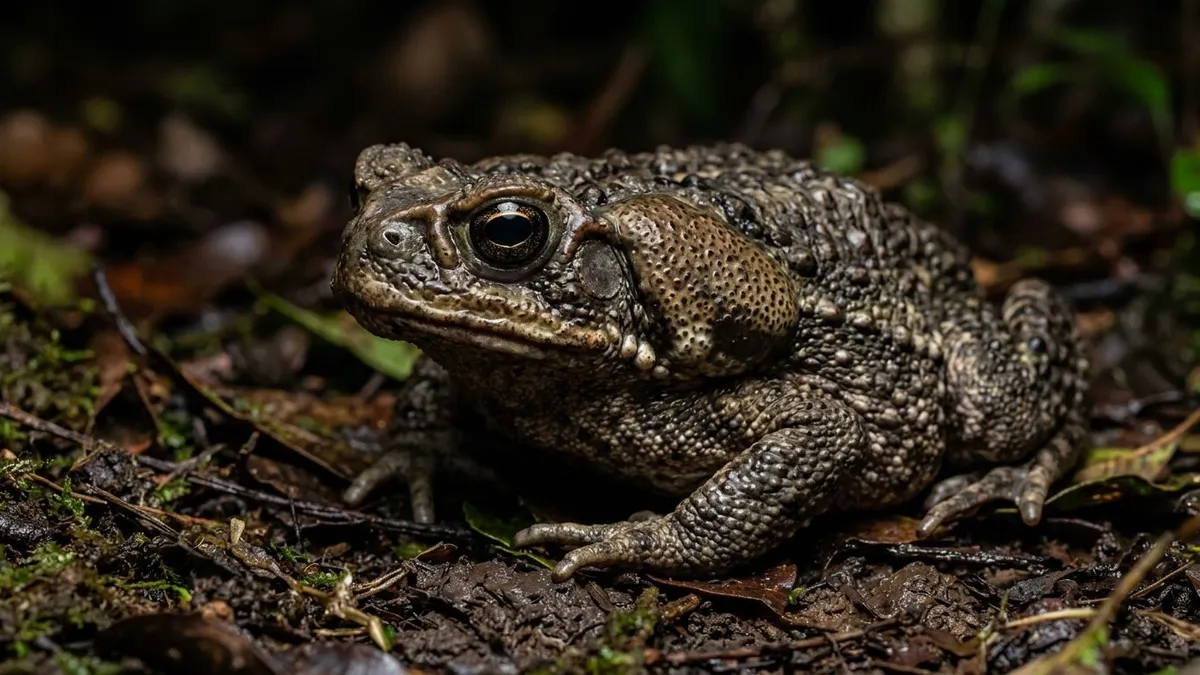
The cane toad (Rhinella marina) has a highly specialized defense system centered on two large glands behind its eyes, over the shoulders. These structures, called parotoid glands, store a complex mixture of toxic substances known as bufotoxin. Unlike venomous animals that inject poison actively with teeth, fangs or stingers, the amphibian relies on physical contact or outside mechanical pressure to put this defensive compound onto the mucous membranes of a predator.
The mechanism proves its strength when unwary predators or pets, especially dogs, try to bite the toad. The strong compression of a bite triggers an immediate flow of a whitish, sticky fluid straight into the mouth of the attacker. The toxins pass quickly through the mucous membranes and cause severe poisoning that hits the cardiovascular system and the central nervous system within minutes.
The anatomy of the parotoid glands
The parotoid glands are prominent skin modifications on the upper rear part of the head of the cane toad. They look rough and perforated with pores, and they contain many internal lobes connected to microscopic ducts that open on the surface of the skin. This structure allows large volumes of dense toxic secretion to be stored continuously. The blood supply around the glands is very efficient, which provides the metabolic support needed for the constant production of the alkaloids and steroids that form the toxin.
Besides the main pair of parotoid glands, the cane toad has smaller secondary glands spread along the back and the hind limbs. Even so, the parotoids hold most of the toxic volume and have the cell architecture to withstand high mechanical pressure without irreversible tissue damage. The connective tissue around the glands acts as a cushion and directs the force of an impact toward the outer secretion pores during an attack.
Biochemistry and cell-level effects of bufotoxin
Bufotoxin is a complex mixture that contains bufadienolides, bufotenines and biogenic amines such as serotonin and adrenaline. The bufadienolides act in a way similar to medicinal cardiac glycosides, and directly inhibit the sodium-potassium pump (Na+/K+-ATPase) in the membranes of heart cells. This inhibition upsets the electrolyte balance of the cell and leads to a buildup of calcium inside it. As a result, heart tissue suffers severe rhythm disturbances, with ventricular arrhythmias, fibrillation and, in the worst cases, irreversible cardiac arrest.
At the same time, the biogenic amines in the secretion act as strong vasoconstrictors and stimulants of the nervous system. On contact with the mucous membrane of the mouth, these substances cause intense local irritation, heavy drooling and changes in circulation throughout the body. The combination of a failure of ion transport in muscle and overstimulation of the nerves makes the skin secretion of the cane toad one of the most effective chemical defenses among South American amphibians, able to put predators of many sizes out of action.
A defense that works under pressure
One of the most misunderstood facts about the cane toad is how its toxin is released. The toad has no muscle wrapped around the gland ducts built to fire the toxin like a weapon, so the usual way the secretion comes out is by direct deformation of the glandular tissue, such as when another animal bites it or steps hard on its back. That is why the defense is described as passive, and why it works so well against animals that grab the toad.
When it is not under direct physical threat, the toad keeps its secretions safely stored inside the cavities of the glands. This passive character saves the energy the animal would otherwise spend on constantly replacing toxin. In practice, the main danger for other animals lies in the moment of the bite or the crushing contact, not in any active attack by the amphibian.
Why dogs are so vulnerable
Conflicts between pet dogs and the cane toad are common in rural and semi-urban areas of Brazil. Driven by predatory instinct or curiosity, dogs tend to bite the amphibian hard on the head and trunk, pressing exactly on the parotoid glands. At the moment of impact, the bufotoxin is released straight onto the oral mucosa, gums and tongue of the dog. The abundant blood supply of the mouth favors very fast absorption, and the cardioactive compounds enter the bloodstream within seconds.
Clinical signs in dogs appear almost at once after contact. The animal shows excessive salivation with whitish foam, intense redness of the gums, vomiting, disorientation and seizures. As the toxin reaches the heart muscle, the heartbeat becomes irregular and may slow down or race out of control, and death can follow in under an hour without emergency veterinary care. The lack of natural immunity in these small and medium-sized mammals makes the poisoning worse.
Reproduction and the life cycle around water
The life cycle of the cane toad is closely tied to temporary and permanent bodies of water, where the species breeds. During the rainy season, males gather on the edges of ponds, puddles and slow streams and start their breeding calls. The deep, rhythmic croak attracts females and marks small mating territories. This intense noise also tends to draw the attention of nocturnal predators to the breeding sites.
Cane toads lay long gelatinous strings holding thousands of black eggs attached to submerged vegetation. The chemical protection of the species is present at every stage of development: eggs and tadpoles also produce moderate amounts of toxins similar to bufotoxin, which discourages predation by fish and aquatic insects. This biochemical safeguard supports a high survival rate for the young before metamorphosis and the move to a mostly land-based adult life.
An ecological role in controlling invertebrates
Despite its powerful chemical defense, the cane toad performs a vital function in the biological control of its habitat. It is a generalist nocturnal predator and eats large amounts of beetles, ants, termites, spiders and small mollusks. Its ability to live in places from dense forest to open fields and areas altered by people makes it an efficient regulator of invertebrate populations that could become agricultural or urban pests.
The toad does not pose an active danger to people or to other animals, since its defensive arsenal is triggered only by direct physical aggression. By recognizing the central role of the amphibian in insect control, and by taking preventive steps with pets at night, it is possible to protect both the health of the animals at home and this important regulator of tropical ecosystems.
Reporting: Natália Santos / Amazonia Mag

Editor · Amazonia Mag
Anne Silva is the editor of Amazonia Mag, the English-language edition of Revista Amazônia. She curates, translates and adapts the outlet's science and environment coverage for an international audience, reporting on Amazon wildlife, flora, rivers, climate and research. Every story she edits is grounded in peer-reviewed studies, official data and on-the-ground reporting from the Revista Amazônia newsroom in Belém, Pará, Brazil. More by Anne Silva →