
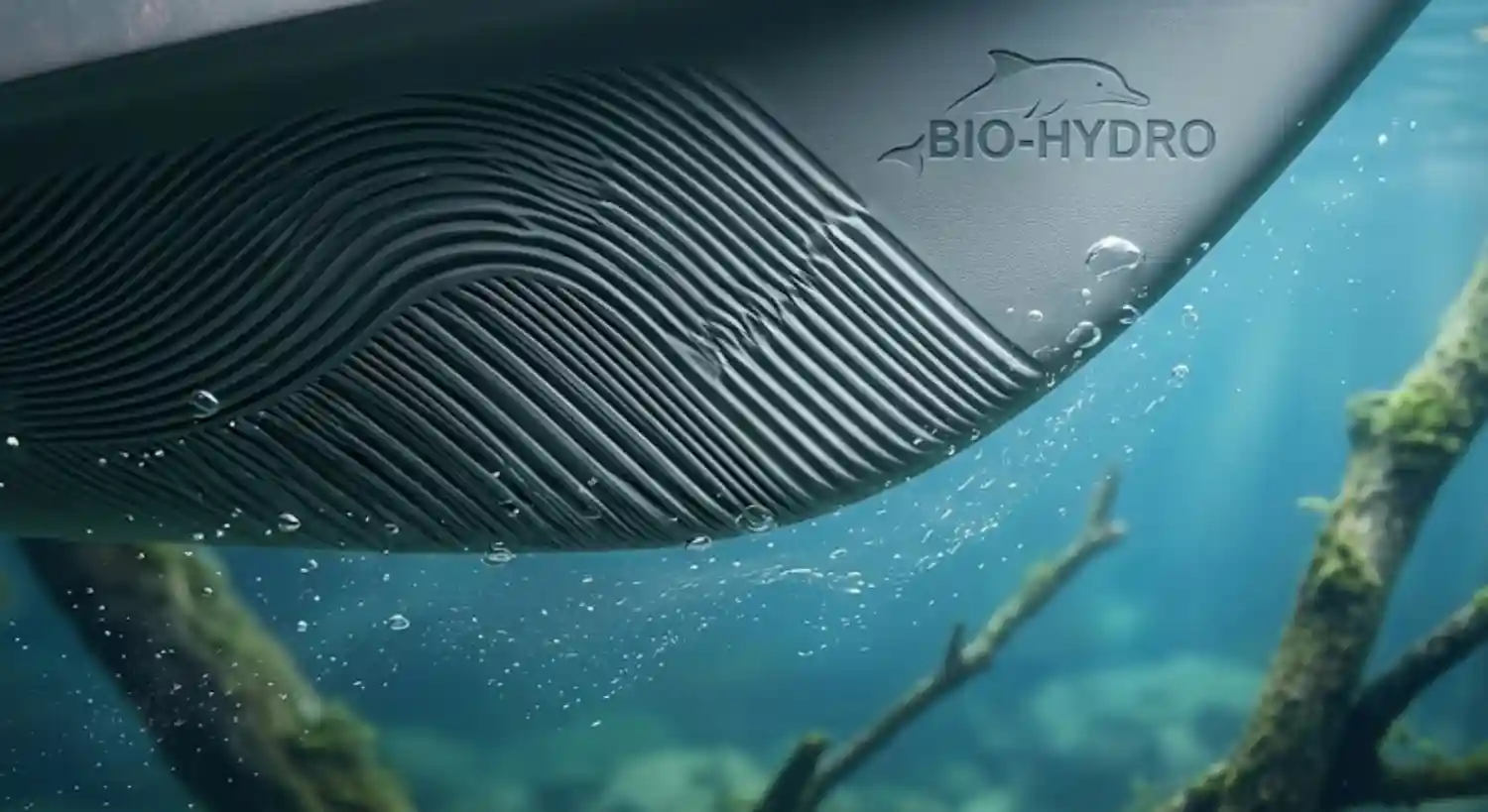
The skin of dolphins and of freshwater river dolphins displays a morphological arrangement that now serves as a foundational model for naval engineering coatings designed around energy efficiency. That bioinspired coating, developed through biomimetics, imitates the physical properties of cetacean dermis in order to reduce the hydrodynamic drag that large vessels experience as they move through water. Established knowledge in fluid mechanics shows that applying these artificial textures to the hulls of commercial ships significantly lowers mechanical friction against the water, which translates into reduced fuel consumption and a smaller volume of polluting gases released into the atmosphere.
A body evolution tuned to waste nothing
In the wild, these aquatic mammals reach high swimming speeds and sustain a remarkable efficiency of movement thanks to the specialised cell structure of their skin covering. Unlike most marine and terrestrial animals, cetacean dermis is not perfectly smooth. It is built from microscopic reliefs and channels that manage the flow of fluid travelling around the body. That biological arrangement prevents turbulence and drag vortices from forming in the boundary layer of water that touches the animal directly, ensuring a smooth transition that optimises the organism’s energy expenditure during propulsion.
Skin microstructure and fluid mechanics
The outer surface of the dermis in these mammals carries longitudinal dermal ridges of micrometric dimensions that run parallel to the direction in which the animal travels. These microstructures damp pressure fluctuations and organise the movement of water molecules before the flow makes its transition from laminar to turbulent. Laminar flow keeps the streamlines ordered and parallel to the hull, minimising the residual hydrodynamic resistance that acts to slow a solid body as it advances through a liquid medium.
Beyond the physical ridges, cetacean epidermis has an accelerated rate of cell renewal and secretes lipid substances and glycoproteins that lower the local viscosity of water at the contact interface. That controlled shedding of old surface cells prevents fouling microorganisms, such as algae and barnacles, from attaching and altering the roughness of the body, a change that would otherwise raise mechanical drag. By imitating this combination of geometric texture and repellent properties, materials engineers have been able to create synthetic elastomeric polymers that replicate the flexibility and hydrodynamic behaviour of animal skin on the steel hulls of modern vessels.
From biology to the shipyard
Moving from a biological structure to an industrial design demands paints and self-organising films that can be applied across vast expanses of metal exposed to severe environmental conditions. Modern biomimetic coatings use low surface energy silicone polymers that generate artificial micro-grooves identical to the dermal ridges observed on dolphins. Those artificial grooves, known technically as riblets, control turbulence in the immediate vicinity of the ship’s hull, push micro-vortices away from the metal structure and reduce the loss of kinetic energy from the engine.
The resulting drop in mechanical friction has a direct effect on the operating cost sheets of international shipping fleets and on the carbon footprint of the global logistics sector. As hydrodynamic resistance falls, vessels need less propulsion power to hold the same cruising speed, which lowers the volume of fuel oil burned per nautical mile sailed. This mechanical optimisation, drawn from biodiversity, shows how evolutionary solutions can be converted into tools of industrial efficiency without any need to enlarge engines or increase their power output.
Antifouling protection without biocides
Another central benefit taken from cetacean skin morphology and reproduced in synthetic coatings is physical antifouling, a property that removes the need for highly toxic biocidal compounds. Traditional marine paints historically relied on heavy metals and poisonous substances to stop molluscs and algae from colonising the underside of ships, generating persistent chemical contamination in ports and coastal ecosystems. The biomimetic coating works instead through a strictly mechanical, low-adhesion barrier that denies organisms a stable anchoring point because of the instability of the micrometric substrate.
Keeping a hydrodynamic surface clean and free of encrustation across long voyages ensures that the fuel savings measured at the start of a vessel’s operation persist over time. When a ship accumulates biological deposits on its hull, surface roughness rises sharply and demands a considerable increase in fuel burn to compensate for the speed lost to that extra friction. Technology inspired by the skin of aquatic mammals therefore protects the economic investment while also safeguarding water quality in oceans and rivers, since it strips hazardous chemical residues out of the logistics chain.
Efficiency written by the rivers
The hydrodynamic efficiency observed in Amazonian river dolphins, among them the pink river dolphin Inia geoffrensis, and in the dolphins of the Brazilian coast reflects severe evolutionary pressures tied to the economy of metabolic resources and to success in catching fast-moving prey. In winding rivers with strong currents, the energy cost of daily movement is high, forcing the organism to spend as few calories as possible in overcoming the resistance of the water. Conserving that energy allows cetaceans to channel their nutrients into reproduction, into nursing their calves and into maintaining the vital immune functions of the social group.
Observing these species in their original habitat provides a continuous stream of data both for the refinement of materials science and for understanding how organisms interact with the physical forces of nature. As apex predators in aquatic environments, these animals hold the trophic balance in place by regulating populations of fish and crustaceans, which in turn secures the structural stability of continental and marine water networks. The integrity of cetacean populations in Brazilian waters is a reliable indicator of the ecological health of rivers and seas in the face of changes driven by human activity.
Preserving aquatic biodiversity therefore takes on a strategic dimension that reaches well beyond the ethical safeguarding of species, consolidating itself as an irreplaceable source of technological information for sustainable development. Every organism living in these river basins represents the outcome of millions of years of evolutionary testing that produced exact solutions to problems of engineering, optimisation and survival. Destroying the natural habitats where those animals evolve and live means irreversibly erasing biological answers that could underpin the next technological revolutions of the global green industry.
The story of how naval coatings were developed out of the study of dolphin skin demonstrates the deep connection between applied science and environmental conservation. The future of engineering and sustainability rests on the capacity to read nature not as a stock of raw material waiting to be extracted, but as a mentor of functional, clean and high performance designs. Ensuring that river dolphin populations keep moving efficiently through the rivers of the Amazon means keeping alive the living laboratory that teaches humanity how to cross water with the least possible impact on the planet.
In strictly physical terms, the geometry of the micro-grooves reduces the formation of turbulence at the interface between the fluid and the solid surface of the ship. That controlled process stabilises the streamlines of water and reduces the loss of kinetic energy during the vessel’s locomotion. It is precisely the same principle that evolution solved, with no blueprints and no engineers, in the body of an animal that has never stopped swimming.
Reporting: Anne Silva / Amazonia Mag. Source: Revista Amazônia.

Editor · Amazonia Mag
Anne Silva is the editor of Amazonia Mag, the English-language edition of Revista Amazônia. She curates, translates and adapts the outlet's science and environment coverage for an international audience, reporting on Amazon wildlife, flora, rivers, climate and research. Every story she edits is grounded in peer-reviewed studies, official data and on-the-ground reporting from the Revista Amazônia newsroom in Belém, Pará, Brazil. More by Anne Silva →