
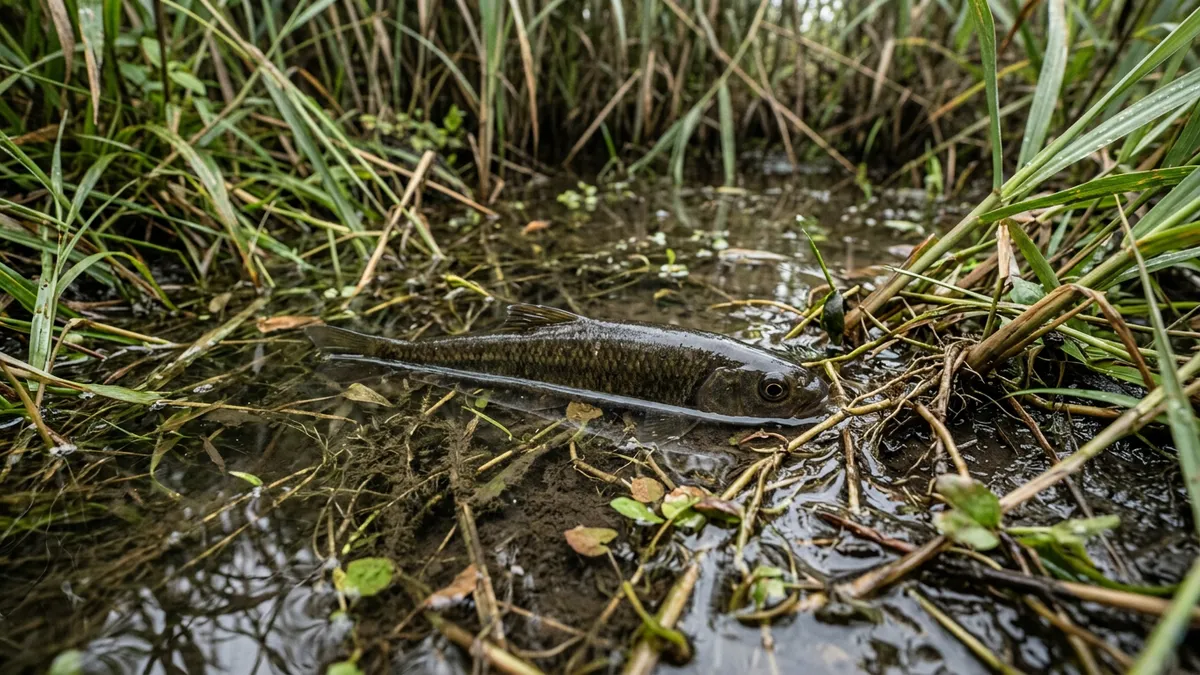
When the water drops and a pool is cut off from the river, the jeju (Hoplerythrinus unitaeniatus) does not depend only on dissolved oxygen to stay alive. This fish can supplement its breathing at the surface, using its swim bladder as an accessory air-breathing organ. The adaptation lets it cope with water that is warm, still and loaded with organic matter, conditions that reduce the amount of oxygen available to the gills.
The result is an animal able to stay in stretches of water that would be limiting for many other fish. The swim bladder does not fully replace the gills, but it widens the possibilities for survival when the oxygen concentration falls. The jeju has to reach the surface and renew its air while its body stays in the water. In a landscape that alternates between flooded areas and shallow channels, this combination turns breathing into a tool for getting through the dry season.
A fish built for shallow water
The name jeju belongs to a freshwater fish of Brazil that occupies varied environments, including shallow water, banks crowded with plants and stretches subject to a seasonal drop in water level. Its cylindrical body helps it move among stems, roots and other obstacles. Instead of depending on a clear passage like an open channel, it can explore the narrow spaces of flooded vegetation.
In this setting the fish acts as an ambush predator. The strategy consists of staying hidden and waiting for prey to come close, which reduces the need for long chases in water that is murky or choked with plants. The same body shape that favors movement in flooded areas also suits quick attacks from hiding places. The jeju is therefore not only resistant to difficult conditions but fitted to an environment in which space, oxygen and visibility keep changing.
The dry season splits the main channel from the pools
The sequence starts with the shrinking of the water. During the dry season, shallow arms and temporarily flooded areas can lose their connection with the main watercourse. The fish is left in a pool or in a damp stretch among plants, while evaporation and the decay of leaves use up part of the dissolved oxygen. For many species, the mix of isolation and oxygen-poor water raises the risk of death from inadequate breathing.
The jeju gets through this phase by turning to accessory air breathing. Rising to the surface, it takes oxygen from the air by means of a swim bladder adapted for that function. This tolerance does not mean the animal can do without water or survive indefinitely outside it. The mechanism offers a margin for staying in aquatic environments degraded by the dry season, as long as some volume of water and access to the surface remain.
A swim bladder that does more than keep the fish afloat
In many fish, the swim bladder is associated with controlling the position of the body in the water column. In the jeju it also takes part in obtaining atmospheric oxygen. The animal rises, gulps or draws in air at the surface and uses the adapted internal structure for gas exchange. Oxygen passes into the body, while the fish becomes less dependent on water with a low concentration of that element.
This mechanism works as a complementary form of breathing, not a total replacement of the gill system. The gills remain important in normal conditions, above all when the water carries enough oxygen. The advantage shows up when the environment becomes hypoxic, the term used for low oxygen availability. By combining the two routes, the jeju can stay active in shallow, still pools, where the water may look steady at the surface but have chemical conditions that are unfavorable inside.
A cylindrical body that opens a path through plants and roots
The shape of the body completes the adaptation. Cylindrical and elongated, the jeju moves through flooded vegetation in ways that let it occupy narrow spaces among leaves, stems and roots. In areas where the water recedes without disappearing entirely, this movement can keep the fish in contact with small pockets of water that are connected in an irregular way. There is no need to picture a long crossing over dry land. The mechanism is tied to advancing through shallow, flooded environments.
While it moves, the jeju keeps the behavior of an ambush predator. The vegetation provides cover and reduces visibility, creating waiting points from which to catch animals passing close by. The strategy saves energy in an environment where shallow water limits maneuvering and the temperature can swing quickly. Accessory air breathing, the cylindrical body and ambush hunting make up a coherent set, but each trait serves a specific function.
The rain restores the connection
When the rain returns and raises the water level, isolated pools can reconnect with channels and rivers. That is when the jeju leaves the temporary environment and returns to the river system. The new water does not create the fish’s respiratory ability, but it changes the conditions that made it necessary to stay in shallow, oxygen-poor areas. The way back depends on the formation of aquatic connections, not just on rain falling on the spot where the animal is.
In Brazil, where rivers, streams, floodplains and temporarily flooded areas form landscapes linked by the pulse of the rains, the adaptation shows how a fish can wait for its environment to recover without ever fully leaving the water. The pool is not just a temporary refuge but part of a cycle that can return the animal to the river.
Reporting: Natália Santos / Amazonia Mag

Editor · Amazonia Mag
Anne Silva is the editor of Amazonia Mag, the English-language edition of Revista Amazônia. She curates, translates and adapts the outlet's science and environment coverage for an international audience, reporting on Amazon wildlife, flora, rivers, climate and research. Every story she edits is grounded in peer-reviewed studies, official data and on-the-ground reporting from the Revista Amazônia newsroom in Belém, Pará, Brazil. More by Anne Silva →